Healthy Living in Garmisch: Yoga, Retreat & Health
Healthy Living in Garmisch: Courses & Retreats with Alpine Panorama (Outlook 2026/2027)
Garmisch-Partenkirchen is positioning itself for the coming months and the 2026/2027 season as a place where movement, relaxation, and mindfulness are specifically linked with the Alpine region. Those seeking yoga, retreats, cold and breathing formats, or prevention offerings in the future will likely find a mix of open courses (for locals and guests) and multi-day programs.
Yoga & Movement: Courses with Mountain Views
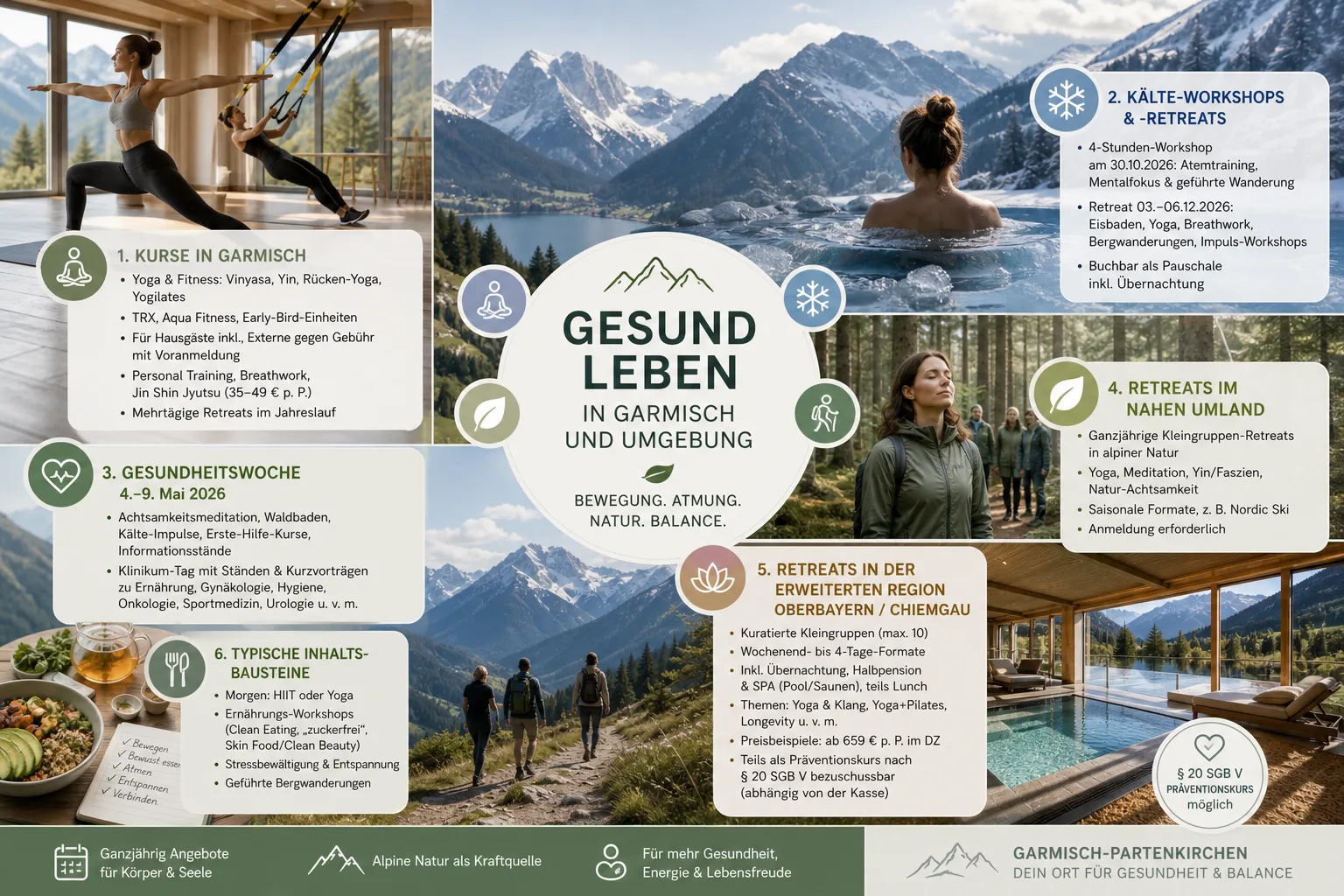
For 2026 and 2027, a wide range of courses can be expected in Garmisch-Partenkirchen: from gentle mobility and yoga classes to functional training and outdoor movement formats. The appeal lies less in "always more," and more in a well-controlled combination of activity, recovery, and nature experience.
What participants can typically expect
- Gentle introductions for beginners.
- Progressive formats for people with training experience.
- Short sessions for guests with limited stay duration.
- Local offerings with regard to weather, altitude, and season.
Those looking for a suitable format should pay attention to the description of the intensity level, group size, and the qualifications of the course leader. Especially in the Alpine region, it makes sense to choose offerings that explicitly provide for adjustments to weather and daily condition.
Retreats: Structured Time-Outs for Body and Mind
For autumn/winter 2026 and spring 2027, retreats are typically planned more frequently in alpine regions: multi-day programs with a clear daily structure, often in small groups. The goal is less "more performance," and more a reliable combination of activity, regeneration, and mental relief.
Typical components of upcoming retreat programs
- Morning practice (yoga, mobility, or gentle interval training) for activation.
- Guided tours (hikes, seasonal outdoor activities) focusing on safe intensity management.
- Nutrition workshops (practical planning, balanced plate principles, mindful handling of sugar/ultra-processed foods).
- Relaxation and stress competence (e.g., meditation, progressive muscle relaxation, everyday routines).
- Breath and mindfulness sessions (breathwork methods in moderate, safe settings; focus on perception and self-regulation).
Many providers combine the sessions with spa or regeneration options (sauna, relaxation areas, warm water, massages). For a reputable selection, it is advisable to prefer programs that openly state goals, intensity, safety rules, and qualifications of the leadership.
Cold, Breath, Focus: Workshops & Retreats
For the 2026/2027 season, more and more programs are being planned in alpine destinations that combine cold stimuli with breath and focus work (e.g., guided cold workshops, winter nature walks, optional cold water bathing under supervision). Such formats are often offered as a compact introductory block (several hours) or as a multi-day retreat.
What is typically included in a reputable cold workshop
- A safety briefing (risks, abort criteria, warming-up strategy, supervision, emergency plan).
- Breath and focus exercises to prepare for stress stimuli (without risky hyperventilation in the water).
- Dosed exposure (e.g., cold air or cold water stimuli) with clear instructions and time limits.
- Integration: debriefing, warming and regeneration phase, transfer to everyday life.
Important: Cold and breath formats are not suitable for everyone. Those with cardiovascular diseases, unclear health status, a history of seizures, or pregnancy should consult a doctor before participating to determine if the offering is appropriate. For cold water, the rule is: only participate in supervised, clearly regulated settings.
Health Week: Prevention to Participate In
For the coming years, many municipalities and health actors in tourist regions are planning events that make prevention easily accessible. For Garmisch-Partenkirchen, formats that appeal to both locals and guests together are likely to make sense for 2026/2027: short participatory units, keynote lectures, and practical courses.
Participatory offerings that work well in a health week
- Mindfulness in nature (e.g., guided forest experiences, quiet perception exercises).
- Movement checks and practical training impulses (mobility, balance, strength).
- First aid as a safety competence for everyday life and outdoor activities.
- Nutrition and health information focusing on prevention and long-term feasibility.
If medical facilities or qualified professionals are involved, participants can ask questions about intensity management, warning signs, and prevention logic. This increases quality: health knowledge is not just "told," but translated into concrete decisions (e.g., training volume, regeneration, meaningful prevention).
Retreats in the Surroundings: Upper Bavaria as a Wellbeing Region
Those who expand their radius for 2026/2027 will find additional small group programs in Upper Bavaria that combine yoga, meditation, nature experience, and regeneration. These retreats are often deliberately kept small so that supervision, adjustments, and safety are the focus.
What often distinguishes these retreats
- Rhythm instead of overload: clear daily plan with sufficient breaks.
- Nature-based wellbeing: measured hikes or seasonal activities focusing on enjoyment and safety.
- Mindful nutrition: simple, regional cuisine and understandable guidelines instead of short-term "detox" promises.
- Transfer: concrete routines that can realistically be continued after the stay (10–20 minutes per day).
Some of the offerings may be recognized as prevention courses according to legal regulations. If reimbursement is important to you, check the provider's information and your health insurance requirements (course ID, certification, participation conditions) before booking.
How to Plan Your Health Stay 2026/2027
So that courses and retreats not only "sound good" but really suit you, these steps help with planning:
- Set a goal: more movement, stress regulation, improve sleep, start yoga, safe cold exposure, or simply relaxation?
- Realistically assess resilience: How much activity per day is sustainable for you without feeling exhausted afterwards?
- Check qualification & safety: training of the leader, group size, contraindications, emergency concept.
- Read program structure: Are there sufficient breaks, real regeneration, and clear information on intensity?
- Ensure transfer: Choose an offering that provides exercises for home (short routines, clear instructions, realistic goals).
Note: This article is for general information and does not replace medical advice. If you have existing illnesses, severe complaints, or uncertainty about your resilience, consult a doctor before participating in intensive programs (e.g., cold, HIIT, altitude exposure).
Sources & Further Links
- World Health Organization (WHO): Guidelines on physical activity and sedentary behaviour (2020) — Recommendations on exercise & health (accessed 2026-07-29)
- Gesetze im Internet: Sozialgesetzbuch (SGB V) § 20 Prevention and Health Promotion — Legal framework for prevention courses (accessed 2026-07-29)
- Federal Centre for Health Education (BZgA) — Health information and prevention basics (accessed 2026-07-29)
- Federal Ministry of Health (BMG) — Background on prevention and health care in Germany (accessed 2026-07-29)