Public Transport in Garmisch: Relaxed to Every Event
Public Transport in Garmisch-Partenkirchen: How to Get Comfortably to Upcoming Events
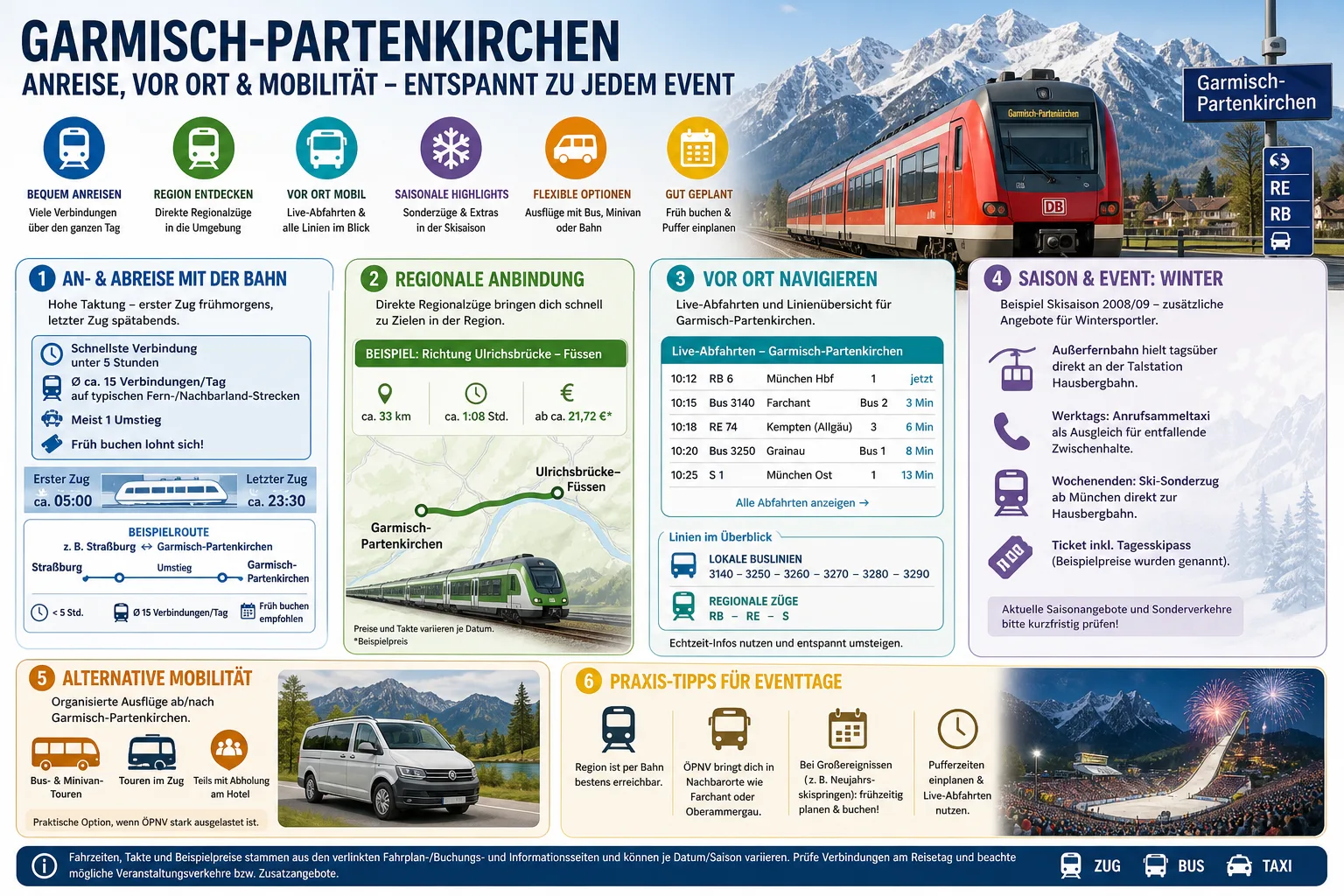
Directly from the train into town, then on by bus or regional train to the event location – no need to search for parking and no traffic jams: In Garmisch-Partenkirchen, this works surprisingly well on many event days. The key is careful planning (including buffer time) and up-to-date real-time information shortly before departure.
Regional Connections: Quickly to Events in the Surrounding Area
Not every upcoming event takes place in the town center. Many cultural, sports, and traditional events are held in neighboring towns or at excursion destinations in the Werdenfelser Land. Here, regional trains and bus lines are especially helpful – they connect Garmisch-Partenkirchen with surrounding communities and make day trips without a car realistic.
Typical Use Cases (Without a Car)
- Neighboring Towns: If you are staying overnight in Garmisch-Partenkirchen, you can easily travel to nearby towns for individual program points and return in the evening.
- Combine Event + Excursion: Arrive in the morning and enjoy the supporting program, attend the event in the afternoon/evening – without the logistics of your own car.
- Groups & Families: Travel together, less stress from searching for parking, often better planning reliability with high visitor numbers.
Important: Frequencies, transfers, and capacities can vary depending on the day of the week, season, and event situation. Therefore, always plan an alternative for time-critical appointments (start, admission, start times) – such as an earlier connection or a different route.
Getting Around Locally: Bus, Train & Live Departures
After arriving at the station, you can usually cover the "last mile" in Garmisch-Partenkirchen well with scheduled buses or (depending on your destination) a short walk. Especially on days with high crowds, it is worth using real-time data: You can see delays, platform/stop information, and better time your transfers.
Practical Routine for Your Event Day
- Set Starting Point: Select Garmisch-Partenkirchen station as the starting point in the timetable information.
- Specify Destination: Enter the stop or location (if stored in the information system).
- Check Live Status Shortly Before Departure: Update 10–20 minutes beforehand to see delays/changes.
- Plan Transfer Buffer: Especially with full buses or large crowds of pedestrians around event venues.
If you are unfamiliar: Save the most important stops (station, accommodation, event destination) as favorites in your app. This reduces search time in the hustle and helps you switch to plan B more quickly.
Major Events & Seasonal Additional Services: What You Should Watch Out For
Around large, high-attendance dates (e.g., winter sports highlights, festivals, holiday weekends, or several events taking place at the same time), transport companies may offer additional capacity or adjust procedures. This can include extra trips, more frequent services, or changed routes.
How to Find Reliable Information (Without Rumors)
- Use Official Timetable Information: Check connections in the official apps/portals of the transport and rail companies instead of screenshots or social media posts.
- Check the Event Website: Many organizers publish travel information (public transport, recommended stops, closures, admission windows).
- Pay Attention to On-Site Signage: For major events, access routes to stops, one-way regulations for pedestrians, or shuttle information are often signposted at short notice.
If you travel by public transport, you also reduce traffic pressure in the valley – a real advantage in a region where the road network and parking spaces quickly reach their limits on peak days.
Planning Tips for Event Days and Short Trips
1) Plan Early, But Don't Be Too Rigid
For highly demanded dates, early planning is worthwhile. Nevertheless, you should build in flexibility for the return journey in case program schedules change or you want to go out to eat after the event.
2) Consciously Calculate Buffer Times
Event days mean more people, longer distances due to visitor flows, and sometimes waiting times when boarding. Those who plan buffer times arrive more relaxed and start the program in a better mood.
3) Use Live Information as Standard
Get used to checking live departures shortly before leaving. This is the fastest way to spot delays, alternative connections, or changed departure positions.
4) Think "Short Vacation Instead of Day Trip"
If you stay two or three nights, you can better distribute the event, supporting program, and relaxation. This reduces time pressure, makes it easier to plan bad weather alternatives, and gives you leeway to explore surrounding places by bus and regional train.
Conclusion
With train and bus, you can reach many upcoming events in Garmisch-Partenkirchen comfortably – especially if you use live information, build in buffer times, and follow official timetables. This makes the journey more predictable, often more relaxed than by car, and ideally already part of the experience.
Note on Up-to-dateness: Timetables, detours, and additional services can change at short notice. Always check your specific connection on the day of travel in the official timetable information.