
François Couperin
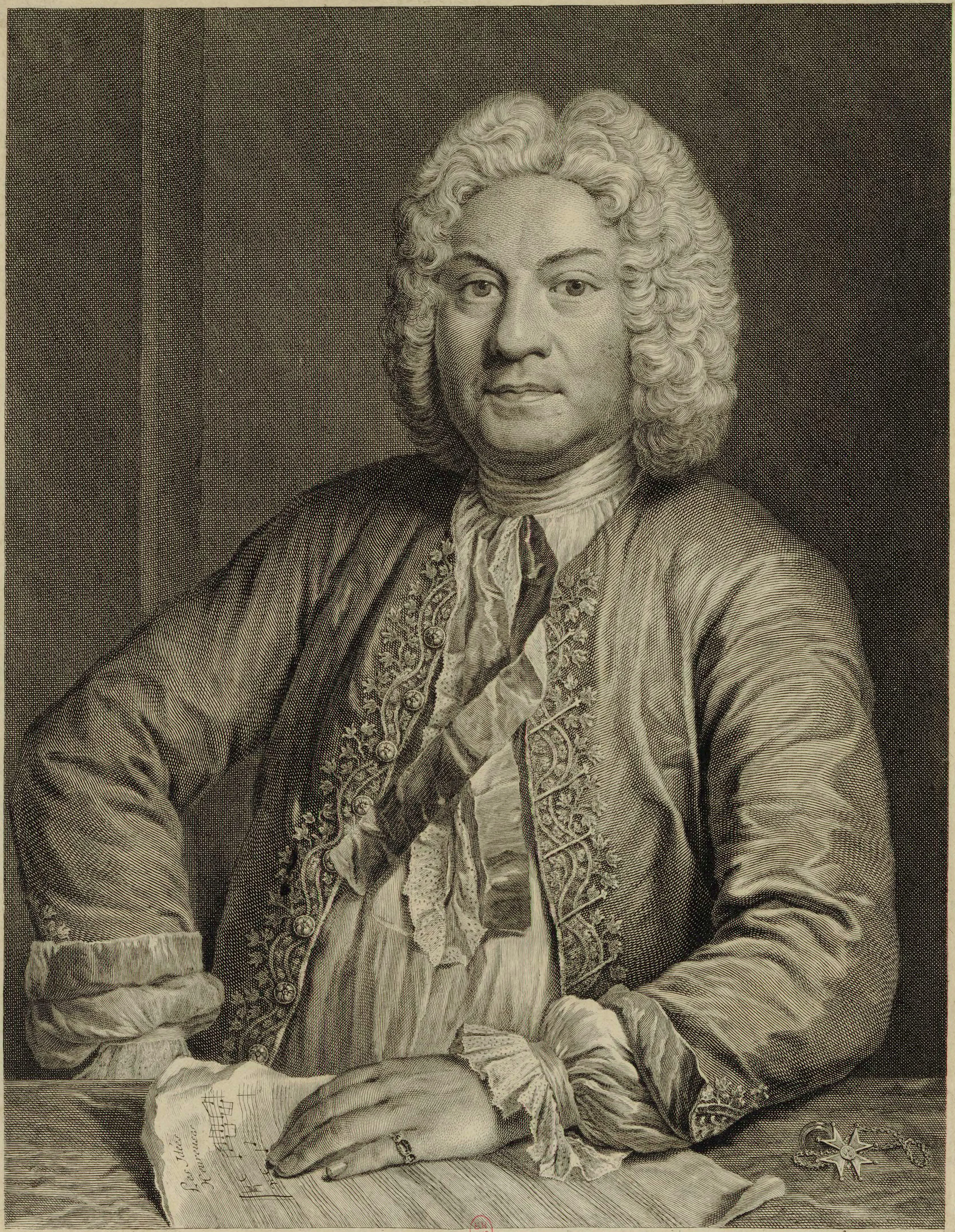
Image from Wikipedia
Image from Wikipedia
François Couperin – The Great Master of French Baroque Between Harpsichord, Organ, and Court Culture
François Couperin: A Composer Who Shaped French Baroque Music with Distinctive Elegance
François Couperin, also known as François II Couperin and "Le Grand," is one of the key figures in French Baroque music. Born on November 10, 1668, in Paris and dying there on September 11, 1733, he created a lasting art as a harpsichordist, organist, and composer that combined court representation, spiritual depth, and chamber music sophistication. As the most significant representative of the Couperin dynasty, he stands between Lully and Rameau as a central figure of an era that profoundly shaped the style, taste, and musical language of France. ([en.wikipedia.org](https://en.wikipedia.org/wiki/Fran%C3%A7ois_Couperin?utm_source=openai))
Biographical Roots: Paris, Family, and Musical Heritage
Couperin came from a long-standing musical family, with several generations serving as organists and composers. This background early on shaped his musical environment and laid the foundation for a career that was not merely based on virtuosity but on stylistic authority and institutional anchoring. His name itself became synonymous with French sound culture and artistic decoration, representing elegance in detail and discipline in expression during the 17th and 18th centuries. ([barbican.org.uk](https://www.barbican.org.uk/sites/default/files/documents/2018-01/Couperin%20for%20web.pdf?utm_source=openai))
As a composer and performer, Couperin moved within the exclusive realms of Parisian and court music culture. He was organist at the prestigious church of Saint-Gervais and simultaneously connected with a quarter of the Chapelle Royale, one of the most important musical institutions of the French royal court. These posts not only indicate his reputation but also illustrate the dual roles that characterized his career: Couperin was both a practical musician, teacher, and creative authority. ([barbican.org.uk](https://www.barbican.org.uk/sites/default/files/documents/2018-01/Couperin%20for%20web.pdf?utm_source=openai))
Career and Breakthrough: Between Church, Court, and Harpsichord School
Couperin's artistic breakthrough was not marked by a single spectacular success, but by sustained recognition as a stylistic shaper. He became one of the most sought-after harpsichord teachers of his time and profoundly influenced the French keyboard school of the Baroque with his practice and theory. The combination of liturgical purpose, courtly presence, and educational impact made him a key musical figure whose influence reached far beyond his lifetime. ([en.wikipedia.org](https://en.wikipedia.org/wiki/Fran%C3%A7ois_Couperin?utm_source=openai))
His theoretical legacy is particularly important: with L’Art de toucher le clavecin, published in 1716, Couperin left one of the central sources on the performance practice of the harpsichord. This work documents not only technical aspects but also the aesthetic claims of an art that viewed sound, articulation, and decoration as inseparable components of musical rhetoric. Couperin thus wrote not just a textbook, but a sonic poetics of the French keyboard style. ([musicologie.org](https://www.musicologie.org/Biographies/c/couperin_francois_2.html?utm_source=openai))
Discography and Work Composition: The Four Books of Harpsichord Pieces
Couperin's core work includes the four books of harpsichord pieces, published between 1713 and 1730. This collection represents a monumental cosmos of French harpsichord art, where dance forms, character pieces, programmatic titles, and finely ornamented details intertwine. In reception, this blend of formal precision and poetic fantasy is often highlighted as the essence of his oeuvre. ([classical.net](https://www.classical.net/music/recs/reviews/b/brl93082a.php?utm_source=openai))
Alongside his harpsichord works, Couperin's sacred music is of great significance, including the Leçons de Ténèbres and other sacred compositions. The Opéra Royal in Versailles emphasizes his special place in a repertoire that primarily focuses on sacred and chamber music rather than the grand opera or grand motet fields dominated by other masters. This specialization lends his music a distinctive intensity: Couperin works with the utmost finesse in the small format, where he fully unfolds his expressive power. ([operaroyal-versailles.fr](https://www.operaroyal-versailles.fr/genre-event/couperin/?utm_source=openai))
Musical Language: Ornament, Affect, and French Elegance
Couperin's style thrives on an extraordinary balance of intimacy and nobility. His compositions are characterized by subtle ornamentation, melodic invention, and a sensitive harmony that showcases French Baroque in its most refined form. The sound often appears transparent and expressive, as if each figure is placed with conscious rhetoric; therein lies the modernity of his art, which continues to challenge interpretation today. ([allmusic.com](https://www.allmusic.com/artist/fran%C3%A7ois-couperin-mn0000763575?utm_source=openai))
At the center of his aesthetics stands the harpsichord as an instrument of differentiation. Couperin utilized its articulation possibilities to portray characters, affects, and musical miniatures with almost literary precision. His music demands not only technical control but also taste, stylistic awareness, and a fine balance between rigor and fantasy; for this reason, it is regarded by interpreters as a benchmark of Baroque artistry. ([classical.net](https://www.classical.net/music/recs/reviews/b/brl93082a.php?utm_source=openai))
Impact and Cultural Influence: From the French Court to the Present
Couperin's significance extends far beyond his immediate era. He is considered one of the most influential musical personalities in France between Lully and Rameau, at a time when French Baroque reached its peak. His works are not only historical documents but also living reference points for the interpretation of French keyboard music, sacred vocal art, and courtly sound language. ([en.wikipedia.org](https://en.wikipedia.org/wiki/Fran%C3%A7ois_Couperin?utm_source=openai))
Even in modern performance practice, Couperin remains present. Current releases and repertoire highlights from labels like Warner Classics and platforms like Apple Music Classical demonstrate that his music continues to be recorded, nurtured, and rediscovered. Reviews and repertoire lists particularly highlight the ongoing appeal of his harpsichord works; thus, Couperin remains not a museum name, but a vibrant part of the early music scene. ([warnerclassics.com](https://www.warnerclassics.com/artist/francois-couperin?utm_source=openai))
Reception in the Music Press: Respect for a Quiet Giant
The music press often describes Couperin as a key composer of the French Baroque, whose work has long been underestimated in significance. The Guardian even posed the question of why Couperin never fully reached the pinnacle of the "great masters," despite his music being among the finest and most distinctive of the 18th century. Such classifications reveal that Couperin's stature in the canon is based more on depth than volume. ([theguardian.com](https://www.theguardian.com/music/2018/nov/25/couperin-edition-warner-erato-review-lalchemiste-cuiller-elicia-silverstein-macoboy-meun?utm_source=openai))
Professional reviews also emphasize the quality of interpretations of his music. In the reception of his recordings, Couperin is frequently described as a composer whose works sound "exemplary" when virtuosity, historical awareness, and sonic sensitivity converge. This is the enduring fascination: Couperin challenges performers to achieve the highest differentiation and rewards them with music of extraordinary sophistication. ([classical.net](https://www.classical.net/music/recs/reviews/b/brl93082a.php?utm_source=openai))
Conclusion: Why François Couperin Continues to Fascinate Today
François Couperin is a composer of quiet greatness who shines in detail and sets standards in the overall picture. His musical career connects court, church, teaching, and composition into a distinctive body of work that continues to shape French Baroque music today. Listening to Couperin is not just experiencing historical music, but engaging with an art of nuance, taste, and intellectual elegance that remains unique in its concentration. ([en.wikipedia.org](https://en.wikipedia.org/wiki/Fran%C3%A7ois_Couperin?utm_source=openai))
For this reason alone, experiencing his works is always worthwhile. Couperin's harpsichord pieces, his sacred compositions, and his theoretical writings open the view to a musical world where every note is deliberately placed, and every ornament carries significance. Experiencing him live in a powerful interpretation brings one face-to-face with one of the finest stylists in European music history. ([classical.net](https://www.classical.net/music/recs/reviews/b/brl93082a.php?utm_source=openai))
Official Channels of François Couperin:
- Instagram: no official account found
- Facebook: no official account found
- YouTube: no official account found
- Spotify: no official account found
- TikTok: no official account found