
François Couperin
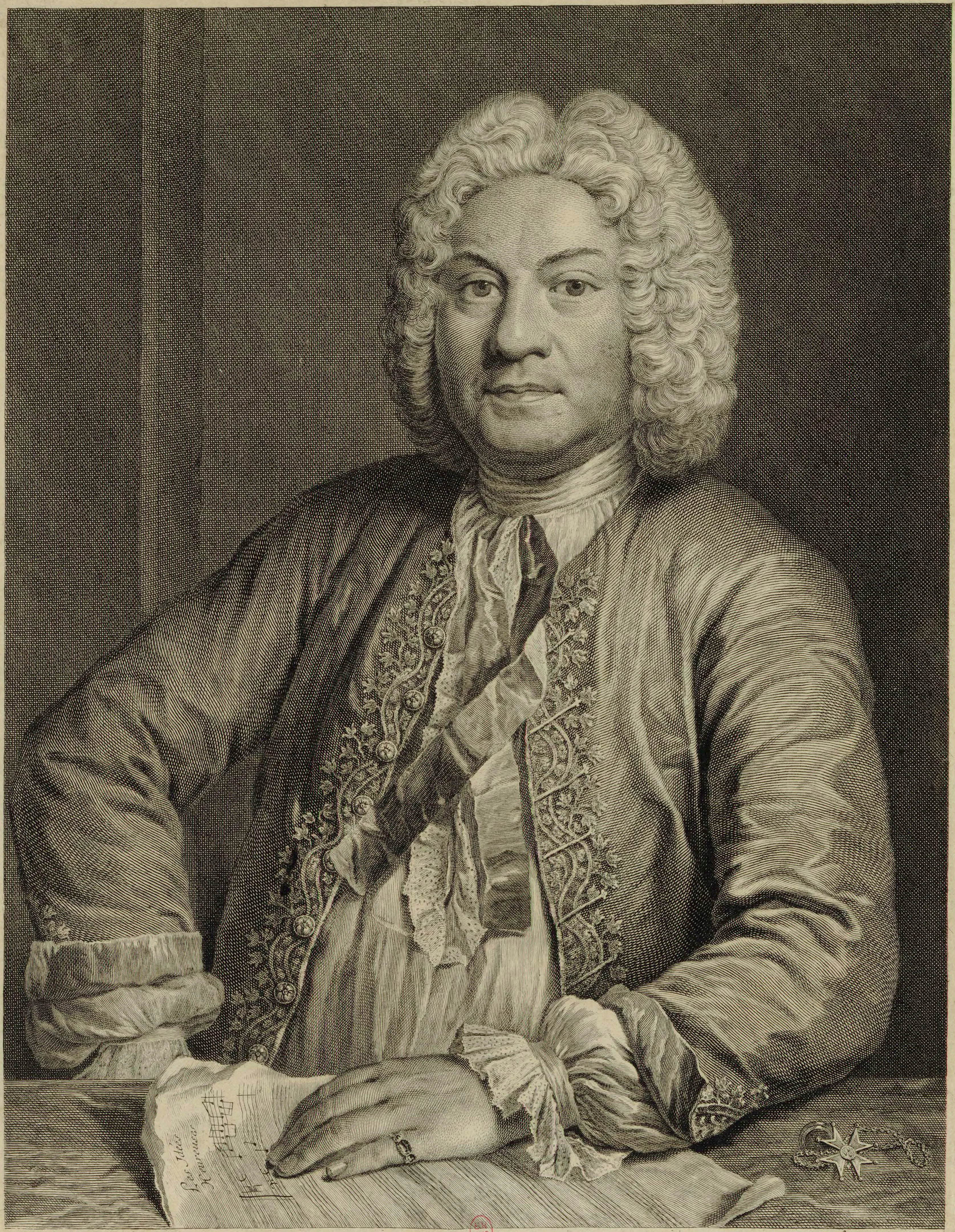
Image from Wikipedia
Image from Wikipedia
François Couperin – The Great Architect of French Baroque
A Master Between Courtly Elegance and Inner Depth
François Couperin, also known as François II Couperin and famous as "Le Grand," is one of the defining figures of French Baroque music. Born on November 10, 1668, in Paris and passing away there in 1733, he combined aristocratic stylistic mastery with an astonishingly sensitive musical language as a harpsichordist, organist, and composer. In music history, he occupies a key position: bridging the splendid era of Lully and the emerging world of Rameau, he shaped a sound that is still regarded as the epitome of French nobility. ([larousse.fr](https://www.larousse.fr/encyclopedie/musdico/Fran%C3%A7ois_Couperin/167027?utm_source=openai))
Biography: Growing Up in a Family of Musicians
Couperin came from a famous Parisian musical dynasty that produced generations of organists, harpsichordists, and composers. Orphaned at a young age, he received his musical education in an environment marked by ecclesiastical practice, courtly representation, and family tradition. The Couperin family was among the most renowned musical families in France; François was recognized during his lifetime as an extraordinary talent. ([larousse.fr](https://www.larousse.fr/encyclopedie/groupe-personnage/Couperin/114915?utm_source=openai))
As early as 1685, he de facto took on the position of organist at Saint-Gervais in Paris, a post he held for many years. In 1689, he married Marie-Anne Ansault and started a family, from which musically active children emerged as well. Couperin's life was almost entirely centered in Paris and within the context of French court culture, which profoundly influenced his artistic language. ([larousse.fr](https://www.larousse.fr/encyclopedie/musdico/Fran%C3%A7ois_Couperin/167027?utm_source=openai))
The Rise at the Royal Residence
In 1693, Couperin was appointed by Louis XIV as organist of the Chapelle royale, a pivotal step in his career. At the same time, he taught the Duc de Bourgogne and other members of the royal household to play the harpsichord. This position made him one of the most respected musicians of his time and solidified his reputation as a virtuosic performer and sought-after educator. ([larousse.fr](https://www.larousse.fr/encyclopedie/groupe-personnage/Couperin/114915?utm_source=openai))
His work at the court chapel and his connection to Saint-Gervais indicate a career that focused on consistency, authority, and stylistic refinement rather than spectacular self-promotion. Couperin operated within a courtly system that valued both restraint and mastery, which was precisely his strength. His biography seems outwardly calm, yet musically it was of great impact. ([larousse.fr](https://www.larousse.fr/encyclopedie/musdico/Fran%C3%A7ois_Couperin/167027?utm_source=openai))
The Works: A Composer of Fine Forms
Couperin's body of work includes organ music, harpsichord pieces, chamber music, and sacred compositions. His central contributions include the two organ masses from 1690, the four books of Pièces de clavecin, the Concerts royaux, the Apothéoses, and the Leçons de ténèbres. Especially significant is L’Art de toucher le clavecin from 1716, which is regarded not only as a teaching treatise but also as a key to the French harpsichord style. ([larousse.fr](https://www.larousse.fr/encyclopedie/musdico/Fran%C3%A7ois_Couperin/167027?utm_source=openai))
His four harpsichord volumes were published in 1713, 1717, 1722, and 1730 and contain around 230 pieces that he organized into so-called “Ordres.” These miniatures are more than mere courtly character pieces: they integrate dance forms, sound painting, psychological implications, and compositional sophistication. Couperin viewed music as an art of nuance, tone, and gesture, rather than just a showcase of virtuosity. ([larousse.fr](https://www.larousse.fr/encyclopedie/musdico/France/167706?utm_source=openai))
Style and Musical Development
Couperin's style exemplifies French Baroque music, yet he never remains at mere representation. His music merges French elegance with Italian formal strength; he consciously sought the convergence of both “goûts.” In his sonatas, suites, and concerts, contrapuntal rigor, decorative refinement, and expressive warmth blend into a distinctive signature. ([larousse.fr](https://www.larousse.fr/encyclopedie/musdico/Fran%C3%A7ois_Couperin/167027?utm_source=openai))
Especially in his harpsichord pieces, his mastery in characterization shines through. Titles with hidden references, subtle rhythmic shifts, and dense ornamentation create music that feels both intimate and aristocratic. Couperin transforms the instrument into a speaking medium; each phrase gains contour, and each ornament carries meaning. ([larousse.fr](https://www.larousse.fr/encyclopedie/musdico/France/167706?utm_source=openai))
The Place in Music History
François Couperin is considered the most significant representative of the Couperin family of French organists, harpsichordists, and composers and one of the most influential musical figures in France between Lully and Rameau. Posterity recognized him not only as a master of the harpsichord but also as a stylistic mediator between tradition and renewal. His music has been continually rediscovered, edited, and performed by later generations. ([fr.wikipedia.org](https://fr.wikipedia.org/wiki/Fran%C3%A7ois_Couperin?utm_source=openai))
His influence remained palpable throughout the subsequent course of music history. Music writers and performers particularly highlighted his art of affectivity, the balance of melody and harmony, and his poetic approach to the instrument. In this respect, Couperin serves as a model for interpretative sensitivity and stylistic discipline even into modern times. ([kulturwissenschaften.uni-hamburg.de](https://www.kulturwissenschaften.uni-hamburg.de/hm/forschung/studentische-forschungsprojekte/hyacinthe-boisson.pdf?utm_source=openai))
Critical Reception, Discography, and Ongoing Presence
The reception of Couperin focuses not on charts or popular successes, but on a rich tradition of performance within the early music scene and classical discography. Platforms like AllMusic and major classical labels recognize him as a central composer of the French Baroque; his works regularly appear in new recordings, editions, and thematic programs. This shows his unbroken relevance in the international concert and recording catalog. ([allmusic.com](https://www.allmusic.com/artist/fran%C3%A7ois-couperin-mn0000763575?utm_source=openai))
Particularly frequently recorded are the organ masses, the harpsichord books, the Concerts royaux, and Les Nations. These works represent the range of his output: liturgical, chamber music, didactic, and stylistically highly reflective. In critical perception, Couperin is regarded as a composer of great formal discipline and fine emotional tension. ([larousse.fr](https://www.larousse.fr/dictionnaires/college/Couperin/9845?utm_source=openai))
Current Projects and Publications in Today’s Context
In 2024 and 2025, Couperin remains present in the classical world, primarily through new releases and repertoire programs on major label and streaming platforms. Warner Classics is producing current releases related to Couperin, while Apple Music and Apple Music Classical offer their own artist pages and curated content. This indicates that his work is not stagnant in archives but is continuously placed in new contexts. ([warnerclassics.com](https://www.warnerclassics.com/artist/francois-couperin?utm_source=openai))
Voices of the Fans
As no verifiable official social media channels for François Couperin have been found, this section is consciously omitted. The reception of his work instead continues to thrive in concert programs, recordings, and musicological contexts, rather than in contemporary fan comments. ([de.wikipedia.org](https://de.wikipedia.org/wiki/Fran%C3%A7ois_Couperin?utm_source=openai))
Conclusion: Why François Couperin Captivates to This Day
François Couperin captivates because he gave French Baroque an unmistakable voice: cultivated, poetic, witty, and technically fully controlled. His musical career illustrates how the service of the court can evolve into an art of lasting radiance. Those who listen to Couperin experience not only historical music but also a school of listening, where subtlety and expression are inextricably linked. ([larousse.fr](https://www.larousse.fr/encyclopedie/musdico/Fran%C3%A7ois_Couperin/167027?utm_source=openai))
Especially live, this music reveals its full effect: in the space, in the breath of the phrases, and in the detail of the articulation. Couperin remains a composer for listeners who seek depth in delicacy and understand elegance as an artistic attitude. His works invite engagement with a sonic world that remains of rare beauty to this day. ([kulturwissenschaften.uni-hamburg.de](https://www.kulturwissenschaften.uni-hamburg.de/hm/forschung/studentische-forschungsprojekte/hyacinthe-boisson.pdf?utm_source=openai))
Official Channels of François Couperin:
- Instagram: No official profile found
- Facebook: No official profile found
- YouTube: No official profile found
- Spotify: No official profile found
- TikTok: No official profile found
Sources:
- Wikipedia: François Couperin
- Larousse – François Couperin dit François II le Grand
- Larousse – France XVIIIe s
- Larousse – Couperin
- AllMusic – François Couperin Biography, Discography, Albums & Expert Reviews
- Warner Classics – François Couperin
- Warner Classics – François Couperin Releases
- Apple Music Classical – François Couperin