
Höhner
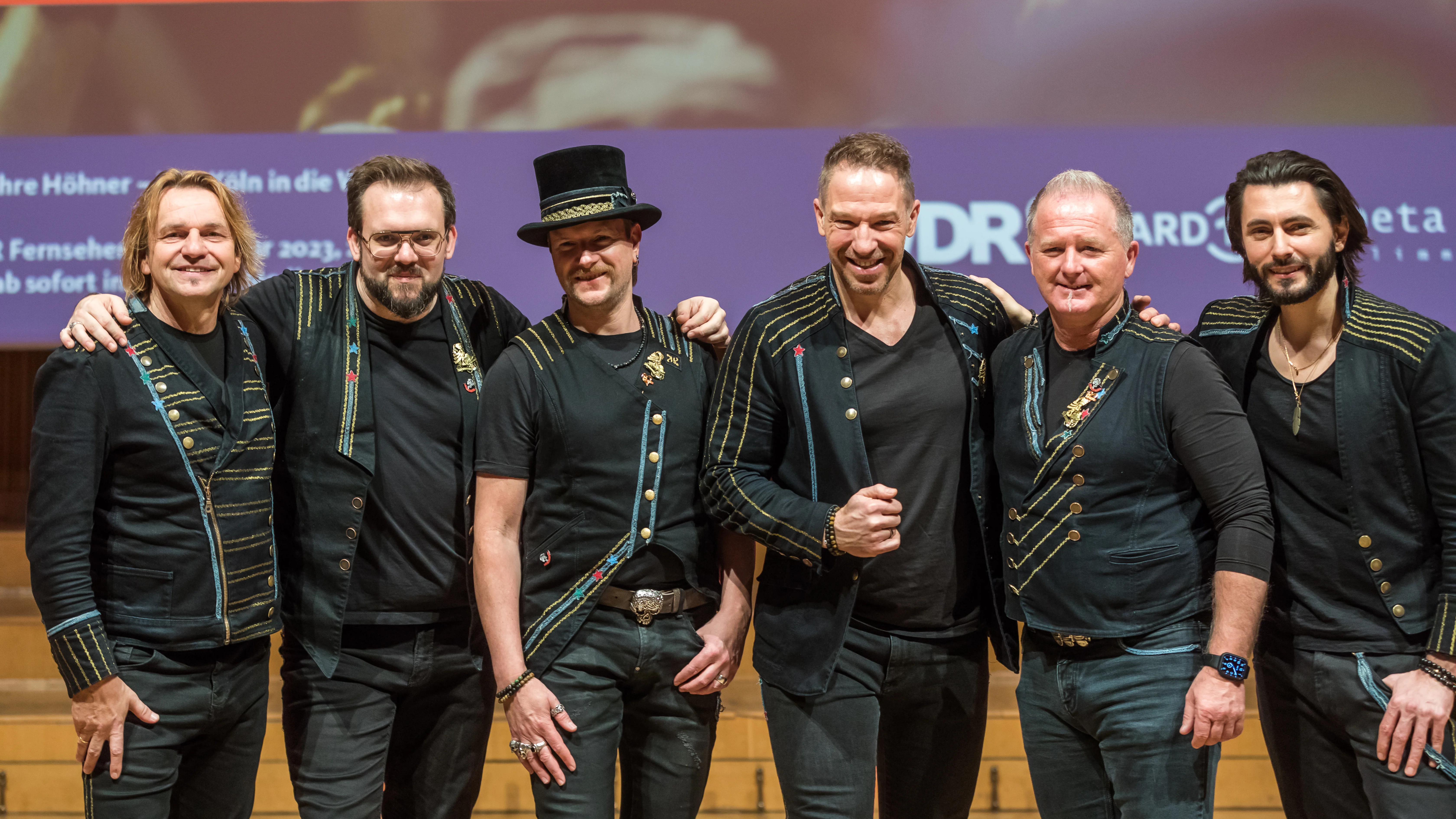
Image from Wikipedia
Image from Wikipedia
Höhner – Cologne's Cult Band with Hit History, Stage Power, and Timeless Celebration Culture
From Cologne to the Entire Republic: The Höhner as a Pop, Carnival, and Live Phenomenon
The Höhner are one of the most influential bands in the German music scene, as they have combined Cologne identity, catchy pop melodies, and unmistakable live energy for decades. Evolving from a Cologne carnival formation, the group has developed into a nationally recognized entity with songs that have long become part of the collective musical memory. Notable titles such as “Viva Colonia,” “Wenn nicht jetzt, wann dann?,” “Schenk mir dein Herz,” “Ich bin ene Räuber,” and “Steh auf, mach laut!” showcase how the band has found a rare balance between Rhineland joie de vivre, stadium suitability, and pop appeal. (hoehner.com)
Origins in Cologne: From “Höhnerhoff” to the Höhner Brand
The band's history began in 1972 in Cologne with the formation “Ne Höhnerhoff,” founded by young students like Peter Werner, Janus Fröhlich, Rolf Lessenich, and Walter Pelzer. Early on, the musicians stirred up the carnival scene with cheeky songs and a performance style that combined humor, costumes, and musical directness. The name later changed to “De Höhner” and eventually to Höhner, as early engagements in the Lachenden Sporthalle and performances at the Willy Millowitsch Theater solidified the group's reputation. Even at this stage, the core of their success was evident: The Höhner are not just a carnival band but an ensemble with a knack for performance, timing, and audience engagement. (hoehner.com)
With the arrival of Peter Horn as lead singer in 1977, the era of classic Höhner hits began. Their first album featured “Blootwoosch, Kölsch un e lecker Mädche,” one of the early carnival classics, followed by further defining titles like “Ich bin ’ne Räuber,” “Winke, winke,” “Dat Hätz vun dr Welt,” and “Echte Fründe.” The band established a style that sees the local dialect not as a niche but as an emotional strength. Kölsch became a vehicle for identity, humor, and melancholy at the same time. (hoehner.com)
The Breakthrough Beyond Cologne: Chart Success and National Relevance
In the 1980s, the Höhner increasingly opened up to an audience beyond the Rhineland. The shift to Henning Krautmacher as singer in 1986 marked an important turning point: The band shortened their name and focused more on High German lyrics without losing their Cologne spirit. In 1987, “Pizza Wundaba” became a significant success that brought the Höhner into the public eye. The decisive nationwide breakthrough came later with songs that were much more than carnival songs: they acted as sing-along anthems, stadium songs, and cultural signals. (hoehner.com)
Especially “Die Karawane zieht weiter” became a commercial success in 1997, staying in the charts for 38 weeks, selling 380,000 copies, and earning the band their first Gold Record. Even more impactful was “Viva Colonia,” released for their 30th anniversary, which conquered not just the Cologne carnival but also nationwide parties and the Oktoberfest. The song “Wenn nicht jetzt, wann dann?” became the anthem of the German national handball team in 2007, reaching number 1 on the German charts, staying in the hit list for 58 weeks, and receiving a Platinum certification. These titles show how the Höhner managed to translate their Cologne origins into a national pop format. (hoehner.com)
Live Culture, Concept Formats, and Musical Versatility
A central feature of the Höhner is their pronounced stage presence. The band thrives not only on studio productions but on formats that combine concert, show, and ritual. In 1993, “Höhner Classic” emerged, a symphonically enhanced format with the Junge Sinfonie in the Cologne Philharmonic, emphasizing the compositional and arrangement side of the band. Later, “Höhner Weihnacht” was added, a rock-chill Advent program that has been a regular part of the band’s calendar with numerous concerts for years. (hoehner.com)
The circus show also became a notable chapter in the band’s history. Under the title “Höhner Rockin’ Roncalli Show,” music, acrobatics, and entertainment merged into a format that consistently expanded the playful, audience-friendly side of the group. This blend of show elements and musical reliability is a significant reason why the Höhner works not only in carnival but also in theaters, arenas, and open-air contexts. The group has thus created a repertoire that goes beyond mere hit collections. (de.wikipedia.org)
Current Projects: New Single, Current Album, and Tour Schedule
Even in the present, the Höhner remain productive and visible. Their official website highlights “Dä Prinz,” a new single that transforms everyday moments into something special and continues the typical mix of celebratory spirit and Cologne linguistic feel. At the same time, the band points to the tour finale of the “11+11” tour in the fall of 2026 as well as the “HÖHNER WEIHNACHT 2026.” Additionally, for 2027, the announced “HÖHNER CIRCUS CRUISE” in collaboration with Phoenix Reisen will further reinterpret the old circus chapter into a new form. The band continues to focus on movement, live experience, and thematic concert series. (hoehner.com)
The album “11+11” marks their return with a double release of eleven new and eleven re-recorded older songs; the official website also lists vinyl and fan box formats. According to the band’s site, this album was the first in six years and was released in 2024. The connection between archival preservation and new recordings fits the Höhner identity: they do not manage their heritage in a museum-like way but transform it into current stage and purchase opportunities. This is also a model of modern fan engagement and classic repertoire maintenance. (hoehner.com)
Discography, Awards, and Cultural Influence
The discography of the Höhner narrates the development of a band that has transformed from a carnival ensemble into a national pop entity. Key milestones include early albums featuring Kölsch songs, followed by releases surrounding “Viva Colonia,” “Alles op Anfang,” “Janz höösch,” “Wir sind für die Liebe gemacht,” and “11+11.” Critical reception and audience success intersect here: AllMusic describes the band as a guardian of German folk and carnival traditions in the 21st century, while the official band history documents chart positions, Gold, Platinum, and the Golden Tuning Fork. (allmusic.com)
The cultural influence of the Höhner extends far beyond music. With songs for 1. FC Köln, for handball world championships, for large carnival events, and for social initiatives, they have demonstrated how a repertoire can shape public moments. At the same time, the band has engaged in projects like “Arsch huh - Zäng ussenander,” in aid efforts for the homeless, the DKMS, and after the flood disaster in the Ahr Valley. This connection between entertainment and stance significantly enhances their authority in German music life. (hoehner.com)
Style and Musical Development: Between Kölsch, Pop, and Stadium Anthem
Stylistically, the Höhner move between Kölsch songs, pop rock, carnival music, and anthemic stadium aesthetics. Their compositions focus on clear choruses, strong harmonies, catchy melodies, and a production that explicitly considers sing-along possibilities. It is this accessibility that explains why their songs work both at carnival and in football stadiums and at national events. The dialect remains not an obstacle but a hallmark of strong emotional attachment. (hoehner.com)
The band’s lineup emphasizes this versatility. The official band site presents musicians with varied backgrounds: a keyboardist with classical piano training, a multi-instrumentalist skilled in saxophone, mandolin, and harp, a drummer with jazz and studio studies, and guitarists with extensive stage experience. This mix of craftsmanship, experience, and band collectivism grants the Höhner sound both stability and agility. As a result, a live character has emerged that remains a hallmark to this day. (hoehner.com)
Conclusion: Why the Höhner Continue to Captivate Today
The Höhner are exciting because they maintain a rare cultural balance: regional roots and national reach, humor and pathos, carnival and pop, tradition and present. Their music career illustrates how everyday Kölsch language can turn into great refrains and how local color can become a lasting stage event. Those who experience the Höhner live do not witness a nostalgic rewind but a band that continues to write its own story while consistently taking its audience along. This is where their enduring strength lies. (hoehner.com)
Official Channels of Höhner:
- Instagram: https://www.instagram.com/hoehnerofficial/
- Facebook: https://www.facebook.com/hoehnerofficial/
- YouTube: https://www.youtube.com/@hoehnerofficial
- Spotify: No official profile found
- TikTok: https://www.tiktok.com/@hoehnerofficial