
Maria Szymanowska
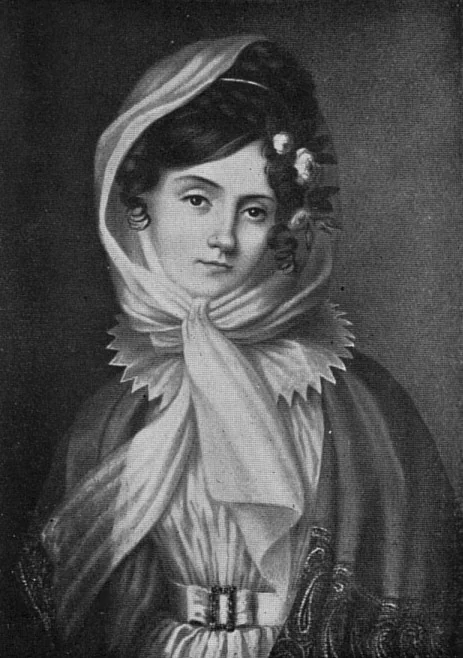
Image from Wikipedia
Image from Wikipedia
Maria Szymanowska – the Elegant Revolution of the Piano between Salon, Virtuosity, and Early Romanticism
A European Pianist Who Set Standards Long Before Chopin
Maria Szymanowska, born Marianna Agata Wołowska, was one of the defining pianists and composers of the early 19th century. Born on December 14, 1789, in Warsaw and died on July 25, 1831, in Saint Petersburg, she combined pianistic brilliance with compositional independence and an astonishing international career. From an early age, she moved in the cultural circles of Warsaw, and later she conquered the major music centers of Europe as a celebrated virtuoso. (de.wikipedia.org)
Biography: Background, Education, and the Path to Becoming an Artist
Szymanowska came from an educated family that, while not musical, provided her children with piano lessons and a solid education. As the seventh of ten children, she grew up in an environment that maintained contacts with the intellectual and artistic elite of Warsaw. These conditions early on shaped an artistic self-understanding that was not limited to court representation but aimed at expression, repertoire, and presence. (de.wikipedia.org)
As a young woman, she already performed as a professional pianist and attracted attention with her skills far beyond Poland. Sources describe her as one of the first women in Europe who not only composed but also pursued an independent career as a concert pianist. Her musical authority thus arose not from later posthumous narratives, but from a real, internationally recognized stage career. (gov.pl)
The Breakthrough in Russia and the Conquest of Europe
In 1822, Szymanowska began an almost one-and-a-half-year tour of Russia that took her to the salons and concert halls of Saint Petersburg and Moscow. There she performed before an audience that not only admired her art but also gave her high recognition; even Tsar Alexander I honored her with a title that underscored her position as a court pianist. During her travels, she also played in Kyiv and other cities of the then-imperial territory. (polmic.pl)
From 1823 onward, she expanded her activities to Western Europe, giving concerts in Karlovy Vary, Mariánské Lázně, Dresden, Leipzig, Weimar, Paris, London, and later also in Italian music centers. Particularly significant was her meeting with Goethe in Mariánské Lázně in August 1823, which led to an intense mutual attention reflected in literary dedications and letters. Szymanowska was thus recognized not only as a virtuoso but also as a cultural personality of the European artistic high society. (polmic.pl)
Encounters with the Greats of Her Time
Her career brought her into the circle of significant composers and performers. The documented stops include Johann Nepomuk Hummel, Felix Mendelssohn-Bartholdy, Gioachino Rossini, Johann Baptist Cramer, Pierre Baillot, and Carl Maria von Weber. These networks show that Szymanowska was not on the periphery but at the center of the European music modernity of her time. (polmic.pl)
In Poland as well, her artistic impact remained strong. During her farewell concerts in Warsaw in 1827, the young Fryderyk Chopin was in the audience; sources point to this encounter as a historically significant moment. Szymanowska thus belongs to those musicians who not only shone themselves but also shaped the aesthetic development of an entire generation. (gov.pl)
Compositional Profile: Between Brillant Style and Polish Sentimentality
According to the Polish music encyclopedia, her compositional oeuvre comprises nearly 100 works, with piano music at its center. Mazurkas, Polonaises, waltzes, nocturnes, and études mark a repertoire that audibly illustrates the transition from the Classical to the early Romantic era. It is particularly these forms that connect virtuosity with elegance and give her work a distinctive profile. (polmic.pl)
Music historically, her style is often classified as stile brillant and Polish sentimentality. Research emphasizes that Szymanowska combined the aesthetics of salon music with brilliant technique, vocal melody, and subtle sound culture. Her music thus displays a mixture of lightness, sophistication, and emotional concentration that later also prepared the language for Chopin. (czasopisma.nifc.pl)
The Repertoire of a Modern Pianist
Szymanowska had an extensive repertoire, performing works by Bach, Mozart, Beethoven, Hummel, Field, Weber, and Chopin as well as her own compositions. This stylistic flexibility was exceptional for her time and enhanced her reputation as a highly educated, confident interpreter. Her stage presence was based not only on technical security but also on an understanding of character, color, and musical rhetoric. (polmic.pl)
Especially her nocturnes, études, and short character pieces testify to a compositional handwriting that combines melodic tension with pianistic delicacy. The early use of Polish dance forms also makes clear that Szymanowska transformed national idioms into a European sound ideal artfully rather than folklorically. Thus, a music emerged that was salon-worthy and at the same time set an unmistakable cultural accent. (musicbytheyear.com)
Critical Reception and Cultural Influence
The reception of her art was already very positive during her lifetime. Contemporary reports and later musicological works highlight the brilliance of her tone, the expressive quality of her playing, and her extraordinary ability to make the piano "sing." In this respect, Szymanowska acts as a direct forerunner of the pianistic singing style that became the ideal in the 19th century. (polishmusic.usc.edu)
Her influence on Chopin is often noted in research, although the exact extent remains debated. It is undisputed that Szymanowska's handling of miniature forms, melody, polonaise, and mazurka created important precursors for the romantic piano aesthetics. In music history, she therefore does not stand as a marginal figure but as a central bridge figure between salon art, national idiomatic expression, and virtuosic modernity. (en.wikipedia.org)
Current Reception: Why Maria Szymanowska Is Being Heard Again Today
Although Maria Szymanowska has not lived since 1831, her presence in the present is remarkably vibrant. The official website of the Maria Szymanowska Society documents projects, salon events, and international activities that repeatedly bring her music and biography into conversation. Additionally, new editions, research publications, and concerts are making her work audible again as part of European heritage. (maria-szymanowska.eu)
Particularly important in this context is the cultural classification: Szymanowska appears today as a composer, virtuoso, and pioneer of female professionalism in the musical life of the 19th century. Her career shows how closely musical excellence, social presence, and international mobility were already interlinked back then. Those who listen to her works encounter an artist who opened the way for later generations with her own hands and unique sound language. (gov.pl)
Conclusion: A Pioneer with Style, Charisma, and Historical Weight
Maria Szymanowska fascinates because she anticipated much: the international pianist career, the modern virtuoso ideal, the connection of salon, composition, and public impact. Her name stands for elegance, determination, and music that not only accompanied but also shaped the transition into Romanticism. Anyone who wants to understand the beginnings of European piano culture cannot overlook her. Her art deserves not only historical recognition but also lively rediscovery in the concert hall. (polmic.pl)
Official Channels of Maria Szymanowska:
- Instagram: no official profile found
- Facebook: no official profile found
- YouTube: no official profile found
- Spotify: no official profile found
- TikTok: no official profile found
Sources:
- Wikipedia – Maria Szymanowska
- Maria Szymanowska (1789-1831). A Woman of Europe – Official Website
- POLMIC – Szymanowska Maria
- gov.pl – Patron of the School: Maria Szymanowska
- Studia Chopinowskie – Maria Szymanowska and the stile brillant
- New Muses Project – Maria Szymanowska
- Wikipedia: Image and text source