
Oesch’s die Dritten
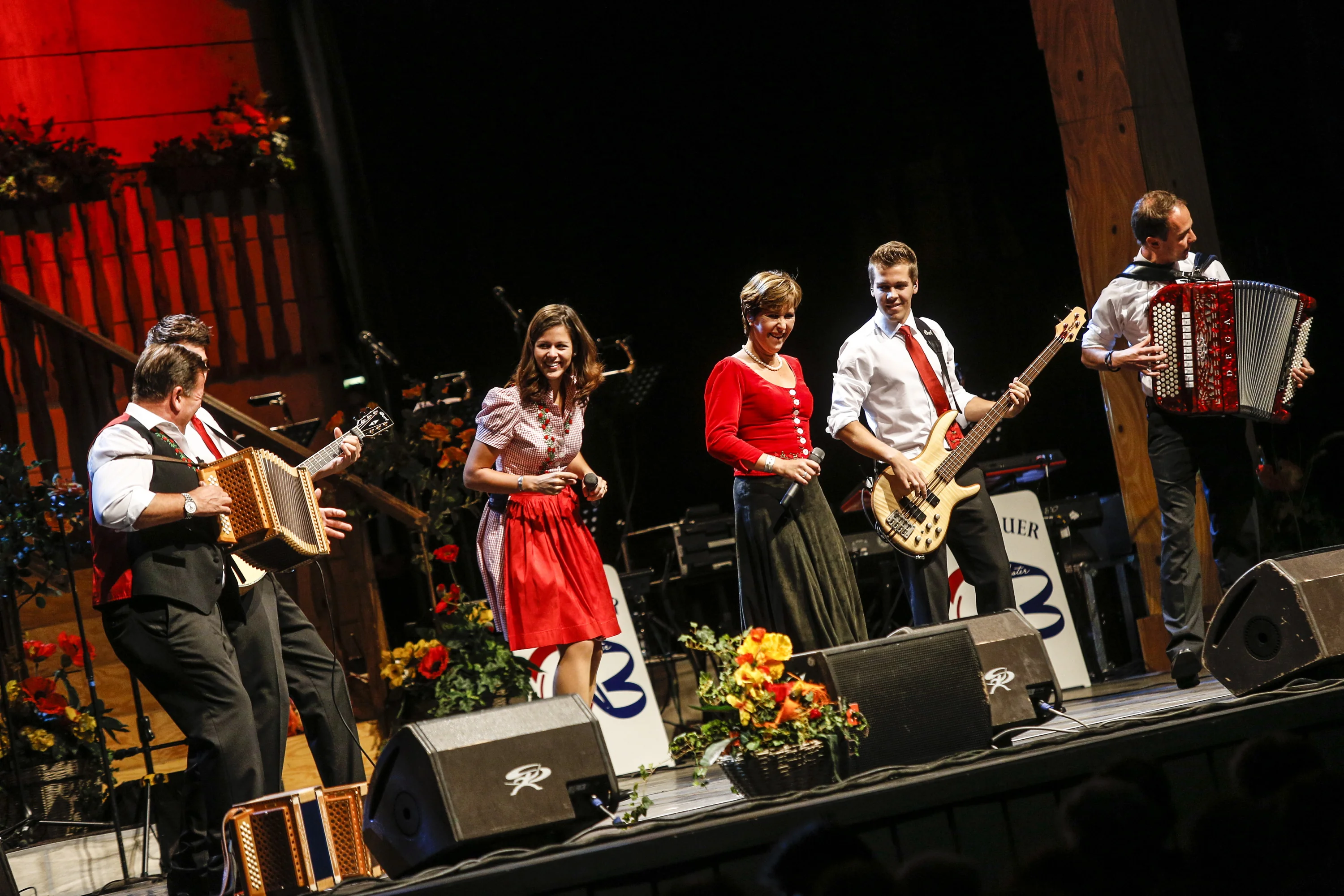
Image from Wikipedia
Image from Wikipedia
Oesch’s die Dritten – Swiss folk music with heart, groove, and international stage presence
A family band reimagining tradition and making folk music an event
Oesch’s die Dritten are among the most distinctive voices in Swiss folk music: a family band from Schwarzenegg in the Bernese Oberland, consisting of Hansueli and Annemarie Oesch, their children Melanie, Kevin, and Mike, and accordionist Urs Meier. Over more than two decades, a unique band sound has emerged from family collaboration, regional roots, and musical curiosity, seamlessly blending yodeling, schlager, folk, country, and popular elements. The group stands for handmade music, strong stage presence, and a career that reaches far beyond the borders of Switzerland. (de.wikipedia.org)
From musical family history to a solid brand in Alpine pop
The origin of Oesch’s die Dritten lies in a lived music tradition that was audible even before the band was officially formed. Hansueli Oesch has been on stage for decades and integrated the Schwyzerörgeli into the family history as naturally as singing and yodeling, while Annemarie Oesch comes from choral singing and accordion playing. Their children grew up in this atmosphere and were early integrated into the musical happenings. This is how a band identity emerged, based not on calculated pop design, but on experience, reliability, and intergenerational musicality. (oeschs-die-dritten.ch)
What is particularly striking is how Oesch’s die Dritten nurture tradition not as a museum piece, but as a living presence. The official band text describes their music as “handmade and unmistakable” and highlights their extensive concert practice: over 1,700 performances in 14 nations. This number not only represents diligence, but also routine at a high level, precise timing, well-rehearsed arrangements, and the ability to engage an audience from the very first note. Thus, a family project became one of the best-known folk music formations in the country. (universal-music.de)
The breakthrough: Musikantenstadl, charts, and the big TV stage
The decisive breakthrough in the German-speaking world came in 2007 with the talent competition in Musikantenstadl. Oesch’s die Dritten represented Switzerland, winning with 63.1 percent of the votes and capturing the hearts of a million-strong audience with the “Ku-Ku Yodel.” Shortly after, further TV appearances followed, including major folk music shows and open-air events, leading the band to be seen not just as a promising up-and-coming formation but as a reliable crowd-puller. The early media success provided the group with the necessary visibility for furthering their musical career. (pakt.ch)
With the third album “Jodelzauber,” they achieved the next strategically important step: Just three weeks later, the group entered the official Swiss charts and remained there for over twelve weeks. In the same year, they won the “Stadlstern 2007” and the small Prix Walo in the folk music category. These awards solidified Oesch’s die Dritten firmly within the canon of successful Swiss folk music and made their blend of authenticity, accessibility, and showmanship a recognizable brand. (pakt.ch)
Musical development: between yodeling, country, dialect, and international repertoire
The artistic development of Oesch’s die Dritten thrives on openness. The band not only operates within folk music but also integrates dialect, German, French, English, and Spanish into their repertoire. This linguistic and stylistic versatility enhances the arrangement work and gives their concerts a colorful, almost cosmopolitan character without abandoning their alpine identity. This embodies one of the group’s greatest strengths: they sound locally rooted while simultaneously surprisingly limitless. (universal-music.de)
The instrumentation also carries this signature. Schwyzerörgeli, accordion, bass, guitar, vocals, and yodeling together create a sound profile that does not simplify tradition but rather condenses it. Melanie Oesch, with her tongue-swing yodeling, has become a trademark of the formation, Kevin Oesch injects rhythmic energy on the guitar, Mike Oesch brings bass and technical precision, and Urs Meier enriches the ensemble with accordion texture and melodic depth. The result is a stage formation with clearly defined musical roles that, precisely because of this clarity, seem flexible. (oeschs-die-dritten.ch)
Discography, hits, and recent releases
The discography of Oesch’s die Dritten shows a continuous evolution from alpine tradition to a broader repertoire with high recognizability. Important releases include “Jodelzauber,” “Volksmusik ist international,” “Jodel-Time,” “Unser Regenbogen,” “Unsere 20 schönsten Jodler,” “Jodelzirkus,” “Das Beste von…,” “20 Jahre Jodelzirkus (Live),” “25 Jahre – Es Fescht,” “Die Reise geht weiter (Wäutebummler – Heimat im Gepäck),” and most recently “Händmade.” Central songs such as “Ich schenk’ Dir einen Jodler,” “Ku-Ku Jodel,” “Heimat,” “Jodel-Time,” and “Hey Melodie” also appear on Spotify as defining titles in the band’s history. (open.spotify.com)
What is particularly exciting is the current phase: in 2024, the single “E schöni Jass-Rundi” was released, followed by “HEIMAT” in late 2024, and the album “Händmade” in 2025. The official shop offerings clearly reference the new album, while the Spotify catalog lists “Händmade” as the current album. The band maintains a high production rhythm while remaining true to their artistic signature: music from everyday life, from home, and from direct contact with the audience. (shop.oeschs-die-dritten.ch)
Current projects, tours, and artistic presence
Oesch’s die Dritten remain highly active in the current concert scene. Official band documents for 2024 indicated, among other things, the “CHILBI im CLUB” series, a spring concert in Lyss, and performances in Schonach, Meransen, Thun, at the Eidgenössisches Trachtenfest, in Flumserberg, Zofingen, Höchenschwand, Schönried, and Corban. The band utilizes these formats to present new songs and classics within a vibrant live context, characterized by closeness, recognizability, and audience engagement. (oeschs-die-dritten.ch)
For 2026 and 2027, the next phase is already taking shape: The official website refers to the “MERCI Tour” for the 30th anniversary, while concert dates for the coming years are already online. This connects reflection with future planning and shows that their musical career is not frozen in nostalgia but is continuously propelled by ongoing stage work. This reliability makes Oesch’s die Dritten equally interesting for event organizers, fans, and music lovers. (oeschs-die-dritten.ch)
Critical reception, cultural influence, and audience success
The cultural significance of Oesch’s die Dritten lies in their ability to elevate folk music out of its pure traditional niche and present it as popular, intergenerational live music. Official and semi-official sources emphasize the large number of television appearances, sold-out concert finales, and strong resonance both domestically and abroad. The band has become a solid presence in the German-speaking world, because they view folk music not as a regression but as a contemporary, audience-oriented form of musicianship. (pakt.ch)
The reception of their recent releases also shows that Oesch’s die Dritten are consistently forging their own path. The new single “HEIMAT” was officially communicated as a digital release, while reports about “Händmade” focus on handmade music, the joy of live performance, and a warm, matured band sound. This is not a radical stylistic reinvention, but a matured form of artistic development that impresses with experience, precision, and stage routine. (oeschs-die-dritten.ch)
Voices of the fans
The closeness to the fan community is an integral part of the group’s identity. In a travel report from the official fan club, it states, “Our fan club Oesch's die Dritten is simply the best and unique!!” Such voices show that Oesch’s die Dritten not only attract concertgoers but have built a loyal community that actively accompanies tours, travels, and club formats. This connection of music, community, and identification is one of the strongest elements of their success. (oeschs-die-dritten.ch)
The band itself also frequently refers to the positive responses from their listeners, such as when new videos and songs on their official channels receive particularly enthusiastic feedback. This creates a direct, personal relationship between the artists and the audience, which remains especially valuable in folk music. The fan support not only confirms the emotional core of the music but also the high live quality of the formation. (oeschs-die-dritten.ch)
Oesch’s die Dritten combine a sense of home with professional stage work, generational music with high musical discipline, and folk tradition with contemporary presentation. This unique blend makes the group exciting, relevant, and enduringly adaptable. Those who experience them live do not just hear folk music but a rich family history in motion – captivating, direct, and full of heart. (universal-music.de)
Official channels of Oesch’s die Dritten:
- Instagram: No official profile found
- Facebook: No official profile found
- YouTube: https://www.youtube.com/@origoeschsdiedritten
- Spotify: https://open.spotify.com/artist/11ZDT1yZkvlXwv7RVqvUWe
- TikTok: No official profile found
Sources:
- Oesch’s die Dritten – Official Website
- Oesch’s die Dritten – Portraits
- Universal Music – Biography
- PAKT Entertainment AG – Artist Page
- Oesch’s die Dritten – Contact / Management
- Spotify – Oesch's die Dritten
- Oesch’s die Dritten – Highlights 2024 (PDF)
- Oesch’s die Dritten – The new single “HEIMAT” is here!
- Oesch’s die Dritten – Shop
- Wikipedia: Oesch’s die Dritten