
Oesch’s die Dritten
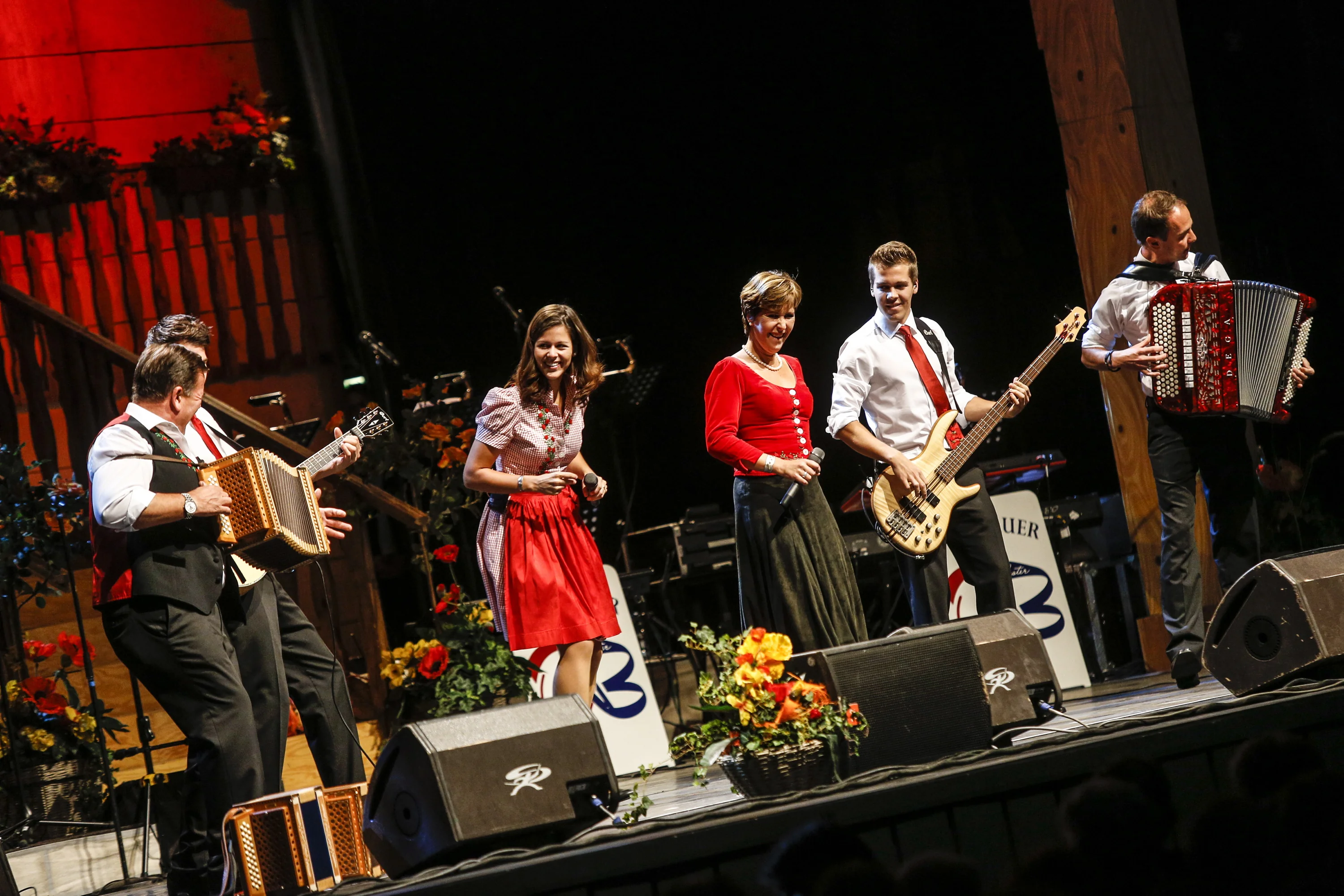
Image from Wikipedia
Image from Wikipedia
Oesch’s die Dritten: Swiss Folk Music with Heart, Precision, and Stage Magic
A Family Band that Makes Folk Music Shine Anew
Oesch’s die Dritten are among the most significant Swiss folk music formations of the present. The group originates from Schwarzenegg in the Bernese Oberland and brings together Hansueli and Annemarie Oesch with their children Melanie, Kevin, and Mike, as well as accordionist Urs Meier, creating an ensemble that uniquely blends tradition, live energy, and approachable pop appeal qualities. Since the late 1990s, a family music community has evolved into a successful stage brand whose sound resonates far beyond Switzerland. ([de.wikipedia.org](https://de.wikipedia.org/wiki/Oesch%E2%80%99s_die_Dritten?utm_source=openai))
From Family Idea to Successful Concept
The story of Oesch’s die Dritten begins in an environment where music is not an image but a lived daily life. The band's portraits clearly reveal how deeply musical socialization, family bonds, and practical stage routine interweave: Melanie was already on stage at the age of five and made yodeling with her tongue her trademark, Annemarie contributed her musical versatility alongside singing, and Hansueli shaped the characteristic Schwyzerörgeli sound as the core of the band's signature. This constellation continues to provide that blend of authenticity and professionalism necessary for good folk music. ([oeschs-die-dritten.ch](https://www.oeschs-die-dritten.ch/en/about-us/portraits/?utm_source=openai))
Urs Meier also seamlessly integrated into this aesthetic early on: He is not only a trained accordionist but also an accordion maker with his own workshop, adding additional handcrafted depth to the overall sound. The band thus focuses not on folkloristic claims but on genuine instrumental substance, precise arrangement, and the experiential values of decades of live practice. This closeness to craftsmanship makes Oesch’s die Dritten credible to a wide audience. ([oeschs-die-dritten.ch](https://www.oeschs-die-dritten.ch/en/about-us/portraits/))
The Breakthrough: Yodeling Magic and the Big Audience Moment
The crucial boost in popularity came in 2007 with a win at the Nachwuchswettbewerb of Musikantenstadl, where the group achieved a significant success with the "Ku-Ku-Jodel." Concurrently, the album Jodelzauber was released, which remained in the Swiss charts for months and later received double platinum status. This early phase already showcased how skillfully Oesch’s die Dritten translated traditional Swiss folk music into a mass-appealing yet down-to-earth and melodically direct sound. ([de.wikipedia.org](https://de.wikipedia.org/wiki/Oesch%E2%80%99s_die_Dritten))
The title "Ku-Ku-Jodel" was also awarded at Die grössten Schweizer Hits in the category "Heimat & Fernweh" and reached the Swiss singles charts. This is more than a competition success: it marks the moment when a folk music group transitioned from a niche audience to the national pop canon. Oesch’s die Dritten thus became a band that not only thrives in folk music contexts but is also firmly rooted in the broader media memory. ([de.wikipedia.org](https://de.wikipedia.org/wiki/Oesch%E2%80%99s_die_Dritten))
Career Development: Tours, Live Routine, and International Reach
In the following years, the formation developed into an extremely active live act. Universal Music reports more than 1700 performances in 14 nations, a figure that impressively demonstrates the group's endurance and international presence. Particularly, the tour Wäutebummler – Heimat im Gepäck illustrates how consistently Oesch’s die Dritten transform the theme of being on the move and returning home into a musical narrative. ([universal-music.de](https://www.universal-music.de/oeschs-die-dritten/biografie))
The band maintains a remarkable stage economy: familiar melodies, clear harmonies, skillful dynamics changes, and an unbridled joy of playing that the press has repeatedly highlighted. That concerts at Kursaal Bern and Auditorium Stravinski in Montreux quickly sold out underscores audience support as well as the planning security of a well-rehearsed family formation. Oesch’s die Dritten deliver folk music as an event, not as a museum. ([universal-music.de](https://www.universal-music.de/oeschs-die-dritten/biografie))
Discography: From Gold and Platinum to the Current Album
The discography shows an exceptionally stable success curve. Following Jodelzauber, other albums include Frech – Frisch – Jodlerisch, Volksmusik ist international, Jodel-Time, Wurzeln und Flügel, and Jodelzirkus; several of these releases received gold, some even platinum or double platinum. Later albums such as Die Reise geht weiter – Wäutebummler – Heimat im Gepäck and 25 Jahre – es Fescht continued the sequence of successful chart placements, confirming the sustained demand for the Oesch sound. ([de.wikipedia.org](https://de.wikipedia.org/wiki/Oesch%E2%80%99s_die_Dritten))
Especially noteworthy is how flexibly the group manages its production: Alongside studio albums, there are live compilations, best-of releases, and seasonal formats like Die stille Zeit ruft. The current album Händmade was released on January 24, 2025, and reached number 3 in Switzerland. The band also announces their album 25 Jahre Oesch’s die Dritten – Es Fescht along with bonus material from Sing meinen Song on their official website, indicating that the project remains creatively and media-present even during the anniversary phase. ([de.wikipedia.org](https://de.wikipedia.org/wiki/Oesch%E2%80%99s_die_Dritten))
Musical Development: Tradition, Pop Sensibility, and Multilingualism
The allure of Oesch’s die Dritten lies in the balance between folk music, pop sensitivity, yodeling art, and an open approach to pop aesthetics. On their biography page, Universal Music describes the sound as handmade, unmistakable, and diverse; the band navigates between dialect, German, French, English, and Spanish depending on the song. This multilingualism expands the reach of the repertoire while simultaneously rooting the group in a modern, culturally permeable Swiss identity. ([universal-music.de](https://www.universal-music.de/oeschs-die-dritten/biografie))
Musically, the formation thrives on clear role distributions: Schwyzerörgeli and accordion carry the folk musical foundation, while bass, guitar, vocals, and yodeling contribute to rhythmic and melodic density. Additionally, an understanding of arrangement focuses not on overload but on striking hooks, catchy refrains, and immediate live impact. The success of Oesch’s die Dritten lies precisely in this: their songs work equally well on stage, on the radio, and via streaming. ([de.wikipedia.org](https://de.wikipedia.org/wiki/Oesch%E2%80%99s_die_Dritten))
Current Projects and New Music
In 2024 and 2025, the group remained active. On their official news page, Oesch’s die Dritten announced the release of the new album 25 Jahre Oesch’s die Dritten – Es Fescht and referenced ten songs plus bonus material from Sing meinen Song. Furthermore, new single and video releases like Im Dorf and Blue Eyes crying in the Rain were prominently supported, highlighting the band's continued presence on digital platforms. ([oeschs-die-dritten.ch](https://www.oeschs-die-dritten.ch/en/news-en/))
Equally important for the present is the live focus: The website already lists numerous concerts for 2026 and 2027, including anniversary dates for the group's 30th birthday. This confirms that Oesch’s die Dritten are not merely a nostalgia band but an ongoing tour project with a clear perspective, stable fan base, and active concert logistics. ([oeschs-die-dritten.ch](https://www.oeschs-die-dritten.ch/en/?utm_source=openai))
Critical Reception, Awards, and Cultural Influence
In Switzerland, the band has been recognized not only commercially but also institutionally. In 2008, they received the Prix Walo in the category "Traditional Folk Music," and in 2016 the same award in the category "Schlager." These awards mark the journey from folk music with Bernese roots to a more broadly accepted popular culture with regional character and national radiance. ([de.wikipedia.org](https://de.wikipedia.org/wiki/Oesch%E2%80%99s_die_Dritten))
Culturally, Oesch’s die Dritten have sustainably shaped the image of modern Swiss folk music. They connect regional roots with openness, yodeling with songwriting, family history with professional stage work. It is precisely this blend that contributes to their impact: the band represents a musical heritage that is not preserved but vibrantly developed. ([universal-music.de](https://www.universal-music.de/oeschs-die-dritten/biografie))
Conclusion: Why Oesch’s die Dritten Remain So Exciting
Oesch’s die Dritten are an exceptional phenomenon in the German-speaking music landscape. The group combines family credibility, technical precision, chart-compatible melodies, and a direct connection to Swiss folk music. Anyone wishing to understand how traditional music remains relevant in the 21st century finds here a prime example of authenticity with contemporary relevance. A live experience with Oesch’s die Dritten is worthwhile precisely for this reason: this band does not just play songs; they transform feelings of home into concert energy. ([universal-music.de](https://www.universal-music.de/oeschs-die-dritten/biografie))
Voices of the Fans
The band’s official channels show high interaction around new songs, videos, and tour announcements. On the website, the group regularly asks for feedback on new releases, and video premieres explicitly invite comments and sharing. This speaks to an engaged fan community that visibly supports the blend of closeness, tradition, and live temperament. ([oeschs-die-dritten.ch](https://www.oeschs-die-dritten.ch/en/news-en/))
Official Channels of Oesch’s die Dritten:
- Instagram: https://www.instagram.com/oeschsdiedritten_official/
- Facebook: https://www.facebook.com/Oeschs-die-Dritten-Offizielle-Fanseite/105415419567760
- YouTube: https://www.youtube.com/channel/UCzatox-rFmyZSDTMWKeim9w
- Spotify: No official profile found
- TikTok: No official profile found