
Oliver Polak
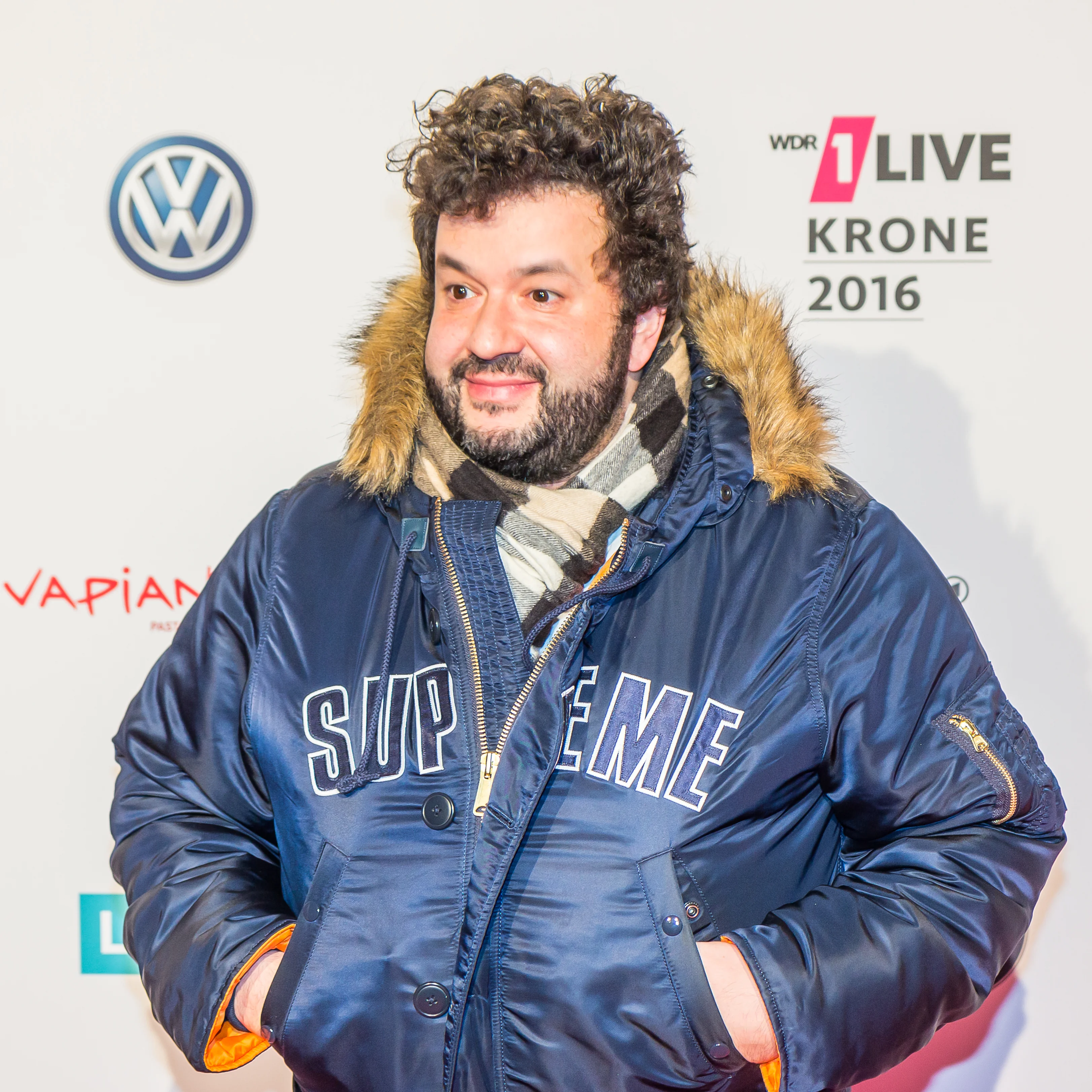
Image from Wikipedia
Image from Wikipedia
Oliver Polak – A Crossborderer between Comedy, Literature, Podcast, and Pop Culture
A German entertainer with sharp wit, literary depth, and unmistakable stage presence
Oliver Polak, born on May 14, 1976, in Papenburg, is one of the most distinctive voices in German entertainment culture. He is a comedian, author, podcaster, and television host, but far more than a classic comedy figure: Polak has established himself as a crossborderer between stand-up, essays, talk formats, music, and personal self-inquiry. His career combines Jewish family history, radical honesty, and a form of humor that continually generates friction and remains culturally relevant as a result. (de.wikipedia.org)
On his official website, Polak describes himself as an entertainer and a pioneer of straight American stand-up in Germany, as well as a bestselling author, columnist, TV host, podcaster, Grimme Prize laureate, and winner of the German Television Award. This self-positioning is not mere marketing jargon but a precise sketch of an artist who understands language, timing, and stage impact as crafts. His career shows how consistently a distinct artist biography can be shaped from personality culture, literary observation, and media versatility. (oliverpolak.de)
Biography: From Papenburg to Berlin – and to the Heart of Contemporary German Culture
Polak's journey begins in Papenburg, where he was born in 1976. The Jewish family history continues to shape his work to this day, as does the experience of living with identity, labels, and societal expectations. This biographical tension runs through his books, stage performances, and television appearances, giving his art a rare mix of self-irony, pain, and analytical sharpness. (de.wikipedia.org)
In 2003, Polak moved to Berlin, took acting lessons, and began stand-up comedy in 2006. His entry into the scene started on small stages, like the Scheinbar in Berlin-Schöneberg, during open-stage nights. It was there that the immediate stage language, for which he later became known, developed: direct, risky, confrontational, yet precisely composed. (de.wikipedia.org)
His early public debates revolved around Jewish identity, provocation, and the question of how far comedy can go. Newspapers and magazines repeatedly described him as an artist who consciously tests boundaries while transforming personal experience into public art. It became clear early on: Polak is not looking for comfortable applause but the productive friction between audience, zeitgeist, and his own biography. (home.1und1.de)
Career: Stand-up, Books, Television, and Podcasts as an Interconnected Work
His breakthrough did not come through a single format but through the sum of various media roles. As an author, Polak published the book Ich darf das – ich bin Jude in 2008 together with Jens Oliver Haas, followed by Der jüdische Patient, Gegen Judenhass, and L’amour numérique – Und täglich grüßt die Liebesgier. These books showcase him as an observer of societal contradictions, merging personal vulnerability with pointed language and a cultural-critical perspective. (de.wikipedia.org)
Meanwhile, he developed a clear stage profile with solo shows and tours. Among the titles listed in the Wikipedia documentation are Jud Süß Sauer – die Show, Ich darf das, ich bin Jude, Krankes Schwein Tour, Super Sad Tour, Über alles, and Der Endgegner. These titles not only mark milestones in his stand-up career but also show a stylistic development: from provocative self-positioning to a more mature, literarily charged stage language. (de.wikipedia.org)
On television, Polak became a distinctive figure straddling talk shows, satire, and experimental hosting. This was particularly evident in formats like Applaus und raus!, for which he received the Grimme Prize, as well as later in Besser als Krieg, Your Life Is a Joke on Netflix, and Gedankenpalast. His television work demonstrates a precise sense for dramaturgy, conversation management, and the rhythm of conflict and resolution. (de.wikipedia.org)
As a podcaster, Polak remains productive and present. His website references the podcasts Enter Sandman and Friendly Fire; in 2024, he introduced the format Schlagertalk, in which he spoke with protagonists of German Schlager. This interest in genre boundaries makes him intriguing: Polak approaches music not as a side topic but as a cultural resonance space for identity, memory, and entertainment. (oliverpolak.de)
Musical Projects: The Surprising Side of a Comedy Artist
Although Oliver Polak is primarily known as a comedian and author, he has also left musical footprints. In 2010, he released the song Lasst uns alle Juden sein together with Erobique, exemplifying how he combines language, provocation, and pop aesthetics into a single work. Later, he released Corona Forever, Forever Corona with Buback, which was described as both a club hit and a love ballad, revealing Polak's sensitivity to melody, mood, and ironically broken emotionality. (de.wikipedia.org)
The Buback release also documents how closely Polak's songwriting remains tied to narrative thinking. The context of its creation is told as a walk through pandemic Hamburg, from which bassline, chorus, and mood suddenly emerged. This interplay of observation, imagery, and musical condensation suits an artist who, even then, does not merely speak but always composes – in terms of rhythm, punchline, and atmospheric structure. (buback.de)
Current Projects 2024/2025: Presence across Literature, Stage, Podcast, and TV
Even in 2024 and 2025, Polak remains strikingly present. In 2024, he starred in the ARD miniseries Sexuell verfügbar as the video producer Heiko. Additionally, his podcast Schlagertalk aired on RTL+, and in December 2024 and January 2025, he again hosted the Roncalli Christmas Circus as the master of ceremonies. These milestones demonstrate remarkable agility between acting, audio format, and live performance. (de.wikipedia.org)
In 2025, Polak was also awarded a fellowship at the Thomas Mann House in Los Angeles. The combination of residency, cultural exchange, and artistic reflection aligns with his profile as an author and performer who connects American stand-up traditions with contemporary German language. His website also references live work, Netflix formats, and podcasts, emphasizing the complexity of his current phase. (de.wikipedia.org)
In 2026, Polak continues to appear in current media reports as an active touring artist and conversation partner, notably in connection with a club tour and performances in Los Angeles' legendary comedy clubs. Thus, he does not remain a nostalgic figure of his own success but an artist who continually recalibrates his stage presence. His career appears not concluded but in constant motion. (stadtmagazin-bremen.de)
Discography, Formats, and Reception: Between Hit, Book, and Award
Oliver Polak does not have a classic music career in the narrowest sense, but rather a discography in a broader cultural practical sense: songs, spoken-word releases, and multimedia formats. Documented musical works include the CD Jud Süß Sauer – die Show from 2010, the DVD Oliver Polak – Ich darf das, ich bin Jude from 2012, as well as song collaborations with Erobique. These releases showcase an artist who treats sound, voice, and timing as part of his overall aesthetic. (de.wikipedia.org)
The critical reception particularly acknowledges Polak's ability to transform personal experience into societal significance. The Grimme Prize for Applaus und raus! and the German Television Award mentioned on his website mark institutional recognition. At the same time, his work has always remained a topic of discussion as it breaks conventions, employs irony riskily, and deliberately challenges the audience out of their comfort zone. (de.wikipedia.org)
In interviews and reports, Polak's mix of melancholy, humor, and cultural intelligence is frequently noted. Especially in the combination of stand-up, literature, podcasting, and music emerges a profile that is rare in the German cultural landscape. He works not only with punchlines but with perspectives; not only with entertainment but with a personal and collective culture of memory. (deutschlandfunkkultur.de)
Style and Cultural Influence: Why Oliver Polak Remains Distinct
Polak's style thrives on directness, self-exposure, and controlled escalation. His art balances between humor and seriousness, between pop and politics, between entertainment and demands. This is exactly why his stage presence is so powerful: he does not merely play a role but shapes the material of his life into a form that is at once comedic, vulnerable, and analytical. (oliverpolak.de)
Culturally, Polak stands for a generation of entertainers who do not separate genres but understand media as an interconnected space. Book, podcast, TV, live stage, and occasionally music intertwine in his work. This versatility grants him authority far beyond the comedy scene and makes him a figure who not only comments on German pop culture but also helps shape it. (oliverpolak.de)
Conclusion: An Artist Who Does Not Avoid Boundaries, But Embraces Them Productively
Oliver Polak remains exciting because he does not pit identity, humor, pain, and pop culture against each other but brings them into an uncompromising form. His career demonstrates an artist who turns personal experience into universal questions and develops an attitude from entertainment. Those who experience him live do not see a smooth showman but a precisely working storyteller with risky energy and great stage intelligence. (oliverpolak.de)
Official Channels of Oliver Polak:
- Instagram: no official profile found
- Facebook: no official profile found
- YouTube: no official profile found
- Spotify: no official profile found
- TikTok: no official profile found
Sources:
- Oliver Polak – Allrounder Entertainer - Official Artist Website
- Buback Tonträger GmbH - Oliver Polak (with Erobique)
- Wikipedia - Oliver Polak
- DIE ZEIT - Oliver Polak: Welcome to the Mainstream
- DIE ZEIT - Oliver Polak: Diary of a Masturbator
- Deutschlandfunk Kultur - Oliver Polak between Comedy and Schlager
- RTL+ - Polak's Schlagertalk
- Rolling Stone - Friendly Fire is Back