
Thomas Bartel
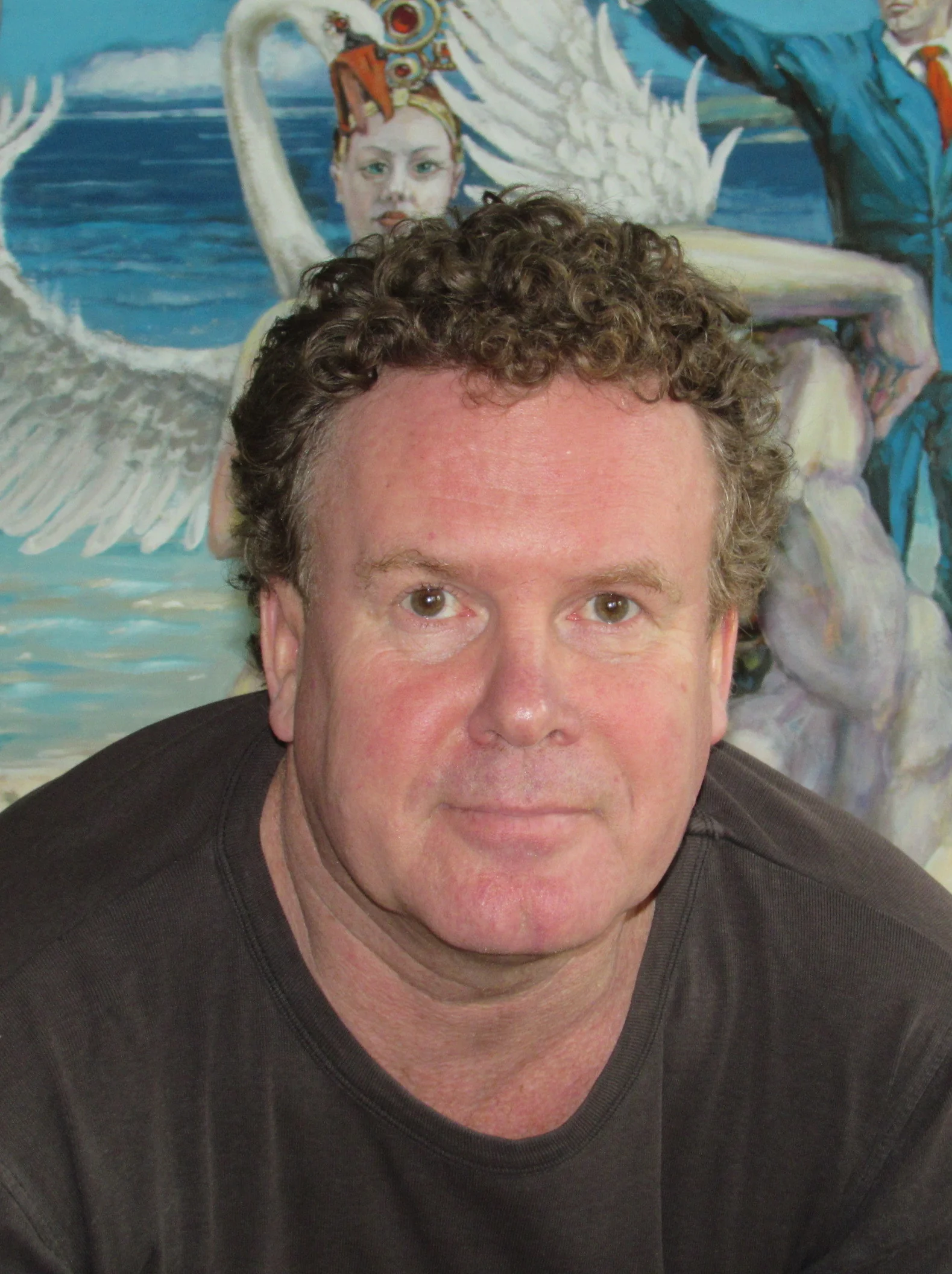
Image from Wikipedia
Image from Wikipedia
Thomas Bartel – Light, Space, and Image as Poetic Art Form
An Artist Between Painting, Light Art, and Public Space
Thomas Bartel, born on December 14, 1963 in Brandenburg an der Havel, is one of the defining visual artists of his hometown. His work combines painting, graphics, scenography, large dioramas, model making, and art in architecture to create a distinctive artistic language that not only shapes spaces but also infuses them with narrative depth. He began painting at an early age, grew up in Brandenburg an der Havel, and developed a visual world rooted in local history that intertwines history, materiality, and light. ([de.wikipedia.org](https://de.wikipedia.org/wiki/Thomas_Bartel))
What sets Bartel apart is his consistent expansion of the medium of image into space. His works do not appear merely as objects, but as performances that encapsulate perception, memory, and atmosphere. Thus, he has established himself as an artist far beyond classical painting, working with light, space, and didactic precision, transforming museums, churches, urban spaces, and exhibitions into visual experiential realms. ([thomasbartel.de](https://thomasbartel.de/?page_id=330))
Biography: From Brandenburg an der Havel to Artistic Independence
Thomas Bartel grew up in Brandenburg an der Havel and began painting during his school years. After completing general education, he initially trained as a bus driver and obtained his high school diploma at the evening school of the Volkshochschule Brandenburg during his apprenticeship. This biographical constellation gives his career a special grounding: it is not a predetermined artistic path, but a conscious and unconventional rise into art based on practical life experience. ([de.wikipedia.org](https://de.wikipedia.org/wiki/Thomas_Bartel))
In 1988, Bartel became a member of the so-called Tuesday Studio of Horst Wall at the Wredowsche Drawing School. There, he sharpened his eye for form, composition, and artistic discipline. He then studied art at the Berlin-Weißensee Art Academy but left before finishing his degree. This open path reflects an artistic attitude that incorporates institutional education while prioritizing personal expression over formal conventions. ([de.wikipedia.org](https://de.wikipedia.org/wiki/Thomas_Bartel))
Since the early 1990s, Bartel has developed an exhibition practice that spans from Berlin to Brandenburg, ranging from museums to public spaces. His first solo exhibition took place in 1991 in Berlin. In the following years, he steadily expanded his scope: light and sound installations, video performances, photography, and public art earned him awards and further solo exhibitions both domestically and internationally. This development showcases an artist who does not remain fixed on a single medium but continuously evolves his language of form. ([thomasbartel.de](https://thomasbartel.de/?page_id=330))
Career: Exhibition Practice, Museum Contexts, and Public Art
A central focus of Bartel's career lies in the connection between art and knowledge transfer. His works regularly appear in museum contexts, particularly at the Brandenburg State Archaeological Museum in the Paulikloster. It is here that his most famous work, the "Stratorama," a stratigraphic large diorama, is anchored. It depicts an excavation cross-section through various layers of earth and translates archaeological insights into an immediately experienceable image. ([landesmuseum-brandenburg.de](https://www.landesmuseum-brandenburg.de/das-museum/dauerausstellung/sammlung/))
The "Stratorama" measures 33 square meters, extends over a six-meter-high excavation cut, and reveals the sequence of layers from the present to the Ice Age. This is where Bartel's particular strength lies: he makes complex historical and scientific contexts sensorially tangible without oversimplifying them. His art employs depth perception, spatial layering, and the tension between documentation and imagination. ([landesmuseum-brandenburg.de](https://www.landesmuseum-brandenburg.de/das-museum/dauerausstellung/sammlung/))
Outside of the museum, Bartel also possesses a considerable presence. For the Dom Museum and the Brandenburg Cathedral, he created the light installation "Wald im Dom" in 2019, transforming the medieval vault into a luminous canopy of leaves. In 2018, he followed this with the light installation in the Katharinenkirche and the staging of the archaeological permanent exhibition "Alchemy and Everyday Life" in the Gothic House. His career is thus closely linked to places that not only preserve history but also make it artistically readable. ([thomasbartel.de](https://thomasbartel.de/?page_id=330))
Project Work: Art in Dialogue with City and Society
Thomas Bartel does not work in isolation in his studio but engages in cooperative projects with cultural and social dimensions. Together with Maria Roewer and Volker Hugo, he conceptualized and organized "Die Rosenhaager," a project at the Cultural Pavilion at Nicolaiplatz in Brandenburg an der Havel. The goal was to utilize the location artistically, culturally, and socially, fostering vibrant communication with the citizens of the city. This illustrates Bartel's understanding of art as public practice. ([stadt-brandenburg.de](https://www.stadt-brandenburg.de/veranstaltung/die-rosenhaager-im-kulturpavillon))
The project "Kulturklosett" with Stephanie Knitter also reflects this attitude. In 2021, Bartel and Knitter worked at the Museum Courtyard behind the Frey House on an unusual art action that brought together culture, everyday life, and societal attention for a medically-social theme. Such works demonstrate Bartel's ability to translate aesthetic means into concrete urban and societal contexts. ([moz.de](https://www.moz.de/lokales/brandenburg-havel/kulturdrang-kulturklosetts-fuer-die-weltkontinenzwoche-in-brandenburg-57178766.html?utm_source=openai))
Style and Artistic Development: Light as Material, Space as Narrative
Bartel's style is based on the intertwining of visual art and spatial dramaturgy. His website describes a spectrum ranging from painting and graphics to scenography and large dioramas, as well as light art and art in architecture. This range makes his work highly applicable: it straddles the boundaries between image, object, installation, and architectural staging. The artistic core remains consistently recognizable – the controlled composition of light, surface, and perception. ([thomasbartel.de](https://thomasbartel.de/))
In "Wald im Dom," this principle becomes particularly visible. The installation transforms the space not only aesthetically but also atmospherically and narratively. Light is not a decorative effect here, but a means of historical reenchantment. The exhibition allowed for a sensorial experience of the history of the cathedral forest, combining scientific information with aesthetic condensation. ([maz-online.de](https://www.maz-online.de/lokales/brandenburg-havel/wald-im-dom-blaetterdach-aus-licht-in-spannender-ausstellung-6OEAH4BTXOLJINVSQ4HONKRPBM.html))
Whether with "Alchemy and Everyday Life" or the didactic models developed by Bartel, his affinity for content-related, spatially-oriented formats is evident. His works combine artisanal precision with museum educational logic. In this sense, Bartel stands in a tradition of artists who understand design as a form of knowledge and link visual culture with educational mandates. ([thomasbartel.de](https://thomasbartel.de/))
Work and Reception: Recognition in the Art and Museum Sector
Bartel's work has received recognition through awards, exhibition participations, and recurring collaborations with museums and cultural institutions. His CV includes the AOK Art Prize 2017, as well as exhibitions in Schwerin, Neubrandenburg, and Teltow. Additionally, he has held solo exhibitions such as "Thus Spoke Zarathustra" at the Brandenburg State Archaeological Museum and numerous artistic presentations both domestically and abroad. ([thomasbartel.de](https://thomasbartel.de/?page_id=330))
The institutional relevance of his work is also demonstrated by the fact that the "Stratorama" is described as a museum pedagogically significant object. It is not just a work of art, but an educational tool that makes archaeological layers visible and structures the museum space in a unique way. This is exactly where Bartel's authority lies: he develops art that is aesthetically compelling while transmitting knowledge. ([de.wikipedia.org](https://de.wikipedia.org/wiki/Arch%C3%A4ologisches_Landesmuseum_Brandenburg_im_Paulikloster))
His studio on Havelstraße in Brandenburg an der Havel underscores his connection to the city, from which his motifs, projects, and collaborations continually emerge. This local attachment is not a narrow regionalism but a starting point for art that brings landscape, history, and present into a precise form. Bartel's work appeals to an audience that wants not only to see images but also to experience spaces. ([de.wikipedia.org](https://de.wikipedia.org/wiki/Thomas_Bartel))
Current Projects and Recent Activities
Among the recent relevant projects is his continued presence in the cultural life of Brandenburg, evident in open studios and urban art initiatives. The official studio page highlights current projects like "Wald im Dom," "Eselslichtkirche," light art, and other location-based works. The city of Brandenburg an der Havel also repeatedly acknowledges Bartel in its cultural formats as an active player in the local art scene. ([thomasbartel.de](https://thomasbartel.de/))
For the year 2025, he is also documented as participating in "Die Rosenhaager," a cooperative city project in the Cultural Pavilion. This continuity shows that Bartel's work does not linger in the past but continuously responds to new spaces, audiences, and societal contexts. His artistic development thus remains dynamic, applicable, and open to experimental formats. ([stadt-brandenburg.de](https://www.stadt-brandenburg.de/veranstaltung/die-rosenhaager-im-kulturpavillon))
Discography, Hits, and Charts: What Can Be Said About Thomas Bartel
As Thomas Bartel works as a visual artist, painter, and light artist, there is no musical discography in the strict sense. Likewise, there are no hit singles, album charts, or music press-related receptions that align with his artistic profile. For an SEO-friendly artist page, it is important to correctly name the actual structure of his works: installations, dioramas, exhibitions, light art, and public art. ([de.wikipedia.org](https://de.wikipedia.org/wiki/Thomas_Bartel))
This clarity enhances the credibility of the portrait. Thomas Bartel does not represent pop or music history, but a form of visual art that operates with a similar dramaturgy to a well-composed stage production: with rhythm, tension, lighting, and spatial staging. His cultural impact emerges not through charts but through places, images, and memories. ([thomasbartel.de](https://thomasbartel.de/))
Conclusion: Why Thomas Bartel Remains Intriguing
Thomas Bartel is an artist who combines material, light, and space into a dense, sensual artistic language. His career connects Brandenburg an der Havel with museum large projects, public art, and a clear stance on cultural mediation. Those who experience his works encounter not mere decorative additions, but a precise, narrative form of art that makes history visible and present tangible. ([thomasbartel.de](https://thomasbartel.de/?page_id=330))
Bartel remains intriguing because he combines local roots with conceptual openness. His art speaks to people who want not only to look but also to immerse themselves. Those who have the opportunity to experience an exhibition or light installation by Thomas Bartel live should take it: his works fully unfold their impact only in space, in light, and in direct viewing. ([thomasbartel.de](https://thomasbartel.de/))
Official Channels of Thomas Bartel:
- Instagram: https://www.instagram.com/bartel_thomas/
- Facebook: https://www.facebook.com/thbartel/
- YouTube: https://www.youtube.com/user/bartelthomas
- Spotify: No official profile found
- TikTok: No official profile found
Sources:
- Wikipedia – Thomas Bartel
- Studio Thomas Bartel – Official Website
- Studio Thomas Bartel – Biography
- Brandenburg State Archaeological Museum – Stratorama
- MAZ – Wald im Dom: Canopy of Leaves from Light in an Exciting Exhibition
- City of Brandenburg an der Havel – Die Rosenhaager at the Cultural Pavilion
- City of Brandenburg an der Havel – Press Release on the Cultural Pavilion
- Wredowsche Drawing School – Context for Artistic Education
- Wikipedia: Image and Text Source