
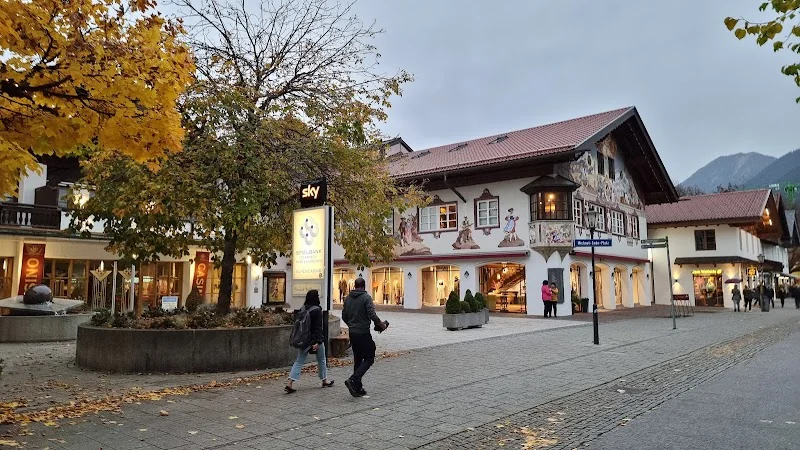
Garmisch-Partenkirchen
82467 Garmisch-Partenkirchen, Deutschland
Garmisch-Partenkirchen | Weather & Webcam
Garmisch-Partenkirchen is much more than a well-known name from the Alpine world: The market combines historical substance, vibrant local culture, modern cable cars, and an impressive location between Wetterstein, Zugspitze, and the Loisach Valley. Officially, the town is situated in the midst of a wide valley basin at the confluence of Loisach and Partnach, in a mountain backdrop that shapes everyday life as much as it does visits. According to official statistics as of December 31, 2024, the market has a total of 29,714 inhabitants, of which 28,471 have their primary residence, making it a developed yet very tourist-oriented place with a clear identity. For many visitors, Garmisch-Partenkirchen is a place of contrasts: a morning glance at the weather via webcam, a midday stroll through the old town, an afternoon trip to the mountains, or a walk through the pedestrian zone. It is precisely this mix that makes it appealing. Those who arrive here do not experience an anonymous holiday resort, but a grown market community whose history dates back to early settlement and the separation of Garmisch and Partenkirchen. The interplay of tradition, nature, and modern infrastructure is the reason why searches for weather, webcam, map, route, ski area, and bus line are so closely intertwined here. ([markt.gapa.de](https://markt.gapa.de/unser-markt/zahlen-fakten/zahlen-fakten/?utm_source=openai))
Weather, Webcams, and Live Images from Garmisch-Partenkirchen
Those planning to visit Garmisch-Partenkirchen often start with the weather. This is no coincidence, as the town is nestled between mountains, and conditions can vary quickly depending on altitude. The official tourism site offers three live cameras, located at the Olympic Ski Stadium, the Congress House, and the Town Hall. These cameras not only show panoramas but also provide a realistic impression of light, clouds, visibility, and mood in the town. Additionally, the site points out that the webcams of the Bavarian Zugspitzbahn provide current live images from the mountain if one wants to assess the situation in the Garmisch-Classic area or towards Zugspitze. This is particularly practical for day visitors, hikers, skiers, and families, as it allows them to gauge in advance whether a city stroll, a mountain excursion, or a ski day is the better idea. The combination of local webcams and mountain images is typical for Garmisch-Partenkirchen: Down in the valley, the town often appears friendly and lively, while the perspective can be quite different up top. Therefore, those searching for weather, webcam, and current information will find a place where this information truly has immediate value and is not just a buzzword. ([gapa-tourismus.de](https://www.gapa-tourismus.de/webcams?utm_source=openai))
The official local information also explains why weather and webcam are so important here. Garmisch-Partenkirchen is located in a valley basin with clear northern, eastern, and southern boundaries defined by mountains, making it geographically prominent. The market states a sea level of 708 meters at the Town Hall and also refers to its proximity to Munich and Innsbruck, which makes the town both alpine-close and easily accessible. For visitors, this means: The town is interesting year-round but can be experienced differently depending on the season. In summer, the webcams help in choosing between a walk, a mountain trip, and a visit to the gorge, while in winter they assist in assessing snow conditions, visibility, and snow reliability. Particularly useful is that the live images are taken at central points in the town, meaning exactly where public life, access to the mountains, and tourist everyday life intersect. Therefore, those checking Garmisch-Partenkirchen online not only receive a weather figure but also a sense of atmosphere, activity, and visibility in the town. This makes the search cluster around weather, webcam, and current information one of the strongest entry points for the entire destination. ([markt.gapa.de](https://markt.gapa.de/unser-markt/zahlen-fakten/zahlen-fakten/?utm_source=openai))
Experience the Old Town, Ludwigstraße, and Pedestrian Zone
The historical side of Garmisch-Partenkirchen is particularly evident in the developed town centers of Garmisch and Partenkirchen. Officially, both towns have been united as a market since January 1, 1935, but their different developmental paths are still noticeable today. In Garmisch, the old alleys, the historic church, and the characteristic houses with regional architecture invite a relaxed stroll. The tourism site describes, among other things, the Werdenfelser farmhouses with their richly decorated balconies, the small streets around Frühlingsstraße, as well as historical landmarks such as the Old Church and the Polznkasperhaus. In Partenkirchen, on the other hand, Ludwigstraße, with its facades, historic townscape, and strong craftsmanship and tavern culture, shapes the image. Additionally, the Werdenfelser Heimatmuseum, the Fraundorfer inn with its famous peasant wedding painting, and Haus Simon serve as further vibrant memorial sites. Therefore, those searching for old town are not looking for a compact pedestrian zone in the classical sense, but rather an ensemble of historically grown areas that together form the character of the place. This is precisely the strength of Garmisch-Partenkirchen: The old town is not a museum remnant but a walkable part of contemporary life. ([markt.gapa.de](https://markt.gapa.de/unser-markt/geschichte-von-garmisch-partenkirchen/garmisch-partenkirchens-geschichte/einleitung-zur-geschichte-von-garmisch-partenkirchen/?utm_source=openai))
The pedestrian zone in Garmisch primarily includes the area around Marienplatz, Bischofseck, and the adjacent streets, while in Partenkirchen, Ludwigstraße plays a significant role as the historic center. The community also clearly states that the weekly market in Garmisch takes place on Friday mornings in the pedestrian zone from the beginning at Marienplatz to Bischofseck, and in Partenkirchen on Thursday mornings in Ludwigstraße between Sonnenbergstraße and Badgasse. This is interesting for visitors, as it leads to very concrete visiting strategies: Those who want to experience regional products, cheese, vegetables, or specialties should consciously plan their stroll around market days. At the same time, the pedestrian zone shows how much Garmisch-Partenkirchen focuses on quality of stay. The market is working on the renovation of the town center, has legally defined the pedestrian zone, and connects it with central squares and promenades. In practice, this means: Shopping, gastronomy, walks, and historical architecture are in close proximity to each other. For users searching for pedestrian zone, old town, or map, this is the real answer: Garmisch-Partenkirchen is best discovered on foot, and only then does the town unfold its mix of village charm, market life, and alpine backdrop. ([markt.gapa.de](https://markt.gapa.de/unser-markt/freizeit/wochenmaerkte/?utm_source=openai))
Ski, Ski Area, and Ski Pass Prices in Garmisch-Classic
When search queries like ski, ski area, or ski pass prices arise, there is hardly a way around the Garmisch-Classic area in Garmisch-Partenkirchen. The official cable car site describes the area as a winter sports, hiking, and climbing region with the three mountains Alpspitze, Kreuzeck, and Hausberg. In winter, the slopes are distributed on the slopes of these three mountains; overall, the cable car lists 40 kilometers of slopes and four valley descents. Highlights include the Kandahar descent and the Ixis children's land for families. The cable cars are also seasonally adjusted: In summer, Alpspitzbahn and Kreuzeckbahn open up the area, while Hausbergbahn is only in operation in winter, according to the official site. Thus, the area is not just a ski area but a whole mountain playground with different access points, difficulty levels, and usage options. For guests staying just one day, this is important because ticket, cable car ride, and weather conditions can lead to a very concrete day planning. For longer stays, the combination of ClassicCard and ZugspitzCard plays a role. Garmisch-Classic is therefore an area that is much more than a list of lifts: It is the sports center of the destination and a core piece of many travel motives revolving around snow, views, and movement. ([zugspitze.de](https://zugspitze.de/de/Unsere-Bergwelten/Die-Gebiete/Garmisch-Classic?utm_source=openai))
The current prices underscore this diversity. For summer 2026, the tariff page applies from May 14, 2026; the Garmisch-Classic ticket costs 39.00 euros for adults, a single mountain or valley ride 24.00 euros, and the 2-summit pass 93.50 euros. The ticket includes one mountain and one valley ride and can be used with Alpspitzbahn or Kreuzeckbahn. For winter 2025/26, the official price overview lists a regular day ticket for adults at 67.00 euros and 69.00 euros in the main season. Additional options include 1.5-day tickets, twin tickets, and half-day variants. This is particularly relevant for the SEO logic around ski pass prices, as many users search for a quick price overview before deciding whether a day on the mountain is worthwhile. Furthermore, the tariff page shows that discounts for families and people with disabilities are clearly regulated and that online pre-sales for the twin ticket can offer advantages in the off-season. Those visiting Garmisch-Partenkirchen in winter should also keep an eye on the parking situation at the valley stations, as the official mountain worlds page mentions parking options at the Alpspitzbahn/Kreuzeckbahn and Hausbergbahn. This connects skiing, arrival, parking, and tickets into a single practical planning topic. ([zugspitze.de](https://zugspitze.de/de/Preise/Sommer/Garmisch-Classic-Tickets-Sommer))
Planning Arrival, Parking, and Bus Line 2 Correctly
For searches related to route, route planner, and map, the official local data from Garmisch-Partenkirchen is particularly helpful. The market states a location of 11°04' eastern longitude and 47°29' northern latitude, an area of 20,055 hectares, and direct transport connections to Munich and Innsbruck. According to the official site, the distance to Munich is 90 kilometers, and to Innsbruck, it is 55 kilometers. These facts are not only geographically interesting but also explain why the town works well for both day trips and longer stays. Those coming from Munich typically orient themselves towards the A95 towards Garmisch-Partenkirchen; those wanting to go from the town center to the cable cars or Partnachklamm benefit from the local buses. The official arrival information for Partnachklamm mentions lines 1/321 or 2/322 from the train station towards the ski stadium. This is particularly important for guests arriving without a car, as many attractions are very well accessible by public transport. Garmisch-Partenkirchen is therefore a place where maps and route planners become truly practical: Not only the center but also cable cars, ski stadium, and gorge can be meaningfully integrated into a day route. ([markt.gapa.de](https://markt.gapa.de/unser-markt/zahlen-fakten/zahlen-fakten/?utm_source=openai))
When it comes to parking, the community is very specific. At Marienplatz, a maximum parking duration of two hours applies, at Rathausplatz and Kongresshaus four hours each, and at Wittelsbacher Park up to twelve hours. For longer stays, the market mentions the ski stadium, Fürstenstraße, Saliterparkplatz Kreuzstraße with a maximum parking duration of 72 hours, and the parking garage Badgasse in Partenkirchen with weekly and monthly tickets. The official rates are clearly displayed: Marienplatz, Rathausplatz, and Kongresshaus cost 0.50 euros per 30 minutes, at Wittelsbacher Park, 12 hours are priced at 5.00 euros, and at the longer parking spaces, daily, two-day, and three-day rates apply. Monthly and annual parking tickets are also mentioned, but not for all locations. This is important for visitors as it leads to different strategies: Those who are just strolling through the pedestrian zone park centrally; those planning a mountain day are more likely to use the broader parking spaces at the valley stations; those staying longer think about the parking garage or monthly solution. Together with the bus lines, this creates a very flexible mobility offer that makes the town both car-friendly and accessible on foot and via public transport. This mix is a strong argument for content related to arrival, parking, and bus line 2. ([markt.gapa.de](https://markt.gapa.de/unser-markt/parkplaetze-in-garmisch-partenkirchen/))
History, Attractions, and Special Places
The historical depth of Garmisch-Partenkirchen is a central unique selling point. The market describes its history from the first traces of settlement through the Roman period to the unification of the two markets on January 1, 1935. Garmisch was first mentioned in documents in 802, and Partenkirchen around 1130; moreover, the trade route between Augsburg and the Adriatic metropolis of Venice passed through Partenkirchen, which economically shaped the town. In the history of the community, the Via Claudia plays as much of a role as the later development into a double town. These historical layers continue to shape the townscape today. Therefore, when walking through the streets, one sees not only beautiful facades but also the overlap of transport routes, religious history, trade, and Bavarian identity. Particularly noteworthy is that the community actively documents its historical development: with chronicles, town hall history, coats of arms, mayor history, and further contributions. This is not only information for visitors but also explains why Garmisch-Partenkirchen has remained authentic despite its tourist significance. The town lives from its historical core, not from an artificially created backdrop. ([markt.gapa.de](https://markt.gapa.de/unser-markt/geschichte-von-garmisch-partenkirchen/garmisch-partenkirchens-geschichte/einleitung-zur-geschichte-von-garmisch-partenkirchen/?utm_source=openai))
Among the most well-known natural and experiential sites is the Partnachklamm. The official tourism site explains that the gorge was formed millions of years ago by meltwater and debris from hard rock and has been protected as a natural monument since 1912. Today, safe paths lead through the gorge, and the name remains a magnet for day visitors, hikers, and families. Equally important is the cultural side: The Partenkirchen Farmers' Theater has existed for over 120 years and presents around 40 performances annually; the existing sets partly date back to the founding year of 1892. Additionally, the Werdenfelser Heimatmuseum in Ludwigstraße, with its historical living rooms, crafts, and regional costume culture, makes the connection between everyday life and history visible. Such places are important for search intentions like old town, tourism map, and current information, as they show that Garmisch-Partenkirchen is not just a mountain destination but a culturally rich travel destination. The tourism communication also emphasizes the region's guiding principle with the idea of discovering its own nature and alpine experience. Therefore, those who truly want to understand the place should not view nature, history, and culture separately, but as an interconnected experience. ([gapa-tourismus.de](https://gapa-tourismus.de/partnachklamm/de/Historie?utm_source=openai))
Inhabitants, Numbers, and Regional Orientation
The search query for inhabitants is not only statistical in Garmisch-Partenkirchen but also helpful for the classification of the place. With 29,714 inhabitants as of December 31, 2024, the market is large enough to support a complete infrastructure, cultural offerings, and tourist services, yet remains small enough to appear manageable and local. The market also provides detailed area information that shows how strongly the community area is characterized by forests, traffic areas, and residential space. For visitors, this means: The town is not a densely built center but an alpine market community with plenty of space, sightlines, and transitions between settlement, valley, and mountains. This fits with the classification in the Zugspitz region, where Garmisch-Partenkirchen is considered a prominent focal point. The regional perspective is important because many activities do not end at the town boundary: hikes, ski days, gorge visits, and excursions to Zugspitze interconnect. Therefore, when looking at the town's map, one quickly recognizes that nature and infrastructure are closely intertwined here. The population figure is not just a number in this context but an expression of a vibrant place that functions year-round and is also strongly defined by guests and seasonal demand. ([markt.gapa.de](https://markt.gapa.de/unser-markt/zahlen-fakten/zahlen-fakten/?utm_source=openai))
The regional backdrop also contributes to the special perception. The market describes Garmisch-Partenkirchen as a place in the midst of a valley basin between the Ammer Mountains, Ester Mountains, and Wetterstein Mountains, with Germany's highest mountain, Zugspitze, to the south. This location is crucial for orientation, weather, and leisure offerings alike. That the community maintains an official local plan, detailed parking overviews, webcam pages, cultural pages, and cable car pages also shows how closely administration and tourism are connected. For the visitor, this is an advantage: Many pieces of information are directly available on-site or through the official pages, from buses to ski passes, from parking lots to webcams. Garmisch-Partenkirchen is therefore suitable for short trips as well as longer stays. The town can be a ski area, old town, family destination, hiking base, and cultural site at the same time without losing its clarity. This versatility explains why the keyword combinations weather, webcam, old town, ski area, route, parking, and bus line 2 are so closely related in Garmisch-Partenkirchen. Those who plan well here experience one of the most well-known places in the Bavarian Alps in all its diversity. ([markt.gapa.de](https://markt.gapa.de/unser-markt/zahlen-fakten/zahlen-fakten/?utm_source=openai))
Sources:
- GaPa Tourism - Webcams & Live Images from Garmisch-Partenkirchen
- Market Garmisch-Partenkirchen - Numbers & Facts
- Market Garmisch-Partenkirchen - Introduction to History
- Market Garmisch-Partenkirchen - Parking in Garmisch-Partenkirchen
- Bavarian Zugspitzbahn - Ski Area Garmisch-Classic
- Bavarian Zugspitzbahn - Tickets & Rates Garmisch-Classic
- GaPa Tourism - Arrival & Parking Partnachklamm
Mehr anzeigenWeniger anzeigen
Garmisch-Partenkirchen | Weather & Webcam
Garmisch-Partenkirchen is much more than a well-known name from the Alpine world: The market combines historical substance, vibrant local culture, modern cable cars, and an impressive location between Wetterstein, Zugspitze, and the Loisach Valley. Officially, the town is situated in the midst of a wide valley basin at the confluence of Loisach and Partnach, in a mountain backdrop that shapes everyday life as much as it does visits. According to official statistics as of December 31, 2024, the market has a total of 29,714 inhabitants, of which 28,471 have their primary residence, making it a developed yet very tourist-oriented place with a clear identity. For many visitors, Garmisch-Partenkirchen is a place of contrasts: a morning glance at the weather via webcam, a midday stroll through the old town, an afternoon trip to the mountains, or a walk through the pedestrian zone. It is precisely this mix that makes it appealing. Those who arrive here do not experience an anonymous holiday resort, but a grown market community whose history dates back to early settlement and the separation of Garmisch and Partenkirchen. The interplay of tradition, nature, and modern infrastructure is the reason why searches for weather, webcam, map, route, ski area, and bus line are so closely intertwined here. ([markt.gapa.de](https://markt.gapa.de/unser-markt/zahlen-fakten/zahlen-fakten/?utm_source=openai))
Weather, Webcams, and Live Images from Garmisch-Partenkirchen
Those planning to visit Garmisch-Partenkirchen often start with the weather. This is no coincidence, as the town is nestled between mountains, and conditions can vary quickly depending on altitude. The official tourism site offers three live cameras, located at the Olympic Ski Stadium, the Congress House, and the Town Hall. These cameras not only show panoramas but also provide a realistic impression of light, clouds, visibility, and mood in the town. Additionally, the site points out that the webcams of the Bavarian Zugspitzbahn provide current live images from the mountain if one wants to assess the situation in the Garmisch-Classic area or towards Zugspitze. This is particularly practical for day visitors, hikers, skiers, and families, as it allows them to gauge in advance whether a city stroll, a mountain excursion, or a ski day is the better idea. The combination of local webcams and mountain images is typical for Garmisch-Partenkirchen: Down in the valley, the town often appears friendly and lively, while the perspective can be quite different up top. Therefore, those searching for weather, webcam, and current information will find a place where this information truly has immediate value and is not just a buzzword. ([gapa-tourismus.de](https://www.gapa-tourismus.de/webcams?utm_source=openai))
The official local information also explains why weather and webcam are so important here. Garmisch-Partenkirchen is located in a valley basin with clear northern, eastern, and southern boundaries defined by mountains, making it geographically prominent. The market states a sea level of 708 meters at the Town Hall and also refers to its proximity to Munich and Innsbruck, which makes the town both alpine-close and easily accessible. For visitors, this means: The town is interesting year-round but can be experienced differently depending on the season. In summer, the webcams help in choosing between a walk, a mountain trip, and a visit to the gorge, while in winter they assist in assessing snow conditions, visibility, and snow reliability. Particularly useful is that the live images are taken at central points in the town, meaning exactly where public life, access to the mountains, and tourist everyday life intersect. Therefore, those checking Garmisch-Partenkirchen online not only receive a weather figure but also a sense of atmosphere, activity, and visibility in the town. This makes the search cluster around weather, webcam, and current information one of the strongest entry points for the entire destination. ([markt.gapa.de](https://markt.gapa.de/unser-markt/zahlen-fakten/zahlen-fakten/?utm_source=openai))
Experience the Old Town, Ludwigstraße, and Pedestrian Zone
The historical side of Garmisch-Partenkirchen is particularly evident in the developed town centers of Garmisch and Partenkirchen. Officially, both towns have been united as a market since January 1, 1935, but their different developmental paths are still noticeable today. In Garmisch, the old alleys, the historic church, and the characteristic houses with regional architecture invite a relaxed stroll. The tourism site describes, among other things, the Werdenfelser farmhouses with their richly decorated balconies, the small streets around Frühlingsstraße, as well as historical landmarks such as the Old Church and the Polznkasperhaus. In Partenkirchen, on the other hand, Ludwigstraße, with its facades, historic townscape, and strong craftsmanship and tavern culture, shapes the image. Additionally, the Werdenfelser Heimatmuseum, the Fraundorfer inn with its famous peasant wedding painting, and Haus Simon serve as further vibrant memorial sites. Therefore, those searching for old town are not looking for a compact pedestrian zone in the classical sense, but rather an ensemble of historically grown areas that together form the character of the place. This is precisely the strength of Garmisch-Partenkirchen: The old town is not a museum remnant but a walkable part of contemporary life. ([markt.gapa.de](https://markt.gapa.de/unser-markt/geschichte-von-garmisch-partenkirchen/garmisch-partenkirchens-geschichte/einleitung-zur-geschichte-von-garmisch-partenkirchen/?utm_source=openai))
The pedestrian zone in Garmisch primarily includes the area around Marienplatz, Bischofseck, and the adjacent streets, while in Partenkirchen, Ludwigstraße plays a significant role as the historic center. The community also clearly states that the weekly market in Garmisch takes place on Friday mornings in the pedestrian zone from the beginning at Marienplatz to Bischofseck, and in Partenkirchen on Thursday mornings in Ludwigstraße between Sonnenbergstraße and Badgasse. This is interesting for visitors, as it leads to very concrete visiting strategies: Those who want to experience regional products, cheese, vegetables, or specialties should consciously plan their stroll around market days. At the same time, the pedestrian zone shows how much Garmisch-Partenkirchen focuses on quality of stay. The market is working on the renovation of the town center, has legally defined the pedestrian zone, and connects it with central squares and promenades. In practice, this means: Shopping, gastronomy, walks, and historical architecture are in close proximity to each other. For users searching for pedestrian zone, old town, or map, this is the real answer: Garmisch-Partenkirchen is best discovered on foot, and only then does the town unfold its mix of village charm, market life, and alpine backdrop. ([markt.gapa.de](https://markt.gapa.de/unser-markt/freizeit/wochenmaerkte/?utm_source=openai))
Ski, Ski Area, and Ski Pass Prices in Garmisch-Classic
When search queries like ski, ski area, or ski pass prices arise, there is hardly a way around the Garmisch-Classic area in Garmisch-Partenkirchen. The official cable car site describes the area as a winter sports, hiking, and climbing region with the three mountains Alpspitze, Kreuzeck, and Hausberg. In winter, the slopes are distributed on the slopes of these three mountains; overall, the cable car lists 40 kilometers of slopes and four valley descents. Highlights include the Kandahar descent and the Ixis children's land for families. The cable cars are also seasonally adjusted: In summer, Alpspitzbahn and Kreuzeckbahn open up the area, while Hausbergbahn is only in operation in winter, according to the official site. Thus, the area is not just a ski area but a whole mountain playground with different access points, difficulty levels, and usage options. For guests staying just one day, this is important because ticket, cable car ride, and weather conditions can lead to a very concrete day planning. For longer stays, the combination of ClassicCard and ZugspitzCard plays a role. Garmisch-Classic is therefore an area that is much more than a list of lifts: It is the sports center of the destination and a core piece of many travel motives revolving around snow, views, and movement. ([zugspitze.de](https://zugspitze.de/de/Unsere-Bergwelten/Die-Gebiete/Garmisch-Classic?utm_source=openai))
The current prices underscore this diversity. For summer 2026, the tariff page applies from May 14, 2026; the Garmisch-Classic ticket costs 39.00 euros for adults, a single mountain or valley ride 24.00 euros, and the 2-summit pass 93.50 euros. The ticket includes one mountain and one valley ride and can be used with Alpspitzbahn or Kreuzeckbahn. For winter 2025/26, the official price overview lists a regular day ticket for adults at 67.00 euros and 69.00 euros in the main season. Additional options include 1.5-day tickets, twin tickets, and half-day variants. This is particularly relevant for the SEO logic around ski pass prices, as many users search for a quick price overview before deciding whether a day on the mountain is worthwhile. Furthermore, the tariff page shows that discounts for families and people with disabilities are clearly regulated and that online pre-sales for the twin ticket can offer advantages in the off-season. Those visiting Garmisch-Partenkirchen in winter should also keep an eye on the parking situation at the valley stations, as the official mountain worlds page mentions parking options at the Alpspitzbahn/Kreuzeckbahn and Hausbergbahn. This connects skiing, arrival, parking, and tickets into a single practical planning topic. ([zugspitze.de](https://zugspitze.de/de/Preise/Sommer/Garmisch-Classic-Tickets-Sommer))
Planning Arrival, Parking, and Bus Line 2 Correctly
For searches related to route, route planner, and map, the official local data from Garmisch-Partenkirchen is particularly helpful. The market states a location of 11°04' eastern longitude and 47°29' northern latitude, an area of 20,055 hectares, and direct transport connections to Munich and Innsbruck. According to the official site, the distance to Munich is 90 kilometers, and to Innsbruck, it is 55 kilometers. These facts are not only geographically interesting but also explain why the town works well for both day trips and longer stays. Those coming from Munich typically orient themselves towards the A95 towards Garmisch-Partenkirchen; those wanting to go from the town center to the cable cars or Partnachklamm benefit from the local buses. The official arrival information for Partnachklamm mentions lines 1/321 or 2/322 from the train station towards the ski stadium. This is particularly important for guests arriving without a car, as many attractions are very well accessible by public transport. Garmisch-Partenkirchen is therefore a place where maps and route planners become truly practical: Not only the center but also cable cars, ski stadium, and gorge can be meaningfully integrated into a day route. ([markt.gapa.de](https://markt.gapa.de/unser-markt/zahlen-fakten/zahlen-fakten/?utm_source=openai))
When it comes to parking, the community is very specific. At Marienplatz, a maximum parking duration of two hours applies, at Rathausplatz and Kongresshaus four hours each, and at Wittelsbacher Park up to twelve hours. For longer stays, the market mentions the ski stadium, Fürstenstraße, Saliterparkplatz Kreuzstraße with a maximum parking duration of 72 hours, and the parking garage Badgasse in Partenkirchen with weekly and monthly tickets. The official rates are clearly displayed: Marienplatz, Rathausplatz, and Kongresshaus cost 0.50 euros per 30 minutes, at Wittelsbacher Park, 12 hours are priced at 5.00 euros, and at the longer parking spaces, daily, two-day, and three-day rates apply. Monthly and annual parking tickets are also mentioned, but not for all locations. This is important for visitors as it leads to different strategies: Those who are just strolling through the pedestrian zone park centrally; those planning a mountain day are more likely to use the broader parking spaces at the valley stations; those staying longer think about the parking garage or monthly solution. Together with the bus lines, this creates a very flexible mobility offer that makes the town both car-friendly and accessible on foot and via public transport. This mix is a strong argument for content related to arrival, parking, and bus line 2. ([markt.gapa.de](https://markt.gapa.de/unser-markt/parkplaetze-in-garmisch-partenkirchen/))
History, Attractions, and Special Places
The historical depth of Garmisch-Partenkirchen is a central unique selling point. The market describes its history from the first traces of settlement through the Roman period to the unification of the two markets on January 1, 1935. Garmisch was first mentioned in documents in 802, and Partenkirchen around 1130; moreover, the trade route between Augsburg and the Adriatic metropolis of Venice passed through Partenkirchen, which economically shaped the town. In the history of the community, the Via Claudia plays as much of a role as the later development into a double town. These historical layers continue to shape the townscape today. Therefore, when walking through the streets, one sees not only beautiful facades but also the overlap of transport routes, religious history, trade, and Bavarian identity. Particularly noteworthy is that the community actively documents its historical development: with chronicles, town hall history, coats of arms, mayor history, and further contributions. This is not only information for visitors but also explains why Garmisch-Partenkirchen has remained authentic despite its tourist significance. The town lives from its historical core, not from an artificially created backdrop. ([markt.gapa.de](https://markt.gapa.de/unser-markt/geschichte-von-garmisch-partenkirchen/garmisch-partenkirchens-geschichte/einleitung-zur-geschichte-von-garmisch-partenkirchen/?utm_source=openai))
Among the most well-known natural and experiential sites is the Partnachklamm. The official tourism site explains that the gorge was formed millions of years ago by meltwater and debris from hard rock and has been protected as a natural monument since 1912. Today, safe paths lead through the gorge, and the name remains a magnet for day visitors, hikers, and families. Equally important is the cultural side: The Partenkirchen Farmers' Theater has existed for over 120 years and presents around 40 performances annually; the existing sets partly date back to the founding year of 1892. Additionally, the Werdenfelser Heimatmuseum in Ludwigstraße, with its historical living rooms, crafts, and regional costume culture, makes the connection between everyday life and history visible. Such places are important for search intentions like old town, tourism map, and current information, as they show that Garmisch-Partenkirchen is not just a mountain destination but a culturally rich travel destination. The tourism communication also emphasizes the region's guiding principle with the idea of discovering its own nature and alpine experience. Therefore, those who truly want to understand the place should not view nature, history, and culture separately, but as an interconnected experience. ([gapa-tourismus.de](https://gapa-tourismus.de/partnachklamm/de/Historie?utm_source=openai))
Inhabitants, Numbers, and Regional Orientation
The search query for inhabitants is not only statistical in Garmisch-Partenkirchen but also helpful for the classification of the place. With 29,714 inhabitants as of December 31, 2024, the market is large enough to support a complete infrastructure, cultural offerings, and tourist services, yet remains small enough to appear manageable and local. The market also provides detailed area information that shows how strongly the community area is characterized by forests, traffic areas, and residential space. For visitors, this means: The town is not a densely built center but an alpine market community with plenty of space, sightlines, and transitions between settlement, valley, and mountains. This fits with the classification in the Zugspitz region, where Garmisch-Partenkirchen is considered a prominent focal point. The regional perspective is important because many activities do not end at the town boundary: hikes, ski days, gorge visits, and excursions to Zugspitze interconnect. Therefore, when looking at the town's map, one quickly recognizes that nature and infrastructure are closely intertwined here. The population figure is not just a number in this context but an expression of a vibrant place that functions year-round and is also strongly defined by guests and seasonal demand. ([markt.gapa.de](https://markt.gapa.de/unser-markt/zahlen-fakten/zahlen-fakten/?utm_source=openai))
The regional backdrop also contributes to the special perception. The market describes Garmisch-Partenkirchen as a place in the midst of a valley basin between the Ammer Mountains, Ester Mountains, and Wetterstein Mountains, with Germany's highest mountain, Zugspitze, to the south. This location is crucial for orientation, weather, and leisure offerings alike. That the community maintains an official local plan, detailed parking overviews, webcam pages, cultural pages, and cable car pages also shows how closely administration and tourism are connected. For the visitor, this is an advantage: Many pieces of information are directly available on-site or through the official pages, from buses to ski passes, from parking lots to webcams. Garmisch-Partenkirchen is therefore suitable for short trips as well as longer stays. The town can be a ski area, old town, family destination, hiking base, and cultural site at the same time without losing its clarity. This versatility explains why the keyword combinations weather, webcam, old town, ski area, route, parking, and bus line 2 are so closely related in Garmisch-Partenkirchen. Those who plan well here experience one of the most well-known places in the Bavarian Alps in all its diversity. ([markt.gapa.de](https://markt.gapa.de/unser-markt/zahlen-fakten/zahlen-fakten/?utm_source=openai))
Sources:
- GaPa Tourism - Webcams & Live Images from Garmisch-Partenkirchen
- Market Garmisch-Partenkirchen - Numbers & Facts
- Market Garmisch-Partenkirchen - Introduction to History
- Market Garmisch-Partenkirchen - Parking in Garmisch-Partenkirchen
- Bavarian Zugspitzbahn - Ski Area Garmisch-Classic
- Bavarian Zugspitzbahn - Tickets & Rates Garmisch-Classic
- GaPa Tourism - Arrival & Parking Partnachklamm
Garmisch-Partenkirchen | Weather & Webcam
Garmisch-Partenkirchen is much more than a well-known name from the Alpine world: The market combines historical substance, vibrant local culture, modern cable cars, and an impressive location between Wetterstein, Zugspitze, and the Loisach Valley. Officially, the town is situated in the midst of a wide valley basin at the confluence of Loisach and Partnach, in a mountain backdrop that shapes everyday life as much as it does visits. According to official statistics as of December 31, 2024, the market has a total of 29,714 inhabitants, of which 28,471 have their primary residence, making it a developed yet very tourist-oriented place with a clear identity. For many visitors, Garmisch-Partenkirchen is a place of contrasts: a morning glance at the weather via webcam, a midday stroll through the old town, an afternoon trip to the mountains, or a walk through the pedestrian zone. It is precisely this mix that makes it appealing. Those who arrive here do not experience an anonymous holiday resort, but a grown market community whose history dates back to early settlement and the separation of Garmisch and Partenkirchen. The interplay of tradition, nature, and modern infrastructure is the reason why searches for weather, webcam, map, route, ski area, and bus line are so closely intertwined here. ([markt.gapa.de](https://markt.gapa.de/unser-markt/zahlen-fakten/zahlen-fakten/?utm_source=openai))
Weather, Webcams, and Live Images from Garmisch-Partenkirchen
Those planning to visit Garmisch-Partenkirchen often start with the weather. This is no coincidence, as the town is nestled between mountains, and conditions can vary quickly depending on altitude. The official tourism site offers three live cameras, located at the Olympic Ski Stadium, the Congress House, and the Town Hall. These cameras not only show panoramas but also provide a realistic impression of light, clouds, visibility, and mood in the town. Additionally, the site points out that the webcams of the Bavarian Zugspitzbahn provide current live images from the mountain if one wants to assess the situation in the Garmisch-Classic area or towards Zugspitze. This is particularly practical for day visitors, hikers, skiers, and families, as it allows them to gauge in advance whether a city stroll, a mountain excursion, or a ski day is the better idea. The combination of local webcams and mountain images is typical for Garmisch-Partenkirchen: Down in the valley, the town often appears friendly and lively, while the perspective can be quite different up top. Therefore, those searching for weather, webcam, and current information will find a place where this information truly has immediate value and is not just a buzzword. ([gapa-tourismus.de](https://www.gapa-tourismus.de/webcams?utm_source=openai))
The official local information also explains why weather and webcam are so important here. Garmisch-Partenkirchen is located in a valley basin with clear northern, eastern, and southern boundaries defined by mountains, making it geographically prominent. The market states a sea level of 708 meters at the Town Hall and also refers to its proximity to Munich and Innsbruck, which makes the town both alpine-close and easily accessible. For visitors, this means: The town is interesting year-round but can be experienced differently depending on the season. In summer, the webcams help in choosing between a walk, a mountain trip, and a visit to the gorge, while in winter they assist in assessing snow conditions, visibility, and snow reliability. Particularly useful is that the live images are taken at central points in the town, meaning exactly where public life, access to the mountains, and tourist everyday life intersect. Therefore, those checking Garmisch-Partenkirchen online not only receive a weather figure but also a sense of atmosphere, activity, and visibility in the town. This makes the search cluster around weather, webcam, and current information one of the strongest entry points for the entire destination. ([markt.gapa.de](https://markt.gapa.de/unser-markt/zahlen-fakten/zahlen-fakten/?utm_source=openai))
Experience the Old Town, Ludwigstraße, and Pedestrian Zone
The historical side of Garmisch-Partenkirchen is particularly evident in the developed town centers of Garmisch and Partenkirchen. Officially, both towns have been united as a market since January 1, 1935, but their different developmental paths are still noticeable today. In Garmisch, the old alleys, the historic church, and the characteristic houses with regional architecture invite a relaxed stroll. The tourism site describes, among other things, the Werdenfelser farmhouses with their richly decorated balconies, the small streets around Frühlingsstraße, as well as historical landmarks such as the Old Church and the Polznkasperhaus. In Partenkirchen, on the other hand, Ludwigstraße, with its facades, historic townscape, and strong craftsmanship and tavern culture, shapes the image. Additionally, the Werdenfelser Heimatmuseum, the Fraundorfer inn with its famous peasant wedding painting, and Haus Simon serve as further vibrant memorial sites. Therefore, those searching for old town are not looking for a compact pedestrian zone in the classical sense, but rather an ensemble of historically grown areas that together form the character of the place. This is precisely the strength of Garmisch-Partenkirchen: The old town is not a museum remnant but a walkable part of contemporary life. ([markt.gapa.de](https://markt.gapa.de/unser-markt/geschichte-von-garmisch-partenkirchen/garmisch-partenkirchens-geschichte/einleitung-zur-geschichte-von-garmisch-partenkirchen/?utm_source=openai))
The pedestrian zone in Garmisch primarily includes the area around Marienplatz, Bischofseck, and the adjacent streets, while in Partenkirchen, Ludwigstraße plays a significant role as the historic center. The community also clearly states that the weekly market in Garmisch takes place on Friday mornings in the pedestrian zone from the beginning at Marienplatz to Bischofseck, and in Partenkirchen on Thursday mornings in Ludwigstraße between Sonnenbergstraße and Badgasse. This is interesting for visitors, as it leads to very concrete visiting strategies: Those who want to experience regional products, cheese, vegetables, or specialties should consciously plan their stroll around market days. At the same time, the pedestrian zone shows how much Garmisch-Partenkirchen focuses on quality of stay. The market is working on the renovation of the town center, has legally defined the pedestrian zone, and connects it with central squares and promenades. In practice, this means: Shopping, gastronomy, walks, and historical architecture are in close proximity to each other. For users searching for pedestrian zone, old town, or map, this is the real answer: Garmisch-Partenkirchen is best discovered on foot, and only then does the town unfold its mix of village charm, market life, and alpine backdrop. ([markt.gapa.de](https://markt.gapa.de/unser-markt/freizeit/wochenmaerkte/?utm_source=openai))
Ski, Ski Area, and Ski Pass Prices in Garmisch-Classic
When search queries like ski, ski area, or ski pass prices arise, there is hardly a way around the Garmisch-Classic area in Garmisch-Partenkirchen. The official cable car site describes the area as a winter sports, hiking, and climbing region with the three mountains Alpspitze, Kreuzeck, and Hausberg. In winter, the slopes are distributed on the slopes of these three mountains; overall, the cable car lists 40 kilometers of slopes and four valley descents. Highlights include the Kandahar descent and the Ixis children's land for families. The cable cars are also seasonally adjusted: In summer, Alpspitzbahn and Kreuzeckbahn open up the area, while Hausbergbahn is only in operation in winter, according to the official site. Thus, the area is not just a ski area but a whole mountain playground with different access points, difficulty levels, and usage options. For guests staying just one day, this is important because ticket, cable car ride, and weather conditions can lead to a very concrete day planning. For longer stays, the combination of ClassicCard and ZugspitzCard plays a role. Garmisch-Classic is therefore an area that is much more than a list of lifts: It is the sports center of the destination and a core piece of many travel motives revolving around snow, views, and movement. ([zugspitze.de](https://zugspitze.de/de/Unsere-Bergwelten/Die-Gebiete/Garmisch-Classic?utm_source=openai))
The current prices underscore this diversity. For summer 2026, the tariff page applies from May 14, 2026; the Garmisch-Classic ticket costs 39.00 euros for adults, a single mountain or valley ride 24.00 euros, and the 2-summit pass 93.50 euros. The ticket includes one mountain and one valley ride and can be used with Alpspitzbahn or Kreuzeckbahn. For winter 2025/26, the official price overview lists a regular day ticket for adults at 67.00 euros and 69.00 euros in the main season. Additional options include 1.5-day tickets, twin tickets, and half-day variants. This is particularly relevant for the SEO logic around ski pass prices, as many users search for a quick price overview before deciding whether a day on the mountain is worthwhile. Furthermore, the tariff page shows that discounts for families and people with disabilities are clearly regulated and that online pre-sales for the twin ticket can offer advantages in the off-season. Those visiting Garmisch-Partenkirchen in winter should also keep an eye on the parking situation at the valley stations, as the official mountain worlds page mentions parking options at the Alpspitzbahn/Kreuzeckbahn and Hausbergbahn. This connects skiing, arrival, parking, and tickets into a single practical planning topic. ([zugspitze.de](https://zugspitze.de/de/Preise/Sommer/Garmisch-Classic-Tickets-Sommer))
Planning Arrival, Parking, and Bus Line 2 Correctly
For searches related to route, route planner, and map, the official local data from Garmisch-Partenkirchen is particularly helpful. The market states a location of 11°04' eastern longitude and 47°29' northern latitude, an area of 20,055 hectares, and direct transport connections to Munich and Innsbruck. According to the official site, the distance to Munich is 90 kilometers, and to Innsbruck, it is 55 kilometers. These facts are not only geographically interesting but also explain why the town works well for both day trips and longer stays. Those coming from Munich typically orient themselves towards the A95 towards Garmisch-Partenkirchen; those wanting to go from the town center to the cable cars or Partnachklamm benefit from the local buses. The official arrival information for Partnachklamm mentions lines 1/321 or 2/322 from the train station towards the ski stadium. This is particularly important for guests arriving without a car, as many attractions are very well accessible by public transport. Garmisch-Partenkirchen is therefore a place where maps and route planners become truly practical: Not only the center but also cable cars, ski stadium, and gorge can be meaningfully integrated into a day route. ([markt.gapa.de](https://markt.gapa.de/unser-markt/zahlen-fakten/zahlen-fakten/?utm_source=openai))
When it comes to parking, the community is very specific. At Marienplatz, a maximum parking duration of two hours applies, at Rathausplatz and Kongresshaus four hours each, and at Wittelsbacher Park up to twelve hours. For longer stays, the market mentions the ski stadium, Fürstenstraße, Saliterparkplatz Kreuzstraße with a maximum parking duration of 72 hours, and the parking garage Badgasse in Partenkirchen with weekly and monthly tickets. The official rates are clearly displayed: Marienplatz, Rathausplatz, and Kongresshaus cost 0.50 euros per 30 minutes, at Wittelsbacher Park, 12 hours are priced at 5.00 euros, and at the longer parking spaces, daily, two-day, and three-day rates apply. Monthly and annual parking tickets are also mentioned, but not for all locations. This is important for visitors as it leads to different strategies: Those who are just strolling through the pedestrian zone park centrally; those planning a mountain day are more likely to use the broader parking spaces at the valley stations; those staying longer think about the parking garage or monthly solution. Together with the bus lines, this creates a very flexible mobility offer that makes the town both car-friendly and accessible on foot and via public transport. This mix is a strong argument for content related to arrival, parking, and bus line 2. ([markt.gapa.de](https://markt.gapa.de/unser-markt/parkplaetze-in-garmisch-partenkirchen/))
History, Attractions, and Special Places
The historical depth of Garmisch-Partenkirchen is a central unique selling point. The market describes its history from the first traces of settlement through the Roman period to the unification of the two markets on January 1, 1935. Garmisch was first mentioned in documents in 802, and Partenkirchen around 1130; moreover, the trade route between Augsburg and the Adriatic metropolis of Venice passed through Partenkirchen, which economically shaped the town. In the history of the community, the Via Claudia plays as much of a role as the later development into a double town. These historical layers continue to shape the townscape today. Therefore, when walking through the streets, one sees not only beautiful facades but also the overlap of transport routes, religious history, trade, and Bavarian identity. Particularly noteworthy is that the community actively documents its historical development: with chronicles, town hall history, coats of arms, mayor history, and further contributions. This is not only information for visitors but also explains why Garmisch-Partenkirchen has remained authentic despite its tourist significance. The town lives from its historical core, not from an artificially created backdrop. ([markt.gapa.de](https://markt.gapa.de/unser-markt/geschichte-von-garmisch-partenkirchen/garmisch-partenkirchens-geschichte/einleitung-zur-geschichte-von-garmisch-partenkirchen/?utm_source=openai))
Among the most well-known natural and experiential sites is the Partnachklamm. The official tourism site explains that the gorge was formed millions of years ago by meltwater and debris from hard rock and has been protected as a natural monument since 1912. Today, safe paths lead through the gorge, and the name remains a magnet for day visitors, hikers, and families. Equally important is the cultural side: The Partenkirchen Farmers' Theater has existed for over 120 years and presents around 40 performances annually; the existing sets partly date back to the founding year of 1892. Additionally, the Werdenfelser Heimatmuseum in Ludwigstraße, with its historical living rooms, crafts, and regional costume culture, makes the connection between everyday life and history visible. Such places are important for search intentions like old town, tourism map, and current information, as they show that Garmisch-Partenkirchen is not just a mountain destination but a culturally rich travel destination. The tourism communication also emphasizes the region's guiding principle with the idea of discovering its own nature and alpine experience. Therefore, those who truly want to understand the place should not view nature, history, and culture separately, but as an interconnected experience. ([gapa-tourismus.de](https://gapa-tourismus.de/partnachklamm/de/Historie?utm_source=openai))
Inhabitants, Numbers, and Regional Orientation
The search query for inhabitants is not only statistical in Garmisch-Partenkirchen but also helpful for the classification of the place. With 29,714 inhabitants as of December 31, 2024, the market is large enough to support a complete infrastructure, cultural offerings, and tourist services, yet remains small enough to appear manageable and local. The market also provides detailed area information that shows how strongly the community area is characterized by forests, traffic areas, and residential space. For visitors, this means: The town is not a densely built center but an alpine market community with plenty of space, sightlines, and transitions between settlement, valley, and mountains. This fits with the classification in the Zugspitz region, where Garmisch-Partenkirchen is considered a prominent focal point. The regional perspective is important because many activities do not end at the town boundary: hikes, ski days, gorge visits, and excursions to Zugspitze interconnect. Therefore, when looking at the town's map, one quickly recognizes that nature and infrastructure are closely intertwined here. The population figure is not just a number in this context but an expression of a vibrant place that functions year-round and is also strongly defined by guests and seasonal demand. ([markt.gapa.de](https://markt.gapa.de/unser-markt/zahlen-fakten/zahlen-fakten/?utm_source=openai))
The regional backdrop also contributes to the special perception. The market describes Garmisch-Partenkirchen as a place in the midst of a valley basin between the Ammer Mountains, Ester Mountains, and Wetterstein Mountains, with Germany's highest mountain, Zugspitze, to the south. This location is crucial for orientation, weather, and leisure offerings alike. That the community maintains an official local plan, detailed parking overviews, webcam pages, cultural pages, and cable car pages also shows how closely administration and tourism are connected. For the visitor, this is an advantage: Many pieces of information are directly available on-site or through the official pages, from buses to ski passes, from parking lots to webcams. Garmisch-Partenkirchen is therefore suitable for short trips as well as longer stays. The town can be a ski area, old town, family destination, hiking base, and cultural site at the same time without losing its clarity. This versatility explains why the keyword combinations weather, webcam, old town, ski area, route, parking, and bus line 2 are so closely related in Garmisch-Partenkirchen. Those who plan well here experience one of the most well-known places in the Bavarian Alps in all its diversity. ([markt.gapa.de](https://markt.gapa.de/unser-markt/zahlen-fakten/zahlen-fakten/?utm_source=openai))
Sources:
- GaPa Tourism - Webcams & Live Images from Garmisch-Partenkirchen
- Market Garmisch-Partenkirchen - Numbers & Facts
- Market Garmisch-Partenkirchen - Introduction to History
- Market Garmisch-Partenkirchen - Parking in Garmisch-Partenkirchen
- Bavarian Zugspitzbahn - Ski Area Garmisch-Classic
- Bavarian Zugspitzbahn - Tickets & Rates Garmisch-Classic
- GaPa Tourism - Arrival & Parking Partnachklamm
Upcoming Events
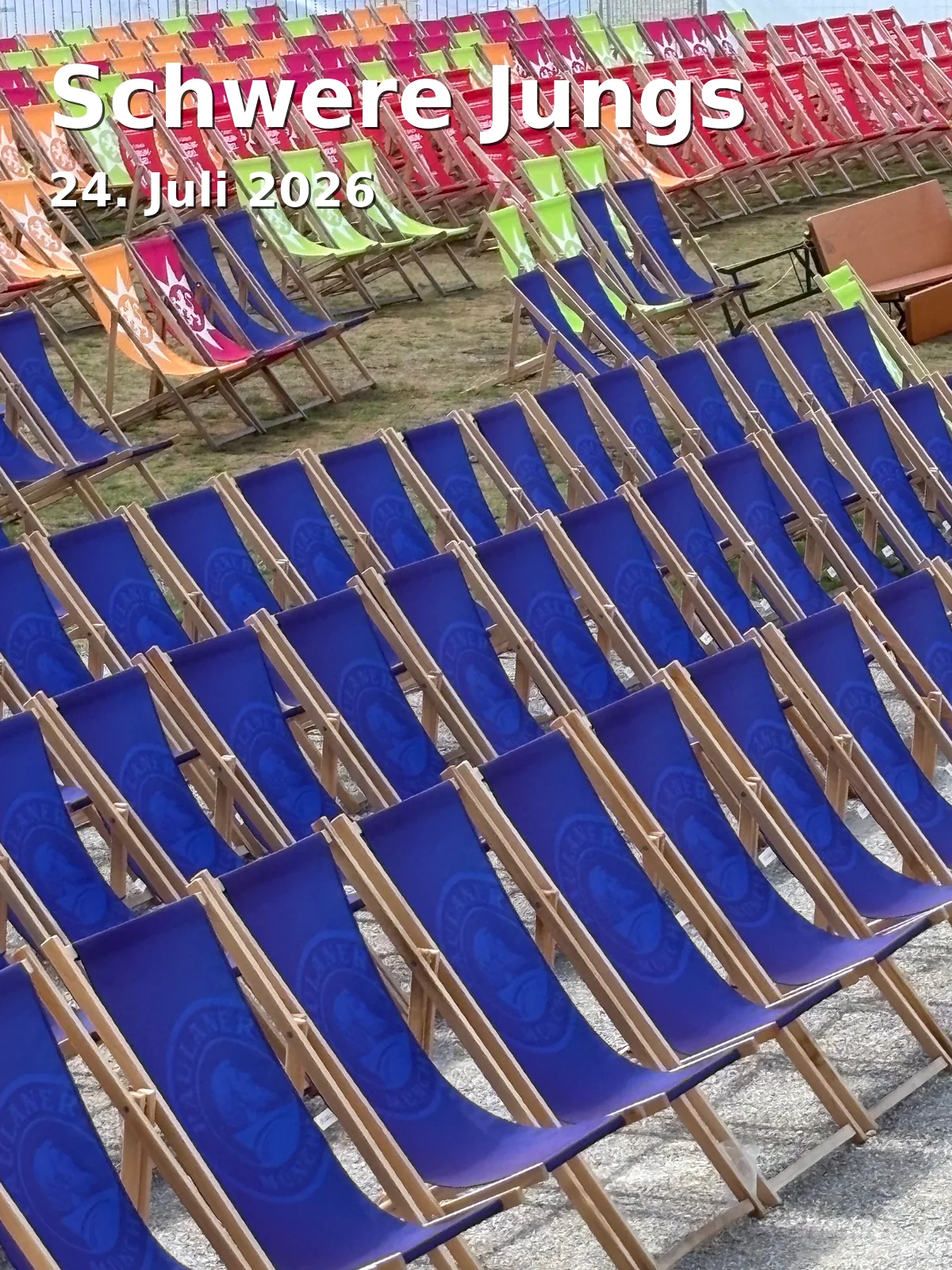
Heavy Boys
Experience the film 'Heavy Boys' at the open-air cinema at Riessersee on July 24. Free entry, with headphone deposit.

Skateworld - Artistic World Cup 2026
The Skateworld - Artistic World Cup 2026 enchants Garmisch-Partenkirchen with top-notch artistic skating at the Olympic Ice Sports Center.
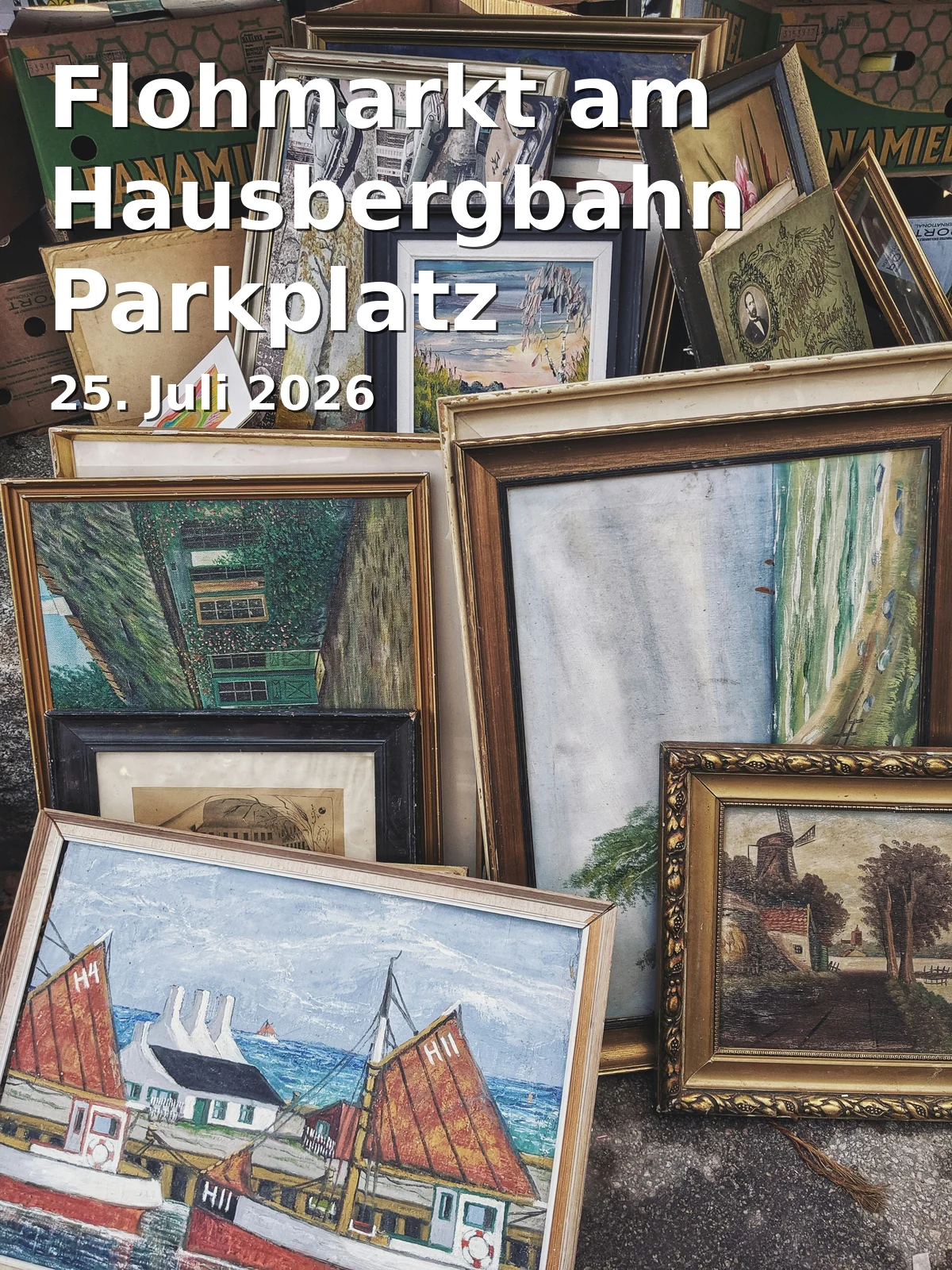
Flea Market at Hausbergbahn Parking Lot
Discover unique treasures at the flea market at Hausbergbahn Parking Lot. A relaxed day awaits you!
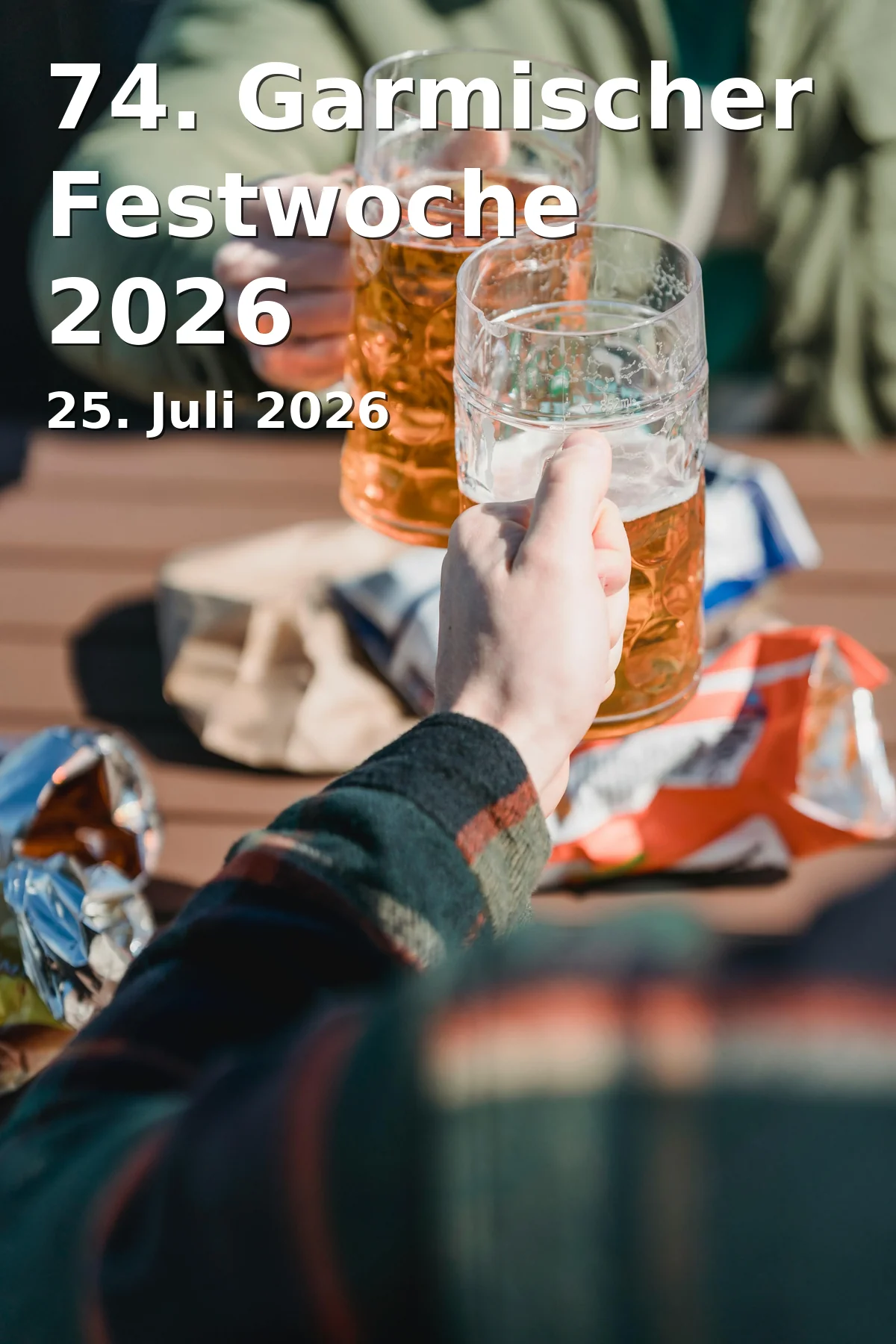
74th Garmisch Festival Week 2026
Discover Bavarian culture with music, dance, and regional delicacies at the festival week in Garmisch-Partenkirchen.
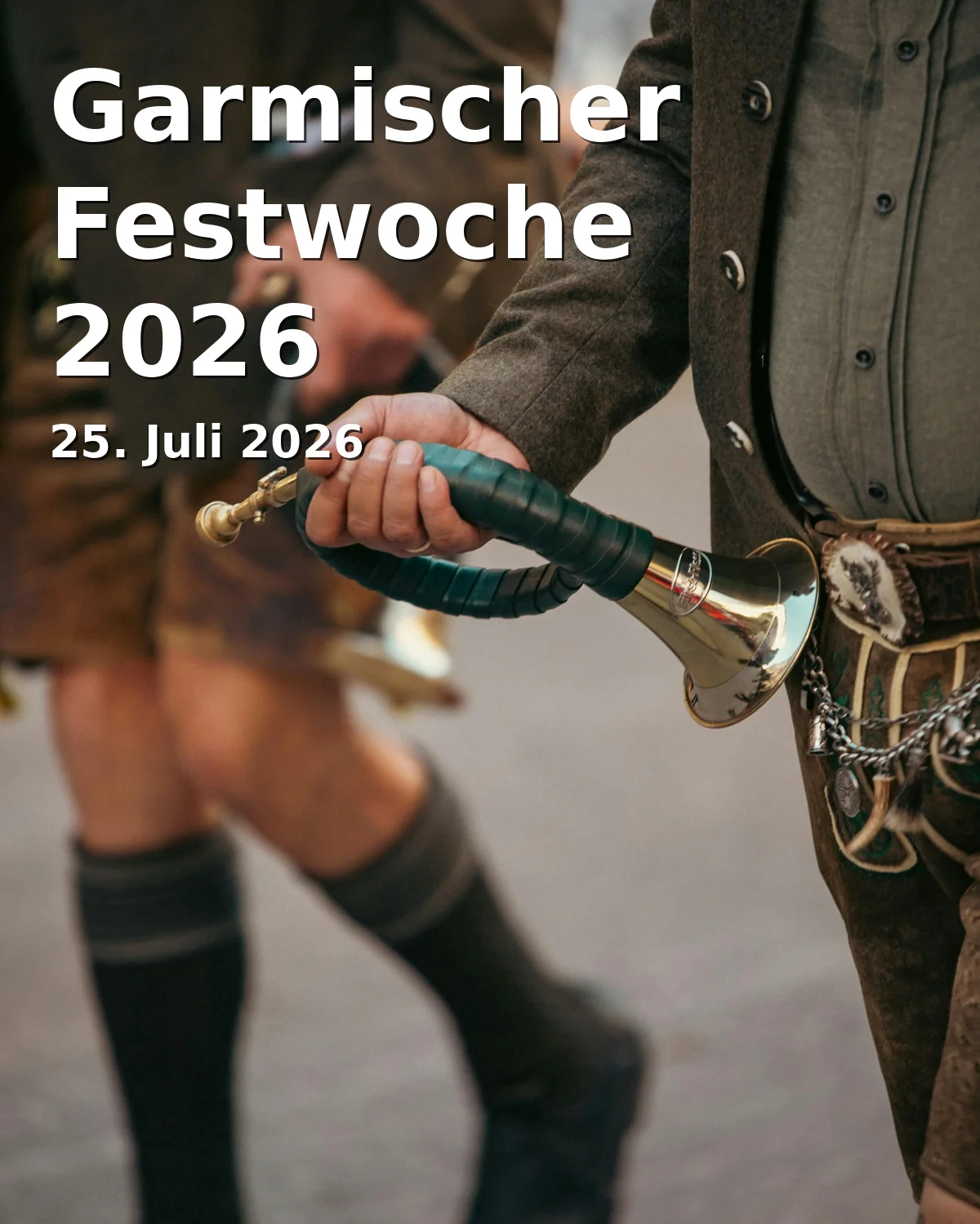
Garmisch Festival Week 2026
Immerse yourself in a festival of traditions with Bavarian music and specialties. Free entry at Wittelsbacher Park!
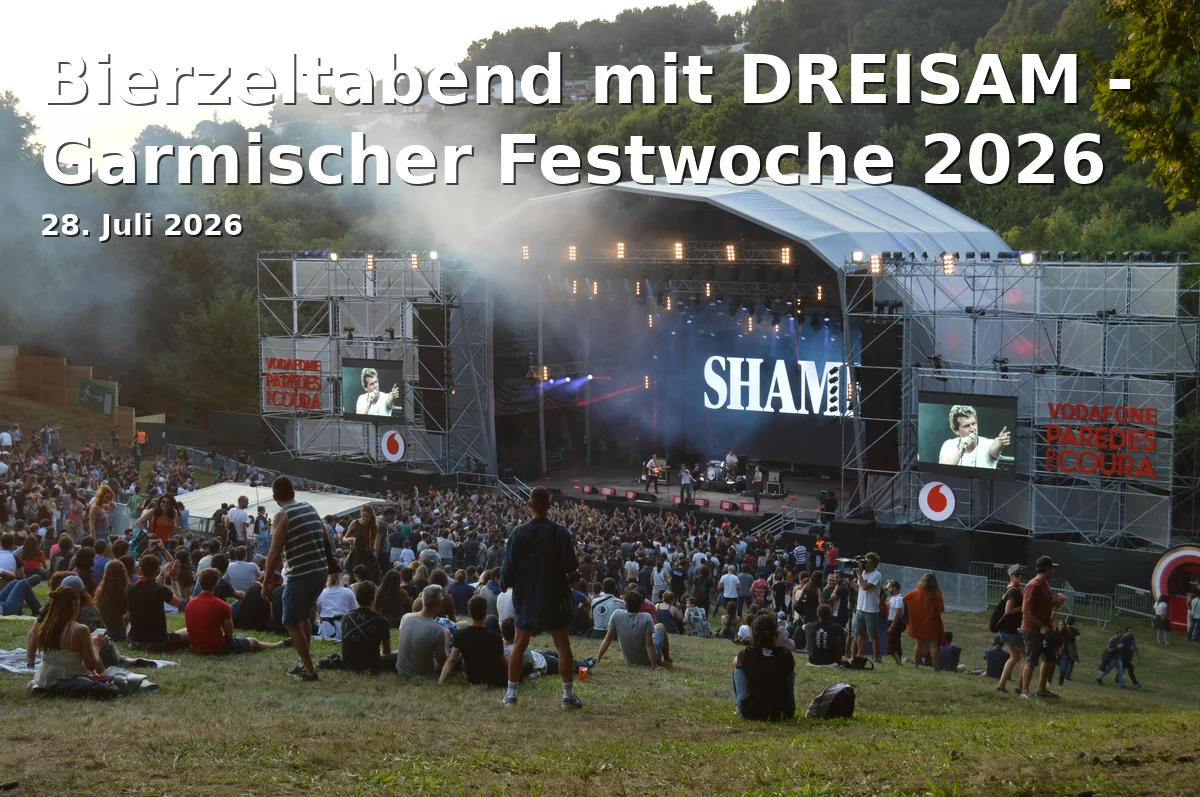
Beer Tent Evening with DREISAM - Garmisch Festival Week 2026
Celebrate an unforgettable evening with the band DREISAM at the Garmisch Festival Week 2026. Festival tent, music, and party spirit for visitors aged 16 and over.
GaPa live - Silk Brass Concert
Visit the free Silk Brass concert in Laura-Dahlmeier-Park and experience an unforgettable musical evening.
Silk Brass Concert in Laura-Dahlmeier-Park
Visit the Silk Brass concert on July 29, 2026, in Laura-Dahlmeier-Park in Partenkirchen. Free entry and a relaxed atmosphere guaranteed!

Michael Mittermeier - Flashback: The Return of the Future
Experience Michael Mittermeier live in Garmisch-Partenkirchen. His program "Flashback: The Return of the Future" guarantees laughter and entertainment.
Garmisch Home Evening - 74th Garmisch Festival Week 2026
Dive into music, dance, and customs at the Garmisch Home Evening of the 74th Garmisch Festival Week, a cultural experience for everyone.
Frequently Asked Questions
Reviews
No reviews found