
Garmisch-Partenkirchen
Ludwigstraße 47, 82467 Garmisch-Partenkirchen, Deutschland
Museum Werdenfels | Opening Hours & Tickets
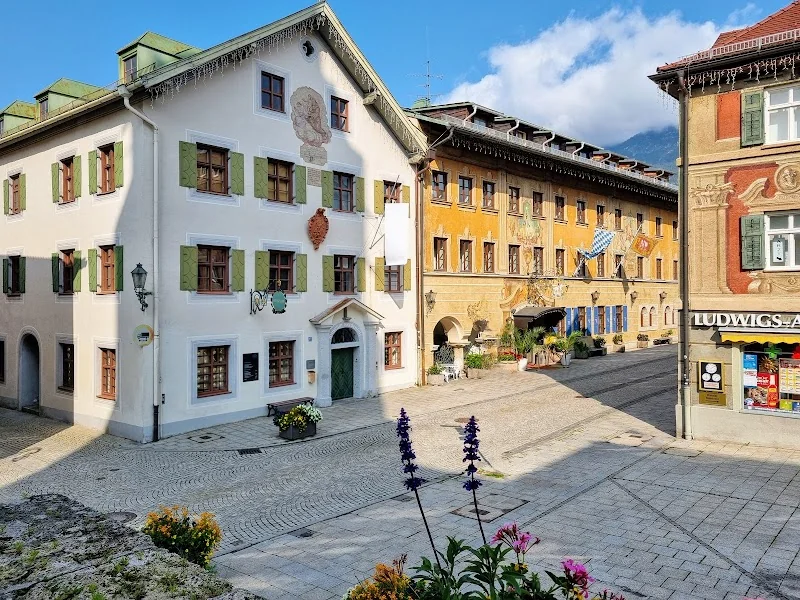
The Museum Werdenfels is much more than a classic local museum: it is a cultural-historical repository for the entire region between Garmisch, Partenkirchen, and the Werdenfelser Land, which can be experienced in an exceptionally historic building right in Ludwigstraße. Those looking for opening hours, tickets, prices, photos, or the location will quickly find a place that not only exhibits history but also makes it spatially tangible. The house is located in a former merchant and trading house that has survived the centuries and makes the development of the region palpable in its architecture as well as in the exhibits. The contrast between the old building and the vibrant, still-growing collection, which ranges from prehistoric finds to religious objects and costumes to crafts, living culture, and special exhibitions, is particularly striking. This very mix makes the Museum Werdenfels so attractive for families, culture enthusiasts, and day visitors. It is a place where one not only looks at something but understands a piece of regional identity. ([museum-werdenfels.de](https://museum-werdenfels.de/kontakt))
Opening Hours, Tickets, and Prices at the Museum Werdenfels
Search queries about opening hours, tickets, admission, and prices are among the clear core interests surrounding the Museum Werdenfels. Officially, the museum is open from Tuesday to Sunday from 10 AM to 5 PM; on public holidays, it also opens on Mondays. This is convenient for visitors because the museum visit can be easily combined with a stroll through Garmisch-Partenkirchen or a stay in the historic Ludwigstraße. The admission prices are deliberately structured to be family- and visitor-friendly: adults pay 5.50 euros, reduced prices are 4.50 euros, including for people with disabilities, groups of eight or more, and eligible guest card holders. Students aged 15 and older, as well as students up to 27 years old, pay 2.00 euros, and youths aged 15 to 18 also pay 2.00 euros, while children and students up to 14 years old have free admission. Accompanying persons of people with severe disabilities with the mark B also enter for free. This clear pricing structure is particularly helpful for day visitors who plan their visit spontaneously and still seek reliable orientation in advance. ([museum-werdenfels.de](https://museum-werdenfels.de/kontakt))
In the keyword analysis, it is noticeable that terms like 'museum werdenfels tickets', 'museum werdenfels prices', and 'museum werdenfels admission' are closely related. That is precisely why it is worthwhile to understand the admission question not just as price information but as part of the overall offering. The museum combines a historically dense building with a modern visitor logic: open, clear times, fair rates, and an offering that appeals to both short visitors and cultural travelers. Those who come early in the day can combine their museum visit with a relaxed city stroll; those who arrive in the afternoon still have enough time to experience the most important areas at leisure. The house is also interesting for guests from the district because it creates a low admission threshold through guest cards and discounts. Especially in a tourist-oriented region, this is important because a museum must not only be beautiful but also function practically. The Museum Werdenfels meets this expectation exactly: it is clear, easy to book, and price-transparent. ([museum-werdenfels.de](https://museum-werdenfels.de/kontakt))
From an SEO perspective, search phrases like 'werdenfels museum opening hours' and 'werdenfels museum tickets' are also relevant because they express a direct intention to visit. Those who ask these questions usually want to know without detours whether the trip is worth it and when the best time to come is. The official structure of the house makes it easy to make this decision. With regular opening hours from Tuesday to Sunday, additional Monday openings on holidays, and clearly communicated prices, a very reliable visit profile is created. This is important for a house with high cultural aspirations: it should appear serious, accessible, and uncomplicated. The Museum Werdenfels provides a strong foundation that convinces both first-time visitors and returning guests. ([museum-werdenfels.de](https://museum-werdenfels.de/kontakt))
Directions, Location, and Parking on Ludwigstraße
Another central theme of the keyword analysis is the location: 'museum werdenfels garmisch-partenkirchen', 'museum werdenfels partenkirchen', and 'museum werdenfels ludwigstraße garmisch partenkirchen' clearly show that visitors search for the museum not abstractly but as a concrete place in the urban landscape. This is where the historic Ludwigstraße showcases its full strength. The museum is located at Ludwigstraße 47 in Garmisch-Partenkirchen, right in one of the most well-known historic streets of the town. The building itself is part of the experience because it is not in a neutral purpose-built structure but in a house that is rooted in the urban history. For travelers, this is ideal because the museum visit connects with the atmosphere of the old town center. So one does not just enter the museum but a piece of grown local history. This makes the address particularly valuable, even photographically: the historic surroundings already provide a strong image before entering. ([museum-werdenfels.de](https://museum-werdenfels.de/kontakt))
When it comes to parking, the museum is surprisingly well-equipped. The official website explicitly states that parking in the underground garage is free for two hours. The current exhibition flyer specifically locates this underground garage in Badgasse. For visitors, this is a real plus because the museum is located in a historic downtown area where parking can often be scarce. Those arriving by car thus receive a pragmatic solution right in the immediate vicinity. This is a strong argument, especially for families, older guests, or groups, as the question of parking is almost always part of the decision about whether a museum visit will be stress-free. The fact that the house communicates this openly and clearly is a sign of visitor-friendliness. Additionally, the central location in Ludwigstraße also facilitates access on foot, for example, as part of a city stroll or after a stay in the city center. The museum is thus not isolated but well integrated into the tourist and urban environment. ([museum-werdenfels.de](https://museum-werdenfels.de/kontakt))
From an SEO perspective, this location is particularly interesting because it serves multiple search intentions simultaneously: those searching for directions, address, parking, or 'Ludwigstraße' usually want to know quickly how convenient a visit really is. The answer for the Museum Werdenfels is: very convenient, yet historically shaped. The combination of a central downtown location, free parking time in the underground garage, and proximity to other attractions makes the house a good destination for half or a whole day in Garmisch-Partenkirchen. This is also important for visitors with tight schedules because the museum can be easily integrated into a route without long logistical preparations. This planability significantly increases the likelihood of an actual visit. ([museum-werdenfels.de](https://museum-werdenfels.de/kontakt))
History of the House Zum Schlamp and the Collection
The strongest feature of the Museum Werdenfels is its historical depth. The museum is housed in a merchant and trading house built in 1747 called 'Zum Schlamp', which is the only building to have survived the great market fire of 1865. At the same time, finds in the cellar vault point to a development since the 12th century. This double layer of history is invaluable for a museum because the place itself already represents an exhibit. Since 1973, the Museum Werdenfels has been located in this building; the collection had previously become so extensive that a museum building erected in 1925 was no longer sufficient. Thus, the house shows a development that is typical for grown regional museums: from a collection to a cultural memory space, from a memory space to a lively place for the present and the past. ([museum-werdenfels.de](https://museum-werdenfels.de/museum-werdenfels))
The collection itself has its roots in 1895 when the Partenkirchen vocational school for wood carving established a 'model and antiquities collection'. According to the official anniversary presentation, the collection then included about 300 pieces; by the end of the opening year in 1925, the museum already counted 1,946 objects. Today, this has grown to a stock of more than 10,000 exhibits. This development is not only impressive in numerical terms but also significant in content: it shows that the region has consciously collected, preserved, and passed on its material culture over generations. The term 'museum' is thus not understood statically here but as a growth process in which research, memory, and public communication mutually reinforce each other. This is important for visitors because they should not expect a small local exhibition but a grown, serious cultural archive. ([museum-werdenfels.de](https://museum-werdenfels.de/images/pdf/8-Seiter_ENGLISH_100_Jahre_2025_Web_02.pdf))
The cultural-historical context is also extraordinarily strong. The museum sees itself as a mirror of the district of Garmisch-Partenkirchen, which has been traversed and settled by humans for over 6,000 years and has always represented a connection between the north and south. From prehistoric and early historical paths developed the Roman military road Via Raetia, and later, long-distance trade flourished in the Middle Ages between Venice, Augsburg, and Munich. This trade and transport history has profoundly shaped the region and explains why the museum prominently features not only rural but also bourgeois and artisanal living environments. The historical architecture of the house reflects exactly this mix: high vaults on the ground floor, a sloping gangway for barrels, and shafts with bottle lifts that could transport goods to higher floors. The building thus tells its own story of trade, goods flow, and economic function. ([museum-werdenfels.de](https://museum-werdenfels.de/museum-werdenfels))
Those searching for 'werdenfelser museum' or 'museum werdenfels garmisch-partenkirchen' often seek precisely this history at its core: Where does the region come from, how has it developed, and why is this house so important? The answer lies in the connection between place, collection, and region. The museum is one of the most significant cultural-historical museums in Bavaria and is deeply rooted in the district. It not only shows objects but also relational spaces: between trade and everyday life, between religion and customs, between art and craft. The exhibition is therefore not just a mere walk through old things but a narrative about identity. And it is precisely this narrative that makes the Museum Werdenfels strong for SEO and visitors alike. ([museen-in-bayern.de](https://museen-in-bayern.de/museen/detailseite-museum/museum-werdenfels))
Exhibitions, Zugspitze, and Summit Cross in the Museum
In the search terms 'museum werdenfels summit cross' and 'museum werdenfels photos', there is an expectation of strong images and special themes. The Museum Werdenfels meets this expectation with several content levels. A focus of the permanent exhibition is on the 17th, 18th, and 19th centuries, the time when everyday life, work, clothing, and living culture can be represented particularly precisely. Visitors will not find a superficial display here but a carefully curated journey through living worlds and life forms. Among other things, a shoemaker's workshop from the early 20th century in the huge attic, sculptures by Ignaz Günther and modern sculptors, as well as paintings from the Munich School are mentioned. Additionally, there is a Michael Ende corner that makes the house attractive for families and literary interested guests. The exhibitions are thus not only historically but also emotionally and narratively charged. ([museum-werdenfels.de](https://museum-werdenfels.de/museum-werdenfels))
A special highlight is the Zugspitze department. The house explicitly points out that there is a Zugspitze exhibition with an explorer's booklet for summit climbers, which brings mountain climbing and the history of the Zugspitze closer. This is where the keyword around 'summit cross' can be meaningfully categorized: those searching for the region's mountains, their symbolism, and the myth of summiting will find in the museum a cultural bridge between landscape, memory, and regional identity. The Zugspitze is not just a mountain but a mental space for the entire area. The fact that the museum integrates this theme into its permanent exhibition shows how closely nature and cultural history are connected here. For visitors, this means: the museum offers not only indoor spaces but also a mental connection to the alpine surroundings of Garmisch-Partenkirchen. Thus, a visit can continue to be thought about outside in the landscape after the museum tour. ([museum-werdenfels.de](https://museum-werdenfels.de/museum-werdenfels))
The current special exhibitions are also noteworthy and make the house a lively place rather than a static collection. Until June 7, 2026, 'Art of Different Sensations' runs with over 120 works by Carl Ludwig Loreck, Rolf Cavael, and Hans-Otto Buchner, highlighting three life paths and artistic concepts of the post-war period. At the same time, 'Thinking About Things – Art Interventions II' is scheduled from February 11 to November 8, 2026, in which three artists from Garmisch-Partenkirchen and Weilheim engage in dialogue with the museum's collection. These two formats show the museum as a place where collection, present, and artistic interpretation come together. For SEO and real visitors, this is important because special exhibitions are always a strong incentive to visit. So those searching for programs, exhibitions, or current content will not only receive a historical tour but also a reason to return. ([museum-werdenfels.de](https://museum-werdenfels.de/museum-werdenfels))
Particularly appealing is the aspect of staging: the anniversary exhibition and the current presentations place objects in new contexts, work with art interventions, and emphasize sensory perception. This is relevant for visitors looking for photos, impressions, and a special atmosphere because the museum offers unusual perspectives, historical spaces, and dense materiality. Instead of a large event show, there is a quiet but strong visual language: costumes, masks, workshops, historical bedrooms, and regional artworks create motifs that remain in memory. This is precisely the strength of the house. It does not sell sensationalism but authenticity - and that is particularly credible in the digital age. ([museum-werdenfels.de](https://museum-werdenfels.de/images/pdf/8-Seiter_ENGLISH_100_Jahre_2025_Web_02.pdf))
Photos, Highlights, and Why Visitors Love the Museum
Those searching for 'museum werdenfels photos' or 'museum werdenfels photos' usually expect visual impressions, and the Museum Werdenfels has much to offer in this regard. The building itself is already a photogenic motif, as the historic Ludwigstraße, the old trade architecture, and the interiors with vaults and attics create an unmistakable atmosphere. In addition, there are the staged thematic rooms, such as the farmer's parlor, the smoke kitchen, the bourgeois bedroom, or the workshops. Such rooms are not only museum-worthy but also visually strong because they make the everyday life of past times tangible. The museum's own images and publications also show how rich the house is in details: costumes, masks, wood art, furniture, tools, and artworks create a depth that can be well transported in photos. For content and SEO purposes, this is important because a place with a strong visual character is more likely to be saved, shared, and revisited. ([museen-in-bayern.de](https://museen-in-bayern.de/museen/detailseite-museum/museum-werdenfels))
Another reason for the high attractiveness lies in the mix of learning and experiencing. The museum is not an overloaded collection but a house with a clear narrative structure: history of the district, development of trade, rural life, bourgeois living culture, crafts, customs, and alpine references. Additionally, there is the unusual combination of original objects and modern artistic interpretation. This combination ensures that visitors feel not only informed but also emotionally addressed. The museum thus becomes a place where one sharpens their view: What did regional identity look like in the past? How was work done? How did families live? What role did the Zugspitze play in the region's self-understanding? Such questions make a museum visit valuable, even if one only has one to two hours. ([museum-werdenfels.de](https://museum-werdenfels.de/museum-werdenfels))
This also explains why the search interest in reviews and ratings is plausible. A house with this mix of historical substance, easily accessible opening hours, and fair admission prices is generally perceived positively because the visit is not complicated and simultaneously offers much in content. For families, the clear structure is important; for culture-interested adults, the depth of the collection; and for travelers, the location in the middle of an attractive old town. The Museum Werdenfels elegantly combines these needs. Instead of a loud staging, there is a quiet, focused place with high authenticity. This is often the reason why guests remember individual rooms, themes, or objects after the visit and recommend the house further. ([museum-werdenfels.de](https://museum-werdenfels.de/kontakt))
Even in bad weather, the museum is a very good idea because, as a fully indoor-oriented house, it is excellent for a culturally rich day in Garmisch-Partenkirchen. This may not be an official weather recommendation, but it is a logical conclusion from the structure of the house: many indoor spaces, historical substance, workshops, special exhibitions, and a clear tour. So those visiting the region and looking for a weather-independent activity will find in the Museum Werdenfels a calm, substantial, and visually interesting alternative to purely outdoor programs. ([museum-werdenfels.de](https://museum-werdenfels.de/museum-werdenfels))
Accessibility, Museum Shop, and Practical Visitor Tips
For truly good visitor information, practical details are also essential, and the Museum Werdenfels provides solid facts in this regard. According to the official website, the house is largely barrier-free, with mobile ramps available. This is crucial for many visitors, especially for people with limited mobility, families with strollers, or older guests. The combination of a historic building and modern accessibility is not a given, which is why this note is particularly valuable. The fact that the museum strives for accessibility despite its monument character makes it contemporary and hospitable. Those planning a visit can thus expect good basic orientation but should still check the official information in advance for special needs. ([museum-werdenfels.de](https://museum-werdenfels.de/kontakt))
Another practical plus is the museum shop with a reading area. There are catalogs of previous exhibitions, books on the history of the district, children's books from artists, art postcards, and handicrafts from both its own and external production. This is attractive for guests who understand their visit not just as a tour but as cultural takeaways. The seating and reading area also allows for a small break to sort what has been seen. Especially in a house with much content, this is important because the density of objects and stories is high. A short stop in the shop or reading area can make the visit significantly more pleasant and simultaneously deepen the engagement with the region. For SEO-relevant search queries like 'tickets', 'photos', 'reviews', or 'opening hours', this means: the museum is not only informative but also well organized in the visiting routine. ([museum-werdenfels.de](https://museum-werdenfels.de/museum-werdenfels/content/4-museums-laden?utm_source=openai))
The museum is also part of a vibrant institutional environment, which includes the Museumsverein Werdenfels e.V., supporting care, promotion, lectures, trips, and tours. This shows that the house does not operate in isolation but is supported by a regional network. For visitors, this indirectly means a higher cultural density: the museum is understood as a place that continues to have an impact, is thought further, and is anchored in the region. This is also evident in the continuous work on exhibitions and communication. Thus, those planning a visit should not only pay attention to the essential data like address and time but also take a look at current special exhibitions. The museum changes but remains true to its regional identity - this very mix makes it so strong. ([museum-werdenfels.de](https://museum-werdenfels.de/kontakt/content/7-museumsverein-werdenfels?utm_source=openai))
Practically, it is advisable for the visit to prioritize clearly: first perceive the historical architecture, then the permanent exhibition with its thematic focuses, followed by the Zugspitze and customs areas, and finally possibly the museum shop or the current special exhibition. Those with little time should focus on the highlights: the house Zum Schlamp, the regional living worlds, the costumes, and the Zugspitze department. Those who have more time can deepen their visit and include the special exhibitions. This flexibility makes the Museum Werdenfels a good address for different visitor groups - from spontaneous day guests to culture-historically interested returnees. ([museum-werdenfels.de](https://museum-werdenfels.de/museum-werdenfels))
Sources:
Mehr anzeigenWeniger anzeigen
Museum Werdenfels | Opening Hours & Tickets
The Museum Werdenfels is much more than a classic local museum: it is a cultural-historical repository for the entire region between Garmisch, Partenkirchen, and the Werdenfelser Land, which can be experienced in an exceptionally historic building right in Ludwigstraße. Those looking for opening hours, tickets, prices, photos, or the location will quickly find a place that not only exhibits history but also makes it spatially tangible. The house is located in a former merchant and trading house that has survived the centuries and makes the development of the region palpable in its architecture as well as in the exhibits. The contrast between the old building and the vibrant, still-growing collection, which ranges from prehistoric finds to religious objects and costumes to crafts, living culture, and special exhibitions, is particularly striking. This very mix makes the Museum Werdenfels so attractive for families, culture enthusiasts, and day visitors. It is a place where one not only looks at something but understands a piece of regional identity. ([museum-werdenfels.de](https://museum-werdenfels.de/kontakt))
Opening Hours, Tickets, and Prices at the Museum Werdenfels
Search queries about opening hours, tickets, admission, and prices are among the clear core interests surrounding the Museum Werdenfels. Officially, the museum is open from Tuesday to Sunday from 10 AM to 5 PM; on public holidays, it also opens on Mondays. This is convenient for visitors because the museum visit can be easily combined with a stroll through Garmisch-Partenkirchen or a stay in the historic Ludwigstraße. The admission prices are deliberately structured to be family- and visitor-friendly: adults pay 5.50 euros, reduced prices are 4.50 euros, including for people with disabilities, groups of eight or more, and eligible guest card holders. Students aged 15 and older, as well as students up to 27 years old, pay 2.00 euros, and youths aged 15 to 18 also pay 2.00 euros, while children and students up to 14 years old have free admission. Accompanying persons of people with severe disabilities with the mark B also enter for free. This clear pricing structure is particularly helpful for day visitors who plan their visit spontaneously and still seek reliable orientation in advance. ([museum-werdenfels.de](https://museum-werdenfels.de/kontakt))
In the keyword analysis, it is noticeable that terms like 'museum werdenfels tickets', 'museum werdenfels prices', and 'museum werdenfels admission' are closely related. That is precisely why it is worthwhile to understand the admission question not just as price information but as part of the overall offering. The museum combines a historically dense building with a modern visitor logic: open, clear times, fair rates, and an offering that appeals to both short visitors and cultural travelers. Those who come early in the day can combine their museum visit with a relaxed city stroll; those who arrive in the afternoon still have enough time to experience the most important areas at leisure. The house is also interesting for guests from the district because it creates a low admission threshold through guest cards and discounts. Especially in a tourist-oriented region, this is important because a museum must not only be beautiful but also function practically. The Museum Werdenfels meets this expectation exactly: it is clear, easy to book, and price-transparent. ([museum-werdenfels.de](https://museum-werdenfels.de/kontakt))
From an SEO perspective, search phrases like 'werdenfels museum opening hours' and 'werdenfels museum tickets' are also relevant because they express a direct intention to visit. Those who ask these questions usually want to know without detours whether the trip is worth it and when the best time to come is. The official structure of the house makes it easy to make this decision. With regular opening hours from Tuesday to Sunday, additional Monday openings on holidays, and clearly communicated prices, a very reliable visit profile is created. This is important for a house with high cultural aspirations: it should appear serious, accessible, and uncomplicated. The Museum Werdenfels provides a strong foundation that convinces both first-time visitors and returning guests. ([museum-werdenfels.de](https://museum-werdenfels.de/kontakt))
Directions, Location, and Parking on Ludwigstraße
Another central theme of the keyword analysis is the location: 'museum werdenfels garmisch-partenkirchen', 'museum werdenfels partenkirchen', and 'museum werdenfels ludwigstraße garmisch partenkirchen' clearly show that visitors search for the museum not abstractly but as a concrete place in the urban landscape. This is where the historic Ludwigstraße showcases its full strength. The museum is located at Ludwigstraße 47 in Garmisch-Partenkirchen, right in one of the most well-known historic streets of the town. The building itself is part of the experience because it is not in a neutral purpose-built structure but in a house that is rooted in the urban history. For travelers, this is ideal because the museum visit connects with the atmosphere of the old town center. So one does not just enter the museum but a piece of grown local history. This makes the address particularly valuable, even photographically: the historic surroundings already provide a strong image before entering. ([museum-werdenfels.de](https://museum-werdenfels.de/kontakt))
When it comes to parking, the museum is surprisingly well-equipped. The official website explicitly states that parking in the underground garage is free for two hours. The current exhibition flyer specifically locates this underground garage in Badgasse. For visitors, this is a real plus because the museum is located in a historic downtown area where parking can often be scarce. Those arriving by car thus receive a pragmatic solution right in the immediate vicinity. This is a strong argument, especially for families, older guests, or groups, as the question of parking is almost always part of the decision about whether a museum visit will be stress-free. The fact that the house communicates this openly and clearly is a sign of visitor-friendliness. Additionally, the central location in Ludwigstraße also facilitates access on foot, for example, as part of a city stroll or after a stay in the city center. The museum is thus not isolated but well integrated into the tourist and urban environment. ([museum-werdenfels.de](https://museum-werdenfels.de/kontakt))
From an SEO perspective, this location is particularly interesting because it serves multiple search intentions simultaneously: those searching for directions, address, parking, or 'Ludwigstraße' usually want to know quickly how convenient a visit really is. The answer for the Museum Werdenfels is: very convenient, yet historically shaped. The combination of a central downtown location, free parking time in the underground garage, and proximity to other attractions makes the house a good destination for half or a whole day in Garmisch-Partenkirchen. This is also important for visitors with tight schedules because the museum can be easily integrated into a route without long logistical preparations. This planability significantly increases the likelihood of an actual visit. ([museum-werdenfels.de](https://museum-werdenfels.de/kontakt))
History of the House Zum Schlamp and the Collection
The strongest feature of the Museum Werdenfels is its historical depth. The museum is housed in a merchant and trading house built in 1747 called 'Zum Schlamp', which is the only building to have survived the great market fire of 1865. At the same time, finds in the cellar vault point to a development since the 12th century. This double layer of history is invaluable for a museum because the place itself already represents an exhibit. Since 1973, the Museum Werdenfels has been located in this building; the collection had previously become so extensive that a museum building erected in 1925 was no longer sufficient. Thus, the house shows a development that is typical for grown regional museums: from a collection to a cultural memory space, from a memory space to a lively place for the present and the past. ([museum-werdenfels.de](https://museum-werdenfels.de/museum-werdenfels))
The collection itself has its roots in 1895 when the Partenkirchen vocational school for wood carving established a 'model and antiquities collection'. According to the official anniversary presentation, the collection then included about 300 pieces; by the end of the opening year in 1925, the museum already counted 1,946 objects. Today, this has grown to a stock of more than 10,000 exhibits. This development is not only impressive in numerical terms but also significant in content: it shows that the region has consciously collected, preserved, and passed on its material culture over generations. The term 'museum' is thus not understood statically here but as a growth process in which research, memory, and public communication mutually reinforce each other. This is important for visitors because they should not expect a small local exhibition but a grown, serious cultural archive. ([museum-werdenfels.de](https://museum-werdenfels.de/images/pdf/8-Seiter_ENGLISH_100_Jahre_2025_Web_02.pdf))
The cultural-historical context is also extraordinarily strong. The museum sees itself as a mirror of the district of Garmisch-Partenkirchen, which has been traversed and settled by humans for over 6,000 years and has always represented a connection between the north and south. From prehistoric and early historical paths developed the Roman military road Via Raetia, and later, long-distance trade flourished in the Middle Ages between Venice, Augsburg, and Munich. This trade and transport history has profoundly shaped the region and explains why the museum prominently features not only rural but also bourgeois and artisanal living environments. The historical architecture of the house reflects exactly this mix: high vaults on the ground floor, a sloping gangway for barrels, and shafts with bottle lifts that could transport goods to higher floors. The building thus tells its own story of trade, goods flow, and economic function. ([museum-werdenfels.de](https://museum-werdenfels.de/museum-werdenfels))
Those searching for 'werdenfelser museum' or 'museum werdenfels garmisch-partenkirchen' often seek precisely this history at its core: Where does the region come from, how has it developed, and why is this house so important? The answer lies in the connection between place, collection, and region. The museum is one of the most significant cultural-historical museums in Bavaria and is deeply rooted in the district. It not only shows objects but also relational spaces: between trade and everyday life, between religion and customs, between art and craft. The exhibition is therefore not just a mere walk through old things but a narrative about identity. And it is precisely this narrative that makes the Museum Werdenfels strong for SEO and visitors alike. ([museen-in-bayern.de](https://museen-in-bayern.de/museen/detailseite-museum/museum-werdenfels))
Exhibitions, Zugspitze, and Summit Cross in the Museum
In the search terms 'museum werdenfels summit cross' and 'museum werdenfels photos', there is an expectation of strong images and special themes. The Museum Werdenfels meets this expectation with several content levels. A focus of the permanent exhibition is on the 17th, 18th, and 19th centuries, the time when everyday life, work, clothing, and living culture can be represented particularly precisely. Visitors will not find a superficial display here but a carefully curated journey through living worlds and life forms. Among other things, a shoemaker's workshop from the early 20th century in the huge attic, sculptures by Ignaz Günther and modern sculptors, as well as paintings from the Munich School are mentioned. Additionally, there is a Michael Ende corner that makes the house attractive for families and literary interested guests. The exhibitions are thus not only historically but also emotionally and narratively charged. ([museum-werdenfels.de](https://museum-werdenfels.de/museum-werdenfels))
A special highlight is the Zugspitze department. The house explicitly points out that there is a Zugspitze exhibition with an explorer's booklet for summit climbers, which brings mountain climbing and the history of the Zugspitze closer. This is where the keyword around 'summit cross' can be meaningfully categorized: those searching for the region's mountains, their symbolism, and the myth of summiting will find in the museum a cultural bridge between landscape, memory, and regional identity. The Zugspitze is not just a mountain but a mental space for the entire area. The fact that the museum integrates this theme into its permanent exhibition shows how closely nature and cultural history are connected here. For visitors, this means: the museum offers not only indoor spaces but also a mental connection to the alpine surroundings of Garmisch-Partenkirchen. Thus, a visit can continue to be thought about outside in the landscape after the museum tour. ([museum-werdenfels.de](https://museum-werdenfels.de/museum-werdenfels))
The current special exhibitions are also noteworthy and make the house a lively place rather than a static collection. Until June 7, 2026, 'Art of Different Sensations' runs with over 120 works by Carl Ludwig Loreck, Rolf Cavael, and Hans-Otto Buchner, highlighting three life paths and artistic concepts of the post-war period. At the same time, 'Thinking About Things – Art Interventions II' is scheduled from February 11 to November 8, 2026, in which three artists from Garmisch-Partenkirchen and Weilheim engage in dialogue with the museum's collection. These two formats show the museum as a place where collection, present, and artistic interpretation come together. For SEO and real visitors, this is important because special exhibitions are always a strong incentive to visit. So those searching for programs, exhibitions, or current content will not only receive a historical tour but also a reason to return. ([museum-werdenfels.de](https://museum-werdenfels.de/museum-werdenfels))
Particularly appealing is the aspect of staging: the anniversary exhibition and the current presentations place objects in new contexts, work with art interventions, and emphasize sensory perception. This is relevant for visitors looking for photos, impressions, and a special atmosphere because the museum offers unusual perspectives, historical spaces, and dense materiality. Instead of a large event show, there is a quiet but strong visual language: costumes, masks, workshops, historical bedrooms, and regional artworks create motifs that remain in memory. This is precisely the strength of the house. It does not sell sensationalism but authenticity - and that is particularly credible in the digital age. ([museum-werdenfels.de](https://museum-werdenfels.de/images/pdf/8-Seiter_ENGLISH_100_Jahre_2025_Web_02.pdf))
Photos, Highlights, and Why Visitors Love the Museum
Those searching for 'museum werdenfels photos' or 'museum werdenfels photos' usually expect visual impressions, and the Museum Werdenfels has much to offer in this regard. The building itself is already a photogenic motif, as the historic Ludwigstraße, the old trade architecture, and the interiors with vaults and attics create an unmistakable atmosphere. In addition, there are the staged thematic rooms, such as the farmer's parlor, the smoke kitchen, the bourgeois bedroom, or the workshops. Such rooms are not only museum-worthy but also visually strong because they make the everyday life of past times tangible. The museum's own images and publications also show how rich the house is in details: costumes, masks, wood art, furniture, tools, and artworks create a depth that can be well transported in photos. For content and SEO purposes, this is important because a place with a strong visual character is more likely to be saved, shared, and revisited. ([museen-in-bayern.de](https://museen-in-bayern.de/museen/detailseite-museum/museum-werdenfels))
Another reason for the high attractiveness lies in the mix of learning and experiencing. The museum is not an overloaded collection but a house with a clear narrative structure: history of the district, development of trade, rural life, bourgeois living culture, crafts, customs, and alpine references. Additionally, there is the unusual combination of original objects and modern artistic interpretation. This combination ensures that visitors feel not only informed but also emotionally addressed. The museum thus becomes a place where one sharpens their view: What did regional identity look like in the past? How was work done? How did families live? What role did the Zugspitze play in the region's self-understanding? Such questions make a museum visit valuable, even if one only has one to two hours. ([museum-werdenfels.de](https://museum-werdenfels.de/museum-werdenfels))
This also explains why the search interest in reviews and ratings is plausible. A house with this mix of historical substance, easily accessible opening hours, and fair admission prices is generally perceived positively because the visit is not complicated and simultaneously offers much in content. For families, the clear structure is important; for culture-interested adults, the depth of the collection; and for travelers, the location in the middle of an attractive old town. The Museum Werdenfels elegantly combines these needs. Instead of a loud staging, there is a quiet, focused place with high authenticity. This is often the reason why guests remember individual rooms, themes, or objects after the visit and recommend the house further. ([museum-werdenfels.de](https://museum-werdenfels.de/kontakt))
Even in bad weather, the museum is a very good idea because, as a fully indoor-oriented house, it is excellent for a culturally rich day in Garmisch-Partenkirchen. This may not be an official weather recommendation, but it is a logical conclusion from the structure of the house: many indoor spaces, historical substance, workshops, special exhibitions, and a clear tour. So those visiting the region and looking for a weather-independent activity will find in the Museum Werdenfels a calm, substantial, and visually interesting alternative to purely outdoor programs. ([museum-werdenfels.de](https://museum-werdenfels.de/museum-werdenfels))
Accessibility, Museum Shop, and Practical Visitor Tips
For truly good visitor information, practical details are also essential, and the Museum Werdenfels provides solid facts in this regard. According to the official website, the house is largely barrier-free, with mobile ramps available. This is crucial for many visitors, especially for people with limited mobility, families with strollers, or older guests. The combination of a historic building and modern accessibility is not a given, which is why this note is particularly valuable. The fact that the museum strives for accessibility despite its monument character makes it contemporary and hospitable. Those planning a visit can thus expect good basic orientation but should still check the official information in advance for special needs. ([museum-werdenfels.de](https://museum-werdenfels.de/kontakt))
Another practical plus is the museum shop with a reading area. There are catalogs of previous exhibitions, books on the history of the district, children's books from artists, art postcards, and handicrafts from both its own and external production. This is attractive for guests who understand their visit not just as a tour but as cultural takeaways. The seating and reading area also allows for a small break to sort what has been seen. Especially in a house with much content, this is important because the density of objects and stories is high. A short stop in the shop or reading area can make the visit significantly more pleasant and simultaneously deepen the engagement with the region. For SEO-relevant search queries like 'tickets', 'photos', 'reviews', or 'opening hours', this means: the museum is not only informative but also well organized in the visiting routine. ([museum-werdenfels.de](https://museum-werdenfels.de/museum-werdenfels/content/4-museums-laden?utm_source=openai))
The museum is also part of a vibrant institutional environment, which includes the Museumsverein Werdenfels e.V., supporting care, promotion, lectures, trips, and tours. This shows that the house does not operate in isolation but is supported by a regional network. For visitors, this indirectly means a higher cultural density: the museum is understood as a place that continues to have an impact, is thought further, and is anchored in the region. This is also evident in the continuous work on exhibitions and communication. Thus, those planning a visit should not only pay attention to the essential data like address and time but also take a look at current special exhibitions. The museum changes but remains true to its regional identity - this very mix makes it so strong. ([museum-werdenfels.de](https://museum-werdenfels.de/kontakt/content/7-museumsverein-werdenfels?utm_source=openai))
Practically, it is advisable for the visit to prioritize clearly: first perceive the historical architecture, then the permanent exhibition with its thematic focuses, followed by the Zugspitze and customs areas, and finally possibly the museum shop or the current special exhibition. Those with little time should focus on the highlights: the house Zum Schlamp, the regional living worlds, the costumes, and the Zugspitze department. Those who have more time can deepen their visit and include the special exhibitions. This flexibility makes the Museum Werdenfels a good address for different visitor groups - from spontaneous day guests to culture-historically interested returnees. ([museum-werdenfels.de](https://museum-werdenfels.de/museum-werdenfels))
Sources:
Museum Werdenfels | Opening Hours & Tickets
The Museum Werdenfels is much more than a classic local museum: it is a cultural-historical repository for the entire region between Garmisch, Partenkirchen, and the Werdenfelser Land, which can be experienced in an exceptionally historic building right in Ludwigstraße. Those looking for opening hours, tickets, prices, photos, or the location will quickly find a place that not only exhibits history but also makes it spatially tangible. The house is located in a former merchant and trading house that has survived the centuries and makes the development of the region palpable in its architecture as well as in the exhibits. The contrast between the old building and the vibrant, still-growing collection, which ranges from prehistoric finds to religious objects and costumes to crafts, living culture, and special exhibitions, is particularly striking. This very mix makes the Museum Werdenfels so attractive for families, culture enthusiasts, and day visitors. It is a place where one not only looks at something but understands a piece of regional identity. ([museum-werdenfels.de](https://museum-werdenfels.de/kontakt))
Opening Hours, Tickets, and Prices at the Museum Werdenfels
Search queries about opening hours, tickets, admission, and prices are among the clear core interests surrounding the Museum Werdenfels. Officially, the museum is open from Tuesday to Sunday from 10 AM to 5 PM; on public holidays, it also opens on Mondays. This is convenient for visitors because the museum visit can be easily combined with a stroll through Garmisch-Partenkirchen or a stay in the historic Ludwigstraße. The admission prices are deliberately structured to be family- and visitor-friendly: adults pay 5.50 euros, reduced prices are 4.50 euros, including for people with disabilities, groups of eight or more, and eligible guest card holders. Students aged 15 and older, as well as students up to 27 years old, pay 2.00 euros, and youths aged 15 to 18 also pay 2.00 euros, while children and students up to 14 years old have free admission. Accompanying persons of people with severe disabilities with the mark B also enter for free. This clear pricing structure is particularly helpful for day visitors who plan their visit spontaneously and still seek reliable orientation in advance. ([museum-werdenfels.de](https://museum-werdenfels.de/kontakt))
In the keyword analysis, it is noticeable that terms like 'museum werdenfels tickets', 'museum werdenfels prices', and 'museum werdenfels admission' are closely related. That is precisely why it is worthwhile to understand the admission question not just as price information but as part of the overall offering. The museum combines a historically dense building with a modern visitor logic: open, clear times, fair rates, and an offering that appeals to both short visitors and cultural travelers. Those who come early in the day can combine their museum visit with a relaxed city stroll; those who arrive in the afternoon still have enough time to experience the most important areas at leisure. The house is also interesting for guests from the district because it creates a low admission threshold through guest cards and discounts. Especially in a tourist-oriented region, this is important because a museum must not only be beautiful but also function practically. The Museum Werdenfels meets this expectation exactly: it is clear, easy to book, and price-transparent. ([museum-werdenfels.de](https://museum-werdenfels.de/kontakt))
From an SEO perspective, search phrases like 'werdenfels museum opening hours' and 'werdenfels museum tickets' are also relevant because they express a direct intention to visit. Those who ask these questions usually want to know without detours whether the trip is worth it and when the best time to come is. The official structure of the house makes it easy to make this decision. With regular opening hours from Tuesday to Sunday, additional Monday openings on holidays, and clearly communicated prices, a very reliable visit profile is created. This is important for a house with high cultural aspirations: it should appear serious, accessible, and uncomplicated. The Museum Werdenfels provides a strong foundation that convinces both first-time visitors and returning guests. ([museum-werdenfels.de](https://museum-werdenfels.de/kontakt))
Directions, Location, and Parking on Ludwigstraße
Another central theme of the keyword analysis is the location: 'museum werdenfels garmisch-partenkirchen', 'museum werdenfels partenkirchen', and 'museum werdenfels ludwigstraße garmisch partenkirchen' clearly show that visitors search for the museum not abstractly but as a concrete place in the urban landscape. This is where the historic Ludwigstraße showcases its full strength. The museum is located at Ludwigstraße 47 in Garmisch-Partenkirchen, right in one of the most well-known historic streets of the town. The building itself is part of the experience because it is not in a neutral purpose-built structure but in a house that is rooted in the urban history. For travelers, this is ideal because the museum visit connects with the atmosphere of the old town center. So one does not just enter the museum but a piece of grown local history. This makes the address particularly valuable, even photographically: the historic surroundings already provide a strong image before entering. ([museum-werdenfels.de](https://museum-werdenfels.de/kontakt))
When it comes to parking, the museum is surprisingly well-equipped. The official website explicitly states that parking in the underground garage is free for two hours. The current exhibition flyer specifically locates this underground garage in Badgasse. For visitors, this is a real plus because the museum is located in a historic downtown area where parking can often be scarce. Those arriving by car thus receive a pragmatic solution right in the immediate vicinity. This is a strong argument, especially for families, older guests, or groups, as the question of parking is almost always part of the decision about whether a museum visit will be stress-free. The fact that the house communicates this openly and clearly is a sign of visitor-friendliness. Additionally, the central location in Ludwigstraße also facilitates access on foot, for example, as part of a city stroll or after a stay in the city center. The museum is thus not isolated but well integrated into the tourist and urban environment. ([museum-werdenfels.de](https://museum-werdenfels.de/kontakt))
From an SEO perspective, this location is particularly interesting because it serves multiple search intentions simultaneously: those searching for directions, address, parking, or 'Ludwigstraße' usually want to know quickly how convenient a visit really is. The answer for the Museum Werdenfels is: very convenient, yet historically shaped. The combination of a central downtown location, free parking time in the underground garage, and proximity to other attractions makes the house a good destination for half or a whole day in Garmisch-Partenkirchen. This is also important for visitors with tight schedules because the museum can be easily integrated into a route without long logistical preparations. This planability significantly increases the likelihood of an actual visit. ([museum-werdenfels.de](https://museum-werdenfels.de/kontakt))
History of the House Zum Schlamp and the Collection
The strongest feature of the Museum Werdenfels is its historical depth. The museum is housed in a merchant and trading house built in 1747 called 'Zum Schlamp', which is the only building to have survived the great market fire of 1865. At the same time, finds in the cellar vault point to a development since the 12th century. This double layer of history is invaluable for a museum because the place itself already represents an exhibit. Since 1973, the Museum Werdenfels has been located in this building; the collection had previously become so extensive that a museum building erected in 1925 was no longer sufficient. Thus, the house shows a development that is typical for grown regional museums: from a collection to a cultural memory space, from a memory space to a lively place for the present and the past. ([museum-werdenfels.de](https://museum-werdenfels.de/museum-werdenfels))
The collection itself has its roots in 1895 when the Partenkirchen vocational school for wood carving established a 'model and antiquities collection'. According to the official anniversary presentation, the collection then included about 300 pieces; by the end of the opening year in 1925, the museum already counted 1,946 objects. Today, this has grown to a stock of more than 10,000 exhibits. This development is not only impressive in numerical terms but also significant in content: it shows that the region has consciously collected, preserved, and passed on its material culture over generations. The term 'museum' is thus not understood statically here but as a growth process in which research, memory, and public communication mutually reinforce each other. This is important for visitors because they should not expect a small local exhibition but a grown, serious cultural archive. ([museum-werdenfels.de](https://museum-werdenfels.de/images/pdf/8-Seiter_ENGLISH_100_Jahre_2025_Web_02.pdf))
The cultural-historical context is also extraordinarily strong. The museum sees itself as a mirror of the district of Garmisch-Partenkirchen, which has been traversed and settled by humans for over 6,000 years and has always represented a connection between the north and south. From prehistoric and early historical paths developed the Roman military road Via Raetia, and later, long-distance trade flourished in the Middle Ages between Venice, Augsburg, and Munich. This trade and transport history has profoundly shaped the region and explains why the museum prominently features not only rural but also bourgeois and artisanal living environments. The historical architecture of the house reflects exactly this mix: high vaults on the ground floor, a sloping gangway for barrels, and shafts with bottle lifts that could transport goods to higher floors. The building thus tells its own story of trade, goods flow, and economic function. ([museum-werdenfels.de](https://museum-werdenfels.de/museum-werdenfels))
Those searching for 'werdenfelser museum' or 'museum werdenfels garmisch-partenkirchen' often seek precisely this history at its core: Where does the region come from, how has it developed, and why is this house so important? The answer lies in the connection between place, collection, and region. The museum is one of the most significant cultural-historical museums in Bavaria and is deeply rooted in the district. It not only shows objects but also relational spaces: between trade and everyday life, between religion and customs, between art and craft. The exhibition is therefore not just a mere walk through old things but a narrative about identity. And it is precisely this narrative that makes the Museum Werdenfels strong for SEO and visitors alike. ([museen-in-bayern.de](https://museen-in-bayern.de/museen/detailseite-museum/museum-werdenfels))
Exhibitions, Zugspitze, and Summit Cross in the Museum
In the search terms 'museum werdenfels summit cross' and 'museum werdenfels photos', there is an expectation of strong images and special themes. The Museum Werdenfels meets this expectation with several content levels. A focus of the permanent exhibition is on the 17th, 18th, and 19th centuries, the time when everyday life, work, clothing, and living culture can be represented particularly precisely. Visitors will not find a superficial display here but a carefully curated journey through living worlds and life forms. Among other things, a shoemaker's workshop from the early 20th century in the huge attic, sculptures by Ignaz Günther and modern sculptors, as well as paintings from the Munich School are mentioned. Additionally, there is a Michael Ende corner that makes the house attractive for families and literary interested guests. The exhibitions are thus not only historically but also emotionally and narratively charged. ([museum-werdenfels.de](https://museum-werdenfels.de/museum-werdenfels))
A special highlight is the Zugspitze department. The house explicitly points out that there is a Zugspitze exhibition with an explorer's booklet for summit climbers, which brings mountain climbing and the history of the Zugspitze closer. This is where the keyword around 'summit cross' can be meaningfully categorized: those searching for the region's mountains, their symbolism, and the myth of summiting will find in the museum a cultural bridge between landscape, memory, and regional identity. The Zugspitze is not just a mountain but a mental space for the entire area. The fact that the museum integrates this theme into its permanent exhibition shows how closely nature and cultural history are connected here. For visitors, this means: the museum offers not only indoor spaces but also a mental connection to the alpine surroundings of Garmisch-Partenkirchen. Thus, a visit can continue to be thought about outside in the landscape after the museum tour. ([museum-werdenfels.de](https://museum-werdenfels.de/museum-werdenfels))
The current special exhibitions are also noteworthy and make the house a lively place rather than a static collection. Until June 7, 2026, 'Art of Different Sensations' runs with over 120 works by Carl Ludwig Loreck, Rolf Cavael, and Hans-Otto Buchner, highlighting three life paths and artistic concepts of the post-war period. At the same time, 'Thinking About Things – Art Interventions II' is scheduled from February 11 to November 8, 2026, in which three artists from Garmisch-Partenkirchen and Weilheim engage in dialogue with the museum's collection. These two formats show the museum as a place where collection, present, and artistic interpretation come together. For SEO and real visitors, this is important because special exhibitions are always a strong incentive to visit. So those searching for programs, exhibitions, or current content will not only receive a historical tour but also a reason to return. ([museum-werdenfels.de](https://museum-werdenfels.de/museum-werdenfels))
Particularly appealing is the aspect of staging: the anniversary exhibition and the current presentations place objects in new contexts, work with art interventions, and emphasize sensory perception. This is relevant for visitors looking for photos, impressions, and a special atmosphere because the museum offers unusual perspectives, historical spaces, and dense materiality. Instead of a large event show, there is a quiet but strong visual language: costumes, masks, workshops, historical bedrooms, and regional artworks create motifs that remain in memory. This is precisely the strength of the house. It does not sell sensationalism but authenticity - and that is particularly credible in the digital age. ([museum-werdenfels.de](https://museum-werdenfels.de/images/pdf/8-Seiter_ENGLISH_100_Jahre_2025_Web_02.pdf))
Photos, Highlights, and Why Visitors Love the Museum
Those searching for 'museum werdenfels photos' or 'museum werdenfels photos' usually expect visual impressions, and the Museum Werdenfels has much to offer in this regard. The building itself is already a photogenic motif, as the historic Ludwigstraße, the old trade architecture, and the interiors with vaults and attics create an unmistakable atmosphere. In addition, there are the staged thematic rooms, such as the farmer's parlor, the smoke kitchen, the bourgeois bedroom, or the workshops. Such rooms are not only museum-worthy but also visually strong because they make the everyday life of past times tangible. The museum's own images and publications also show how rich the house is in details: costumes, masks, wood art, furniture, tools, and artworks create a depth that can be well transported in photos. For content and SEO purposes, this is important because a place with a strong visual character is more likely to be saved, shared, and revisited. ([museen-in-bayern.de](https://museen-in-bayern.de/museen/detailseite-museum/museum-werdenfels))
Another reason for the high attractiveness lies in the mix of learning and experiencing. The museum is not an overloaded collection but a house with a clear narrative structure: history of the district, development of trade, rural life, bourgeois living culture, crafts, customs, and alpine references. Additionally, there is the unusual combination of original objects and modern artistic interpretation. This combination ensures that visitors feel not only informed but also emotionally addressed. The museum thus becomes a place where one sharpens their view: What did regional identity look like in the past? How was work done? How did families live? What role did the Zugspitze play in the region's self-understanding? Such questions make a museum visit valuable, even if one only has one to two hours. ([museum-werdenfels.de](https://museum-werdenfels.de/museum-werdenfels))
This also explains why the search interest in reviews and ratings is plausible. A house with this mix of historical substance, easily accessible opening hours, and fair admission prices is generally perceived positively because the visit is not complicated and simultaneously offers much in content. For families, the clear structure is important; for culture-interested adults, the depth of the collection; and for travelers, the location in the middle of an attractive old town. The Museum Werdenfels elegantly combines these needs. Instead of a loud staging, there is a quiet, focused place with high authenticity. This is often the reason why guests remember individual rooms, themes, or objects after the visit and recommend the house further. ([museum-werdenfels.de](https://museum-werdenfels.de/kontakt))
Even in bad weather, the museum is a very good idea because, as a fully indoor-oriented house, it is excellent for a culturally rich day in Garmisch-Partenkirchen. This may not be an official weather recommendation, but it is a logical conclusion from the structure of the house: many indoor spaces, historical substance, workshops, special exhibitions, and a clear tour. So those visiting the region and looking for a weather-independent activity will find in the Museum Werdenfels a calm, substantial, and visually interesting alternative to purely outdoor programs. ([museum-werdenfels.de](https://museum-werdenfels.de/museum-werdenfels))
Accessibility, Museum Shop, and Practical Visitor Tips
For truly good visitor information, practical details are also essential, and the Museum Werdenfels provides solid facts in this regard. According to the official website, the house is largely barrier-free, with mobile ramps available. This is crucial for many visitors, especially for people with limited mobility, families with strollers, or older guests. The combination of a historic building and modern accessibility is not a given, which is why this note is particularly valuable. The fact that the museum strives for accessibility despite its monument character makes it contemporary and hospitable. Those planning a visit can thus expect good basic orientation but should still check the official information in advance for special needs. ([museum-werdenfels.de](https://museum-werdenfels.de/kontakt))
Another practical plus is the museum shop with a reading area. There are catalogs of previous exhibitions, books on the history of the district, children's books from artists, art postcards, and handicrafts from both its own and external production. This is attractive for guests who understand their visit not just as a tour but as cultural takeaways. The seating and reading area also allows for a small break to sort what has been seen. Especially in a house with much content, this is important because the density of objects and stories is high. A short stop in the shop or reading area can make the visit significantly more pleasant and simultaneously deepen the engagement with the region. For SEO-relevant search queries like 'tickets', 'photos', 'reviews', or 'opening hours', this means: the museum is not only informative but also well organized in the visiting routine. ([museum-werdenfels.de](https://museum-werdenfels.de/museum-werdenfels/content/4-museums-laden?utm_source=openai))
The museum is also part of a vibrant institutional environment, which includes the Museumsverein Werdenfels e.V., supporting care, promotion, lectures, trips, and tours. This shows that the house does not operate in isolation but is supported by a regional network. For visitors, this indirectly means a higher cultural density: the museum is understood as a place that continues to have an impact, is thought further, and is anchored in the region. This is also evident in the continuous work on exhibitions and communication. Thus, those planning a visit should not only pay attention to the essential data like address and time but also take a look at current special exhibitions. The museum changes but remains true to its regional identity - this very mix makes it so strong. ([museum-werdenfels.de](https://museum-werdenfels.de/kontakt/content/7-museumsverein-werdenfels?utm_source=openai))
Practically, it is advisable for the visit to prioritize clearly: first perceive the historical architecture, then the permanent exhibition with its thematic focuses, followed by the Zugspitze and customs areas, and finally possibly the museum shop or the current special exhibition. Those with little time should focus on the highlights: the house Zum Schlamp, the regional living worlds, the costumes, and the Zugspitze department. Those who have more time can deepen their visit and include the special exhibitions. This flexibility makes the Museum Werdenfels a good address for different visitor groups - from spontaneous day guests to culture-historically interested returnees. ([museum-werdenfels.de](https://museum-werdenfels.de/museum-werdenfels))
Sources:
Upcoming Events
No events found
Frequently Asked Questions
Reviews
Simran Munot
2. April 2022
Housed in a 17th-century mansion belonging to a merchant, the Werdenfels Museum was created in 1895 from a private collection. Currently, the place consists of historic artifacts, documents, folk art, religious and sacred objects, art décor items and also prehistoric and archaeological relics from the Werdenfelser region. Walk in and you see just how the Alpine life was a couple of centuries back. The everyday objects reconstruct the bygone era. You can find old wagons, chariots, photographs, beautiful wooden furniture, personally owned objects, and tools that were used by the people of the region. The crafts section and the carnival exhibit that is showcased here that includes colorful masks and portrays the history of the festival are the highlights of the museum.
Marc Dyer
16. May 2019
Excellent collection of period art and furniture... and now there's also a small, modern art room attached. Well worth the admission charge and an hour or two of your time.
Roma Doe
23. May 2025
Wonderful collection, I honestly did not expect it to be so large and was pleasantly surprised.
Sneza
29. October 2020
Interesting and educational. The staff was very kind. I loved it!
Don SOD
22. September 2023
Not great if you're a tourist with zero German. 90% of the info has no translation. Nice to visit on a wet day all the same. Entry was only €4.