
Wildenau 14, Garmisch-Partenkirchen
Wildenau 14, 82467 Garmisch-Partenkirchen, Germany
Partnach Gorge | Opening Hours & Tickets
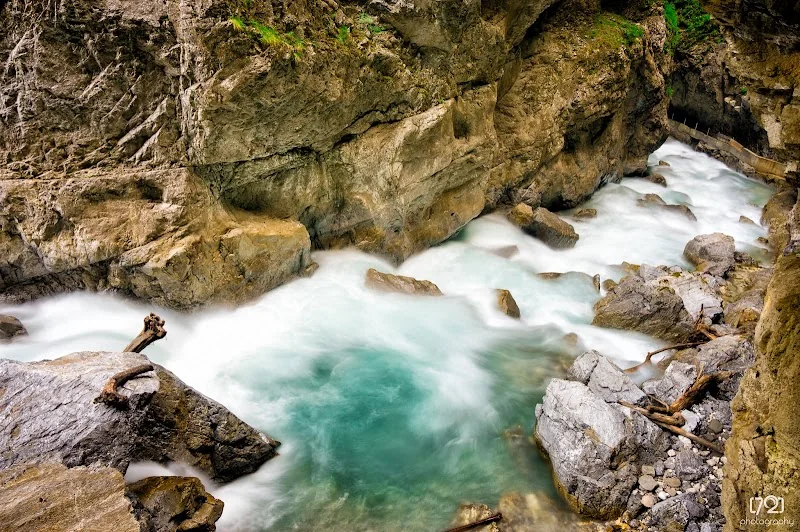
The Partnach Gorge in Garmisch-Partenkirchen is one of the most famous natural destinations in Bavaria and represents for many visitors the epitome of a short, intense Alpine experience. The gorge is about 700 meters long, with some sections cut more than 80 meters deep, and is located in the Reintal at the edge of the Zugspitze area. Those searching for Partnach Gorge opening hours, Partnach Gorge tickets, Partnach Gorge parking, Partnach Gorge hiking, or Partnach Gorge winter usually want to know exactly when a visit is worthwhile, how to get there best, and which route can be combined with a trip into the mountains. The gorge is ideal for this: it is a compact natural experience with dramatic rock walls, roaring waters, a clear path, and many connections for longer hikes. At the same time, it is a place with real history, as the gorge was declared a natural monument as early as 1912 and has been accessible in winter since 1930. After a necessary construction and safety phase, it was officially reopened on April 2, 2026. Thus, the Partnach Gorge today serves as both a classic destination for day trips and a popular starting point for more challenging tours towards Reintal, Graseck, and Eckbauer. Those who plan their visit well will experience one of the most impressive natural images of the Bavarian Alps in a form that is both easily accessible and surprisingly varied.
Opening Hours, Tickets, and Admission Prices for the Partnach Gorge
The official opening hours are one of the most important points in planning, as the Partnach Gorge is accessible almost all year round, but not open around the clock. According to the official website, the gorge is open daily from June to September from 8:00 AM to 8:00 PM. From October to May, the hours are from 8:00 AM to 6:00 PM. The last entry at the turnstiles occurs 30 minutes before closing. This is important if you do not want to start your hike under time pressure, as you should plan enough reserve time for the path through the gorge and possible connecting paths. Additionally, the official site points out that short-term closures for safety reasons can occur. Therefore, anyone researching Partnach Gorge current or Partnach Gorge winter opening hours should plan their visit not only according to the calendar but always also according to the current situation.
Upon entry, the gorge is clearly structured. Adults pay 10.00 euros. Holidaymakers with a valid guest card from the mentioned towns pay 9.00 euros, locals from the surrounding municipalities 8.50 euros. Children and teenagers aged 6 to 17 pay 5.00 euros. People with disabilities also pay 5.00 euros, as do dogs; dogs are required to be on a leash. Those who possess a volunteer card receive free entry, but only at the ticket counter. For groups of 15 or more, special prices of 9.00 euros for adults and 4.00 euros for children apply; bus drivers and tour guides can enter for free. The official site recommends that larger groups visit before 10:30 AM or later in the day to keep visitor flow more relaxed. This price and time structure shows that the Partnach Gorge is not organized as a mass attraction without rules, but as a protected natural experience with clear safety and visitor management measures. This is sensible for a natural monument: the gorge should remain accessible without unnecessarily burdening its sensitive areas.
The ticket purchase process is also practically organized at the Partnach Gorge. Tickets can be obtained directly at the ticket counter near the gorge entrance, in the experience shop of GaPa Tourism, or at the machines at the entrances of the gorge at the South Portal/Reintal and the North Portal. The official English site also points out that the online ticket should be shown directly at the turnstile, where the QR code will be scanned. It is also very important to note that there may be no Wi-Fi and no mobile network in the alpine terrain. Therefore, if you are using an online ticket, you should load it completely on your smartphone beforehand. This saves time and avoids stress at the control. Additionally, the Partnach Gorge is card-payment friendly, as card payment is officially supported. For many visitors searching for Partnach Gorge tickets or Partnach Gorge admission, this is particularly relevant: you can plan your visit spontaneously, but you must still know that the gorge is regulated, weather-dependent, and safety-oriented. This mix is precisely what makes it appealing: a natural experience with easy booking but clear framework conditions.
Getting There, Parking, and the Way to the Entrance
The Partnach Gorge is easily accessible by car, train, and bus, although the last section always remains a short walk. Those coming from Munich should drive via the A95 towards Garmisch-Partenkirchen, according to the official arrival page. In Garmisch-Partenkirchen, follow the signs to the Olympic Ski Stadium. This stadium is the main parking lot for visitors to the Partnach Gorge. It is important to note that while the nearest parking lot is at the Olympic Ski Stadium, it can quickly fill up on weekends and during peak season. Therefore, the official site recommends arriving early or using alternative parking lots. From the stadium, it is about a 25-minute walk to the gorge. Therefore, those searching for Partnach Gorge parking should not only save the nearest parking lot but also plan enough time for the walk.
Additionally, the official arrival page lists other paid parking options in Garmisch-Partenkirchen, including Badgasse, Rathausplatz, Zugspitzbahnhof, and Kongresshaus. The distances vary, and the path from there is correspondingly longer than from the Olympic Ski Stadium. Therefore, those who want to start as close to the gorge as possible usually drive directly to the stadium. For train travelers, there is also very clear guidance: Regional trains regularly run from Munich Central Station to Garmisch-Partenkirchen, with a journey time of about 1.5 hours. Direct connections from Innsbruck and other places are also possible. From the station, you can continue with local bus lines 1 or 2 towards the ski stadium; the ride takes about 10 minutes. This makes the gorge very accessible even without a car. This is a significant advantage for day visitors who do not want to travel by their own vehicle. The route is clear, the frequency is good, and the endpoint is easy to find.
The Grainau page adds to this information with further practical details, making the region as a starting point even more understandable. It describes that from the stop at the station, you can also use beautiful walking paths along the railway line and that there is a pleasant walking path along the Partnach riverbank to the ski stadium from Zugspitzbahnhof. Additionally, a special travel variant is mentioned: the horse-drawn carriage ride from the ski stadium to Wildenau on level ground. This is not a necessity for the visit but a charming addition for guests who want to consciously slow down the trip. Grainau hotel guests with a guest card also benefit from free use of the bus or cogwheel train between Garmisch-Partenkirchen and Grainau. For the typical search intent of Partnach Gorge route or Partnach Gorge Garmisch, this combination of car, train, local bus, and walking path is essential. The gorge is close enough for an uncomplicated visit but far enough in the valley that the journey itself becomes part of the experience. Those who plan their time well will already experience the alpine backdrop on the way, which later becomes denser and more impressive in the gorge.
Hiking Through the Partnach Gorge and the Best Connecting Routes
The actual hike through the Partnach Gorge is short, but that is precisely what makes its appeal. The path through the gorge is not designed as a major summit tour but as an intense natural experience in a confined space. Massive rock walls close in tightly, the water rushes beneath the path, and the perspectives change constantly. Therefore, those searching for Partnach Gorge hiking or Partnach Gorge route will find not just a single path but a whole network of connections. The official tour page describes the gorge as a starting point for numerous hikes in the Reintal, Hausberg, and Kreuzeck areas. Directly in front of the entrance, a steep road branches off to the left, leading to Vordergraseck in about 20 minutes on foot. It is more comfortable to take the cable car of the Hotel Das Graseck. To the left of the entrance hut, there is also a path that leads in about 20 minutes to the Iron Bridge. From there, you can either go about 10 minutes to Vordergraseck or about 15 minutes with approximately 100 meters of elevation to the Partnachalm.
These transitions are important because they can turn a short visit to the gorge into a half-day or full-day hiking program. Vordergraseck is a real hub: From there, paths lead to Hintergraseck, up to Eckbauer, further to Wamberg, or down to the back entrance of the Partnach Gorge. This way, you can also hike down the gorge instead of just using the classic access. This is particularly interesting for returning visitors because it allows for a different combination each time. Those who only want to see the gorge itself should plan the route as a short, clear tour. Those with more time can combine the tour with a stop at the Partnachalm, Klammhaus, Hanneslabauer, or other huts. This mix of nature, movement, and dining makes the place so popular. Families also benefit from this because the entrance is not too complicated, and the paths are well marked. At the same time, one should not underestimate the paths: Some connections are steep, and not every option is equally pleasant for all fitness levels.
Particularly exciting is the connection to the Zugspitze. The official tour page reminds us that the classic route to the Zugspitze runs along the Partnach and that this very path was taken by the first ascender Josef Naus in 1820. This is not only a historical reference but a strong motivation for hikers: the Partnach Gorge is not just a photo stop but part of a famous Alpine route. Therefore, anyone searching for Partnach Gorge Bavaria or Partnach Gorge Garmisch should not see the gorge in isolation but as an entry point into a larger mountain system. Even the short section through the gorge already conveys why the place has attracted so many people for decades: It is close, dramatic, easily accessible, and still very alpine. The hike is thus interesting for spontaneous visitors, nature-loving photographers, and ambitious mountain hikers alike. In short: The gorge is small enough for a day trip and large enough to make it a real tour.
Partnach Gorge in Winter, During Weather Changes, and for Current Impressions
Those searching for Partnach Gorge winter, Partnach Gorge weather, Partnach Gorge current, Partnach Gorge webcam, Partnach Gorge current images, or Partnach Gorge photos usually want to know whether a visit is particularly worthwhile at the moment. This is where the Partnach Gorge shows its great strength: it changes significantly with the seasons but remains strong in its effect. According to official history, the gorge has been accessible in winter since 1930. This is an important point, as many visitors associate the gorge with frosty days, calm light, and the impression of an almost fairy-tale Alpine landscape. The opening hours from October to May, namely 8:00 AM to 6:00 PM, explicitly cover this season. At the same time, the official pages remind us that short-term closures for safety reasons are possible. Therefore, anyone coming in winter should not only bring warm clothing and good footwear but always check the current status before visiting.
Particularly important in this context is the official information that the gorge was reopened on April 2, 2026, after urgent construction work. Those currently visiting the Partnach Gorge thus benefit from regular access but should know that the terrain remains sensitive and that official information takes precedence in case of doubt. For the search terms webcam and current images, the practical core is almost always the same: many people want to gain a quick visual impression before the trip and check whether the weather, water level, light, or snow conditions make the visit attractive. The official pages primarily rely on the gallery, images, and clear status messages for this purpose. A live webcam is not highlighted as a standard feature on the pages evaluated here, but orientation through images and weather remains sensible. Especially in the mountains, a sunny day can provide completely different impressions than a gray or snowy day.
The fascinating aspect of the Partnach Gorge in winter is not only the landscape but also the combination of narrowness, water, rock, and cold. Even without spectacular weather effects, the gorge is impressive because the steep walls and the powerful Partnach compress the space. When light hits wet rocks or ice forms at the edges on cold days, the mood changes immediately. Therefore, winter is the most impressive time for many visitors. At the same time, one should never underestimate the influence of the weather: the path can be wet, slippery, or uncomfortable, and short-term closures are expressly possible. This is why people search for Partnach Gorge weather and Partnach Gorge current before they even set off. Smart planning is thus part of the experience. Those who remain flexible significantly increase the chance of a perfect visit. Especially in photos and current images, the gorge then appears as a compact, powerful natural theater that creates a lot of atmosphere in a small space.
History, Natural Monument, and Special Rock Formations
The history of the Partnach Gorge is much older than its tourist development. According to official accounts, the gorge was formed over millions of years as meltwater and debris hollowed out the hard rock. What remains is the narrow gorge as we know it today. Before the Ice Age, the Partnach flowed in a different direction, and geologists assume that a barrier of shell limestone near Graseck blocked the way into the Loisach Valley. This initially created only a small stream in the current direction; this water cut deeper into the rock and gradually shaped the current bed. The source of the Partnach is in the Reintal, one of the most beautiful high valleys of the Northern Limestone Alps. From there, the water flows through the Reintal, the Partnachfall, and several foregorge sections into the famous, publicly accessible part. These geological details are important because they show that the gorge was not artificially staged but is the result of a very long natural development.
Historically, the Partnach Gorge also has special significance. It was declared a natural monument in 1912. Already in 1820, Josef Naus, the first ascender of the Zugspitze, had to bypass the gorge. It was only later that it was developed for tourism. Between 1910 and 1912, the gorge was expanded under difficult conditions for visitors. For a long time, it also served economic purposes, primarily for timber transport. The official historical pages remind us that timber from the valleys was brought down through the gorge and that names like Triftstraße or Am Holzofen still recall this use today. This connection between nature and work makes the history of the gorge particularly tangible. It was not only a destination for excursions but for a long time an important transport and economic area of the region.
Another turning point was the rockfall on June 1, 1991, when about 5,000 cubic meters of rock slipped at the southern end of the gorge, blocking the path and the watercourse. No one was injured, but the situation changed fundamentally. Since 1992, a 108-meter-long tunnel has been built through the rock, allowing a safe view of this natural phenomenon. Subsequent construction measures further improved safety: a section of the path was widened, rock stabilization and flood protection were implemented, and additional emergency call facilities and 26 more lamps were added. This development is typical for the Partnach Gorge: it remains a wild natural experience but is technically secured so that visitors can experience it responsibly. This balance of authenticity and modern safety is what makes it appealing. It is not a polished amusement park but a natural monument that has been made accessible with respect.
Safety, Accessibility Notes, and Dining Options Around the Gorge
The official pages for the Partnach Gorge are very clear when it comes to safety and accessibility. The safety concept includes reduced visitor numbers, emergency lighting, and intercom systems. Additionally, a layperson's defibrillator has been provided at the newly designed entrance next to the ticket counter, which is accessible to all visitors in a storage box. This shows that not only beautiful images have been worked on here, but also real infrastructure. It is also important for the visit that walkers cannot be taken through the gorge, strollers and buggies are prohibited, and drone recordings are also not allowed. Dogs are welcome on a leash. The gorge is family-friendly according to official symbols but is not equally suitable for all forms of mobility. This honesty is helpful because it prevents false expectations. Those traveling with small children, with luggage, or with limited mobility should therefore check the path in advance.
Even without significant barriers, the Partnach Gorge remains a place where reasonable preparation counts. There are card and online ticket solutions, but no Wi-Fi and no reliable mobile network in the alpine terrain. Therefore, the smartphone should not be prepared only at the entrance but beforehand. The path itself is well organized, but the climate in the gorge can be damp, cool, and slippery. Therefore, sturdy shoes and weatherproof clothing are not trivial matters. Those preparing for Partnach Gorge current or Partnach Gorge weather will thus be significantly more relaxed. The surroundings also offer numerous dining options, making it easy to combine the visit with a break. Directly at the entrance stands the Pitznerhütte, the oldest kiosk in the district, since 1895. In the immediate vicinity, there are the Partnachlodge, the Olympiahaus, the Klammhaus with kiosk, the Lenz’n Hütte, the Hanneslabauer, the Kaiserschmarrn Alm, and the Berggasthof Eckbauer. This is remarkably dense for a natural site and makes the tour flexible. You can sit down, eat, and let the impressions sink in after the gorge.
This mix of safety, nature, and dining is a significant part of the success of the Partnach Gorge. Those who just pass through experience an impressive gorge. Those who take their time also understand the region better. The paths to Vordergraseck, to Eckbauer, or towards Reintal open the gorge into the landscape and turn the short natural experience into a real mountain and enjoyment route. In conjunction with the historical background, the official safety measures, and the clear opening hours, a very rounded visitor profile emerges. The Partnach Gorge is thus not only a pretty place for photos but a well-organized natural experience with high recognizability. Whether you are searching for Partnach Gorge photos, Partnach Gorge Bavaria, or a meaningful Partnach Gorge route: in the end, it is primarily important that you plan the visit according to the season, the weather, and your own pace.
Sources:
Show moreShow less
Partnach Gorge | Opening Hours & Tickets
The Partnach Gorge in Garmisch-Partenkirchen is one of the most famous natural destinations in Bavaria and represents for many visitors the epitome of a short, intense Alpine experience. The gorge is about 700 meters long, with some sections cut more than 80 meters deep, and is located in the Reintal at the edge of the Zugspitze area. Those searching for Partnach Gorge opening hours, Partnach Gorge tickets, Partnach Gorge parking, Partnach Gorge hiking, or Partnach Gorge winter usually want to know exactly when a visit is worthwhile, how to get there best, and which route can be combined with a trip into the mountains. The gorge is ideal for this: it is a compact natural experience with dramatic rock walls, roaring waters, a clear path, and many connections for longer hikes. At the same time, it is a place with real history, as the gorge was declared a natural monument as early as 1912 and has been accessible in winter since 1930. After a necessary construction and safety phase, it was officially reopened on April 2, 2026. Thus, the Partnach Gorge today serves as both a classic destination for day trips and a popular starting point for more challenging tours towards Reintal, Graseck, and Eckbauer. Those who plan their visit well will experience one of the most impressive natural images of the Bavarian Alps in a form that is both easily accessible and surprisingly varied.
Opening Hours, Tickets, and Admission Prices for the Partnach Gorge
The official opening hours are one of the most important points in planning, as the Partnach Gorge is accessible almost all year round, but not open around the clock. According to the official website, the gorge is open daily from June to September from 8:00 AM to 8:00 PM. From October to May, the hours are from 8:00 AM to 6:00 PM. The last entry at the turnstiles occurs 30 minutes before closing. This is important if you do not want to start your hike under time pressure, as you should plan enough reserve time for the path through the gorge and possible connecting paths. Additionally, the official site points out that short-term closures for safety reasons can occur. Therefore, anyone researching Partnach Gorge current or Partnach Gorge winter opening hours should plan their visit not only according to the calendar but always also according to the current situation.
Upon entry, the gorge is clearly structured. Adults pay 10.00 euros. Holidaymakers with a valid guest card from the mentioned towns pay 9.00 euros, locals from the surrounding municipalities 8.50 euros. Children and teenagers aged 6 to 17 pay 5.00 euros. People with disabilities also pay 5.00 euros, as do dogs; dogs are required to be on a leash. Those who possess a volunteer card receive free entry, but only at the ticket counter. For groups of 15 or more, special prices of 9.00 euros for adults and 4.00 euros for children apply; bus drivers and tour guides can enter for free. The official site recommends that larger groups visit before 10:30 AM or later in the day to keep visitor flow more relaxed. This price and time structure shows that the Partnach Gorge is not organized as a mass attraction without rules, but as a protected natural experience with clear safety and visitor management measures. This is sensible for a natural monument: the gorge should remain accessible without unnecessarily burdening its sensitive areas.
The ticket purchase process is also practically organized at the Partnach Gorge. Tickets can be obtained directly at the ticket counter near the gorge entrance, in the experience shop of GaPa Tourism, or at the machines at the entrances of the gorge at the South Portal/Reintal and the North Portal. The official English site also points out that the online ticket should be shown directly at the turnstile, where the QR code will be scanned. It is also very important to note that there may be no Wi-Fi and no mobile network in the alpine terrain. Therefore, if you are using an online ticket, you should load it completely on your smartphone beforehand. This saves time and avoids stress at the control. Additionally, the Partnach Gorge is card-payment friendly, as card payment is officially supported. For many visitors searching for Partnach Gorge tickets or Partnach Gorge admission, this is particularly relevant: you can plan your visit spontaneously, but you must still know that the gorge is regulated, weather-dependent, and safety-oriented. This mix is precisely what makes it appealing: a natural experience with easy booking but clear framework conditions.
Getting There, Parking, and the Way to the Entrance
The Partnach Gorge is easily accessible by car, train, and bus, although the last section always remains a short walk. Those coming from Munich should drive via the A95 towards Garmisch-Partenkirchen, according to the official arrival page. In Garmisch-Partenkirchen, follow the signs to the Olympic Ski Stadium. This stadium is the main parking lot for visitors to the Partnach Gorge. It is important to note that while the nearest parking lot is at the Olympic Ski Stadium, it can quickly fill up on weekends and during peak season. Therefore, the official site recommends arriving early or using alternative parking lots. From the stadium, it is about a 25-minute walk to the gorge. Therefore, those searching for Partnach Gorge parking should not only save the nearest parking lot but also plan enough time for the walk.
Additionally, the official arrival page lists other paid parking options in Garmisch-Partenkirchen, including Badgasse, Rathausplatz, Zugspitzbahnhof, and Kongresshaus. The distances vary, and the path from there is correspondingly longer than from the Olympic Ski Stadium. Therefore, those who want to start as close to the gorge as possible usually drive directly to the stadium. For train travelers, there is also very clear guidance: Regional trains regularly run from Munich Central Station to Garmisch-Partenkirchen, with a journey time of about 1.5 hours. Direct connections from Innsbruck and other places are also possible. From the station, you can continue with local bus lines 1 or 2 towards the ski stadium; the ride takes about 10 minutes. This makes the gorge very accessible even without a car. This is a significant advantage for day visitors who do not want to travel by their own vehicle. The route is clear, the frequency is good, and the endpoint is easy to find.
The Grainau page adds to this information with further practical details, making the region as a starting point even more understandable. It describes that from the stop at the station, you can also use beautiful walking paths along the railway line and that there is a pleasant walking path along the Partnach riverbank to the ski stadium from Zugspitzbahnhof. Additionally, a special travel variant is mentioned: the horse-drawn carriage ride from the ski stadium to Wildenau on level ground. This is not a necessity for the visit but a charming addition for guests who want to consciously slow down the trip. Grainau hotel guests with a guest card also benefit from free use of the bus or cogwheel train between Garmisch-Partenkirchen and Grainau. For the typical search intent of Partnach Gorge route or Partnach Gorge Garmisch, this combination of car, train, local bus, and walking path is essential. The gorge is close enough for an uncomplicated visit but far enough in the valley that the journey itself becomes part of the experience. Those who plan their time well will already experience the alpine backdrop on the way, which later becomes denser and more impressive in the gorge.
Hiking Through the Partnach Gorge and the Best Connecting Routes
The actual hike through the Partnach Gorge is short, but that is precisely what makes its appeal. The path through the gorge is not designed as a major summit tour but as an intense natural experience in a confined space. Massive rock walls close in tightly, the water rushes beneath the path, and the perspectives change constantly. Therefore, those searching for Partnach Gorge hiking or Partnach Gorge route will find not just a single path but a whole network of connections. The official tour page describes the gorge as a starting point for numerous hikes in the Reintal, Hausberg, and Kreuzeck areas. Directly in front of the entrance, a steep road branches off to the left, leading to Vordergraseck in about 20 minutes on foot. It is more comfortable to take the cable car of the Hotel Das Graseck. To the left of the entrance hut, there is also a path that leads in about 20 minutes to the Iron Bridge. From there, you can either go about 10 minutes to Vordergraseck or about 15 minutes with approximately 100 meters of elevation to the Partnachalm.
These transitions are important because they can turn a short visit to the gorge into a half-day or full-day hiking program. Vordergraseck is a real hub: From there, paths lead to Hintergraseck, up to Eckbauer, further to Wamberg, or down to the back entrance of the Partnach Gorge. This way, you can also hike down the gorge instead of just using the classic access. This is particularly interesting for returning visitors because it allows for a different combination each time. Those who only want to see the gorge itself should plan the route as a short, clear tour. Those with more time can combine the tour with a stop at the Partnachalm, Klammhaus, Hanneslabauer, or other huts. This mix of nature, movement, and dining makes the place so popular. Families also benefit from this because the entrance is not too complicated, and the paths are well marked. At the same time, one should not underestimate the paths: Some connections are steep, and not every option is equally pleasant for all fitness levels.
Particularly exciting is the connection to the Zugspitze. The official tour page reminds us that the classic route to the Zugspitze runs along the Partnach and that this very path was taken by the first ascender Josef Naus in 1820. This is not only a historical reference but a strong motivation for hikers: the Partnach Gorge is not just a photo stop but part of a famous Alpine route. Therefore, anyone searching for Partnach Gorge Bavaria or Partnach Gorge Garmisch should not see the gorge in isolation but as an entry point into a larger mountain system. Even the short section through the gorge already conveys why the place has attracted so many people for decades: It is close, dramatic, easily accessible, and still very alpine. The hike is thus interesting for spontaneous visitors, nature-loving photographers, and ambitious mountain hikers alike. In short: The gorge is small enough for a day trip and large enough to make it a real tour.
Partnach Gorge in Winter, During Weather Changes, and for Current Impressions
Those searching for Partnach Gorge winter, Partnach Gorge weather, Partnach Gorge current, Partnach Gorge webcam, Partnach Gorge current images, or Partnach Gorge photos usually want to know whether a visit is particularly worthwhile at the moment. This is where the Partnach Gorge shows its great strength: it changes significantly with the seasons but remains strong in its effect. According to official history, the gorge has been accessible in winter since 1930. This is an important point, as many visitors associate the gorge with frosty days, calm light, and the impression of an almost fairy-tale Alpine landscape. The opening hours from October to May, namely 8:00 AM to 6:00 PM, explicitly cover this season. At the same time, the official pages remind us that short-term closures for safety reasons are possible. Therefore, anyone coming in winter should not only bring warm clothing and good footwear but always check the current status before visiting.
Particularly important in this context is the official information that the gorge was reopened on April 2, 2026, after urgent construction work. Those currently visiting the Partnach Gorge thus benefit from regular access but should know that the terrain remains sensitive and that official information takes precedence in case of doubt. For the search terms webcam and current images, the practical core is almost always the same: many people want to gain a quick visual impression before the trip and check whether the weather, water level, light, or snow conditions make the visit attractive. The official pages primarily rely on the gallery, images, and clear status messages for this purpose. A live webcam is not highlighted as a standard feature on the pages evaluated here, but orientation through images and weather remains sensible. Especially in the mountains, a sunny day can provide completely different impressions than a gray or snowy day.
The fascinating aspect of the Partnach Gorge in winter is not only the landscape but also the combination of narrowness, water, rock, and cold. Even without spectacular weather effects, the gorge is impressive because the steep walls and the powerful Partnach compress the space. When light hits wet rocks or ice forms at the edges on cold days, the mood changes immediately. Therefore, winter is the most impressive time for many visitors. At the same time, one should never underestimate the influence of the weather: the path can be wet, slippery, or uncomfortable, and short-term closures are expressly possible. This is why people search for Partnach Gorge weather and Partnach Gorge current before they even set off. Smart planning is thus part of the experience. Those who remain flexible significantly increase the chance of a perfect visit. Especially in photos and current images, the gorge then appears as a compact, powerful natural theater that creates a lot of atmosphere in a small space.
History, Natural Monument, and Special Rock Formations
The history of the Partnach Gorge is much older than its tourist development. According to official accounts, the gorge was formed over millions of years as meltwater and debris hollowed out the hard rock. What remains is the narrow gorge as we know it today. Before the Ice Age, the Partnach flowed in a different direction, and geologists assume that a barrier of shell limestone near Graseck blocked the way into the Loisach Valley. This initially created only a small stream in the current direction; this water cut deeper into the rock and gradually shaped the current bed. The source of the Partnach is in the Reintal, one of the most beautiful high valleys of the Northern Limestone Alps. From there, the water flows through the Reintal, the Partnachfall, and several foregorge sections into the famous, publicly accessible part. These geological details are important because they show that the gorge was not artificially staged but is the result of a very long natural development.
Historically, the Partnach Gorge also has special significance. It was declared a natural monument in 1912. Already in 1820, Josef Naus, the first ascender of the Zugspitze, had to bypass the gorge. It was only later that it was developed for tourism. Between 1910 and 1912, the gorge was expanded under difficult conditions for visitors. For a long time, it also served economic purposes, primarily for timber transport. The official historical pages remind us that timber from the valleys was brought down through the gorge and that names like Triftstraße or Am Holzofen still recall this use today. This connection between nature and work makes the history of the gorge particularly tangible. It was not only a destination for excursions but for a long time an important transport and economic area of the region.
Another turning point was the rockfall on June 1, 1991, when about 5,000 cubic meters of rock slipped at the southern end of the gorge, blocking the path and the watercourse. No one was injured, but the situation changed fundamentally. Since 1992, a 108-meter-long tunnel has been built through the rock, allowing a safe view of this natural phenomenon. Subsequent construction measures further improved safety: a section of the path was widened, rock stabilization and flood protection were implemented, and additional emergency call facilities and 26 more lamps were added. This development is typical for the Partnach Gorge: it remains a wild natural experience but is technically secured so that visitors can experience it responsibly. This balance of authenticity and modern safety is what makes it appealing. It is not a polished amusement park but a natural monument that has been made accessible with respect.
Safety, Accessibility Notes, and Dining Options Around the Gorge
The official pages for the Partnach Gorge are very clear when it comes to safety and accessibility. The safety concept includes reduced visitor numbers, emergency lighting, and intercom systems. Additionally, a layperson's defibrillator has been provided at the newly designed entrance next to the ticket counter, which is accessible to all visitors in a storage box. This shows that not only beautiful images have been worked on here, but also real infrastructure. It is also important for the visit that walkers cannot be taken through the gorge, strollers and buggies are prohibited, and drone recordings are also not allowed. Dogs are welcome on a leash. The gorge is family-friendly according to official symbols but is not equally suitable for all forms of mobility. This honesty is helpful because it prevents false expectations. Those traveling with small children, with luggage, or with limited mobility should therefore check the path in advance.
Even without significant barriers, the Partnach Gorge remains a place where reasonable preparation counts. There are card and online ticket solutions, but no Wi-Fi and no reliable mobile network in the alpine terrain. Therefore, the smartphone should not be prepared only at the entrance but beforehand. The path itself is well organized, but the climate in the gorge can be damp, cool, and slippery. Therefore, sturdy shoes and weatherproof clothing are not trivial matters. Those preparing for Partnach Gorge current or Partnach Gorge weather will thus be significantly more relaxed. The surroundings also offer numerous dining options, making it easy to combine the visit with a break. Directly at the entrance stands the Pitznerhütte, the oldest kiosk in the district, since 1895. In the immediate vicinity, there are the Partnachlodge, the Olympiahaus, the Klammhaus with kiosk, the Lenz’n Hütte, the Hanneslabauer, the Kaiserschmarrn Alm, and the Berggasthof Eckbauer. This is remarkably dense for a natural site and makes the tour flexible. You can sit down, eat, and let the impressions sink in after the gorge.
This mix of safety, nature, and dining is a significant part of the success of the Partnach Gorge. Those who just pass through experience an impressive gorge. Those who take their time also understand the region better. The paths to Vordergraseck, to Eckbauer, or towards Reintal open the gorge into the landscape and turn the short natural experience into a real mountain and enjoyment route. In conjunction with the historical background, the official safety measures, and the clear opening hours, a very rounded visitor profile emerges. The Partnach Gorge is thus not only a pretty place for photos but a well-organized natural experience with high recognizability. Whether you are searching for Partnach Gorge photos, Partnach Gorge Bavaria, or a meaningful Partnach Gorge route: in the end, it is primarily important that you plan the visit according to the season, the weather, and your own pace.
Sources:
Partnach Gorge | Opening Hours & Tickets
The Partnach Gorge in Garmisch-Partenkirchen is one of the most famous natural destinations in Bavaria and represents for many visitors the epitome of a short, intense Alpine experience. The gorge is about 700 meters long, with some sections cut more than 80 meters deep, and is located in the Reintal at the edge of the Zugspitze area. Those searching for Partnach Gorge opening hours, Partnach Gorge tickets, Partnach Gorge parking, Partnach Gorge hiking, or Partnach Gorge winter usually want to know exactly when a visit is worthwhile, how to get there best, and which route can be combined with a trip into the mountains. The gorge is ideal for this: it is a compact natural experience with dramatic rock walls, roaring waters, a clear path, and many connections for longer hikes. At the same time, it is a place with real history, as the gorge was declared a natural monument as early as 1912 and has been accessible in winter since 1930. After a necessary construction and safety phase, it was officially reopened on April 2, 2026. Thus, the Partnach Gorge today serves as both a classic destination for day trips and a popular starting point for more challenging tours towards Reintal, Graseck, and Eckbauer. Those who plan their visit well will experience one of the most impressive natural images of the Bavarian Alps in a form that is both easily accessible and surprisingly varied.
Opening Hours, Tickets, and Admission Prices for the Partnach Gorge
The official opening hours are one of the most important points in planning, as the Partnach Gorge is accessible almost all year round, but not open around the clock. According to the official website, the gorge is open daily from June to September from 8:00 AM to 8:00 PM. From October to May, the hours are from 8:00 AM to 6:00 PM. The last entry at the turnstiles occurs 30 minutes before closing. This is important if you do not want to start your hike under time pressure, as you should plan enough reserve time for the path through the gorge and possible connecting paths. Additionally, the official site points out that short-term closures for safety reasons can occur. Therefore, anyone researching Partnach Gorge current or Partnach Gorge winter opening hours should plan their visit not only according to the calendar but always also according to the current situation.
Upon entry, the gorge is clearly structured. Adults pay 10.00 euros. Holidaymakers with a valid guest card from the mentioned towns pay 9.00 euros, locals from the surrounding municipalities 8.50 euros. Children and teenagers aged 6 to 17 pay 5.00 euros. People with disabilities also pay 5.00 euros, as do dogs; dogs are required to be on a leash. Those who possess a volunteer card receive free entry, but only at the ticket counter. For groups of 15 or more, special prices of 9.00 euros for adults and 4.00 euros for children apply; bus drivers and tour guides can enter for free. The official site recommends that larger groups visit before 10:30 AM or later in the day to keep visitor flow more relaxed. This price and time structure shows that the Partnach Gorge is not organized as a mass attraction without rules, but as a protected natural experience with clear safety and visitor management measures. This is sensible for a natural monument: the gorge should remain accessible without unnecessarily burdening its sensitive areas.
The ticket purchase process is also practically organized at the Partnach Gorge. Tickets can be obtained directly at the ticket counter near the gorge entrance, in the experience shop of GaPa Tourism, or at the machines at the entrances of the gorge at the South Portal/Reintal and the North Portal. The official English site also points out that the online ticket should be shown directly at the turnstile, where the QR code will be scanned. It is also very important to note that there may be no Wi-Fi and no mobile network in the alpine terrain. Therefore, if you are using an online ticket, you should load it completely on your smartphone beforehand. This saves time and avoids stress at the control. Additionally, the Partnach Gorge is card-payment friendly, as card payment is officially supported. For many visitors searching for Partnach Gorge tickets or Partnach Gorge admission, this is particularly relevant: you can plan your visit spontaneously, but you must still know that the gorge is regulated, weather-dependent, and safety-oriented. This mix is precisely what makes it appealing: a natural experience with easy booking but clear framework conditions.
Getting There, Parking, and the Way to the Entrance
The Partnach Gorge is easily accessible by car, train, and bus, although the last section always remains a short walk. Those coming from Munich should drive via the A95 towards Garmisch-Partenkirchen, according to the official arrival page. In Garmisch-Partenkirchen, follow the signs to the Olympic Ski Stadium. This stadium is the main parking lot for visitors to the Partnach Gorge. It is important to note that while the nearest parking lot is at the Olympic Ski Stadium, it can quickly fill up on weekends and during peak season. Therefore, the official site recommends arriving early or using alternative parking lots. From the stadium, it is about a 25-minute walk to the gorge. Therefore, those searching for Partnach Gorge parking should not only save the nearest parking lot but also plan enough time for the walk.
Additionally, the official arrival page lists other paid parking options in Garmisch-Partenkirchen, including Badgasse, Rathausplatz, Zugspitzbahnhof, and Kongresshaus. The distances vary, and the path from there is correspondingly longer than from the Olympic Ski Stadium. Therefore, those who want to start as close to the gorge as possible usually drive directly to the stadium. For train travelers, there is also very clear guidance: Regional trains regularly run from Munich Central Station to Garmisch-Partenkirchen, with a journey time of about 1.5 hours. Direct connections from Innsbruck and other places are also possible. From the station, you can continue with local bus lines 1 or 2 towards the ski stadium; the ride takes about 10 minutes. This makes the gorge very accessible even without a car. This is a significant advantage for day visitors who do not want to travel by their own vehicle. The route is clear, the frequency is good, and the endpoint is easy to find.
The Grainau page adds to this information with further practical details, making the region as a starting point even more understandable. It describes that from the stop at the station, you can also use beautiful walking paths along the railway line and that there is a pleasant walking path along the Partnach riverbank to the ski stadium from Zugspitzbahnhof. Additionally, a special travel variant is mentioned: the horse-drawn carriage ride from the ski stadium to Wildenau on level ground. This is not a necessity for the visit but a charming addition for guests who want to consciously slow down the trip. Grainau hotel guests with a guest card also benefit from free use of the bus or cogwheel train between Garmisch-Partenkirchen and Grainau. For the typical search intent of Partnach Gorge route or Partnach Gorge Garmisch, this combination of car, train, local bus, and walking path is essential. The gorge is close enough for an uncomplicated visit but far enough in the valley that the journey itself becomes part of the experience. Those who plan their time well will already experience the alpine backdrop on the way, which later becomes denser and more impressive in the gorge.
Hiking Through the Partnach Gorge and the Best Connecting Routes
The actual hike through the Partnach Gorge is short, but that is precisely what makes its appeal. The path through the gorge is not designed as a major summit tour but as an intense natural experience in a confined space. Massive rock walls close in tightly, the water rushes beneath the path, and the perspectives change constantly. Therefore, those searching for Partnach Gorge hiking or Partnach Gorge route will find not just a single path but a whole network of connections. The official tour page describes the gorge as a starting point for numerous hikes in the Reintal, Hausberg, and Kreuzeck areas. Directly in front of the entrance, a steep road branches off to the left, leading to Vordergraseck in about 20 minutes on foot. It is more comfortable to take the cable car of the Hotel Das Graseck. To the left of the entrance hut, there is also a path that leads in about 20 minutes to the Iron Bridge. From there, you can either go about 10 minutes to Vordergraseck or about 15 minutes with approximately 100 meters of elevation to the Partnachalm.
These transitions are important because they can turn a short visit to the gorge into a half-day or full-day hiking program. Vordergraseck is a real hub: From there, paths lead to Hintergraseck, up to Eckbauer, further to Wamberg, or down to the back entrance of the Partnach Gorge. This way, you can also hike down the gorge instead of just using the classic access. This is particularly interesting for returning visitors because it allows for a different combination each time. Those who only want to see the gorge itself should plan the route as a short, clear tour. Those with more time can combine the tour with a stop at the Partnachalm, Klammhaus, Hanneslabauer, or other huts. This mix of nature, movement, and dining makes the place so popular. Families also benefit from this because the entrance is not too complicated, and the paths are well marked. At the same time, one should not underestimate the paths: Some connections are steep, and not every option is equally pleasant for all fitness levels.
Particularly exciting is the connection to the Zugspitze. The official tour page reminds us that the classic route to the Zugspitze runs along the Partnach and that this very path was taken by the first ascender Josef Naus in 1820. This is not only a historical reference but a strong motivation for hikers: the Partnach Gorge is not just a photo stop but part of a famous Alpine route. Therefore, anyone searching for Partnach Gorge Bavaria or Partnach Gorge Garmisch should not see the gorge in isolation but as an entry point into a larger mountain system. Even the short section through the gorge already conveys why the place has attracted so many people for decades: It is close, dramatic, easily accessible, and still very alpine. The hike is thus interesting for spontaneous visitors, nature-loving photographers, and ambitious mountain hikers alike. In short: The gorge is small enough for a day trip and large enough to make it a real tour.
Partnach Gorge in Winter, During Weather Changes, and for Current Impressions
Those searching for Partnach Gorge winter, Partnach Gorge weather, Partnach Gorge current, Partnach Gorge webcam, Partnach Gorge current images, or Partnach Gorge photos usually want to know whether a visit is particularly worthwhile at the moment. This is where the Partnach Gorge shows its great strength: it changes significantly with the seasons but remains strong in its effect. According to official history, the gorge has been accessible in winter since 1930. This is an important point, as many visitors associate the gorge with frosty days, calm light, and the impression of an almost fairy-tale Alpine landscape. The opening hours from October to May, namely 8:00 AM to 6:00 PM, explicitly cover this season. At the same time, the official pages remind us that short-term closures for safety reasons are possible. Therefore, anyone coming in winter should not only bring warm clothing and good footwear but always check the current status before visiting.
Particularly important in this context is the official information that the gorge was reopened on April 2, 2026, after urgent construction work. Those currently visiting the Partnach Gorge thus benefit from regular access but should know that the terrain remains sensitive and that official information takes precedence in case of doubt. For the search terms webcam and current images, the practical core is almost always the same: many people want to gain a quick visual impression before the trip and check whether the weather, water level, light, or snow conditions make the visit attractive. The official pages primarily rely on the gallery, images, and clear status messages for this purpose. A live webcam is not highlighted as a standard feature on the pages evaluated here, but orientation through images and weather remains sensible. Especially in the mountains, a sunny day can provide completely different impressions than a gray or snowy day.
The fascinating aspect of the Partnach Gorge in winter is not only the landscape but also the combination of narrowness, water, rock, and cold. Even without spectacular weather effects, the gorge is impressive because the steep walls and the powerful Partnach compress the space. When light hits wet rocks or ice forms at the edges on cold days, the mood changes immediately. Therefore, winter is the most impressive time for many visitors. At the same time, one should never underestimate the influence of the weather: the path can be wet, slippery, or uncomfortable, and short-term closures are expressly possible. This is why people search for Partnach Gorge weather and Partnach Gorge current before they even set off. Smart planning is thus part of the experience. Those who remain flexible significantly increase the chance of a perfect visit. Especially in photos and current images, the gorge then appears as a compact, powerful natural theater that creates a lot of atmosphere in a small space.
History, Natural Monument, and Special Rock Formations
The history of the Partnach Gorge is much older than its tourist development. According to official accounts, the gorge was formed over millions of years as meltwater and debris hollowed out the hard rock. What remains is the narrow gorge as we know it today. Before the Ice Age, the Partnach flowed in a different direction, and geologists assume that a barrier of shell limestone near Graseck blocked the way into the Loisach Valley. This initially created only a small stream in the current direction; this water cut deeper into the rock and gradually shaped the current bed. The source of the Partnach is in the Reintal, one of the most beautiful high valleys of the Northern Limestone Alps. From there, the water flows through the Reintal, the Partnachfall, and several foregorge sections into the famous, publicly accessible part. These geological details are important because they show that the gorge was not artificially staged but is the result of a very long natural development.
Historically, the Partnach Gorge also has special significance. It was declared a natural monument in 1912. Already in 1820, Josef Naus, the first ascender of the Zugspitze, had to bypass the gorge. It was only later that it was developed for tourism. Between 1910 and 1912, the gorge was expanded under difficult conditions for visitors. For a long time, it also served economic purposes, primarily for timber transport. The official historical pages remind us that timber from the valleys was brought down through the gorge and that names like Triftstraße or Am Holzofen still recall this use today. This connection between nature and work makes the history of the gorge particularly tangible. It was not only a destination for excursions but for a long time an important transport and economic area of the region.
Another turning point was the rockfall on June 1, 1991, when about 5,000 cubic meters of rock slipped at the southern end of the gorge, blocking the path and the watercourse. No one was injured, but the situation changed fundamentally. Since 1992, a 108-meter-long tunnel has been built through the rock, allowing a safe view of this natural phenomenon. Subsequent construction measures further improved safety: a section of the path was widened, rock stabilization and flood protection were implemented, and additional emergency call facilities and 26 more lamps were added. This development is typical for the Partnach Gorge: it remains a wild natural experience but is technically secured so that visitors can experience it responsibly. This balance of authenticity and modern safety is what makes it appealing. It is not a polished amusement park but a natural monument that has been made accessible with respect.
Safety, Accessibility Notes, and Dining Options Around the Gorge
The official pages for the Partnach Gorge are very clear when it comes to safety and accessibility. The safety concept includes reduced visitor numbers, emergency lighting, and intercom systems. Additionally, a layperson's defibrillator has been provided at the newly designed entrance next to the ticket counter, which is accessible to all visitors in a storage box. This shows that not only beautiful images have been worked on here, but also real infrastructure. It is also important for the visit that walkers cannot be taken through the gorge, strollers and buggies are prohibited, and drone recordings are also not allowed. Dogs are welcome on a leash. The gorge is family-friendly according to official symbols but is not equally suitable for all forms of mobility. This honesty is helpful because it prevents false expectations. Those traveling with small children, with luggage, or with limited mobility should therefore check the path in advance.
Even without significant barriers, the Partnach Gorge remains a place where reasonable preparation counts. There are card and online ticket solutions, but no Wi-Fi and no reliable mobile network in the alpine terrain. Therefore, the smartphone should not be prepared only at the entrance but beforehand. The path itself is well organized, but the climate in the gorge can be damp, cool, and slippery. Therefore, sturdy shoes and weatherproof clothing are not trivial matters. Those preparing for Partnach Gorge current or Partnach Gorge weather will thus be significantly more relaxed. The surroundings also offer numerous dining options, making it easy to combine the visit with a break. Directly at the entrance stands the Pitznerhütte, the oldest kiosk in the district, since 1895. In the immediate vicinity, there are the Partnachlodge, the Olympiahaus, the Klammhaus with kiosk, the Lenz’n Hütte, the Hanneslabauer, the Kaiserschmarrn Alm, and the Berggasthof Eckbauer. This is remarkably dense for a natural site and makes the tour flexible. You can sit down, eat, and let the impressions sink in after the gorge.
This mix of safety, nature, and dining is a significant part of the success of the Partnach Gorge. Those who just pass through experience an impressive gorge. Those who take their time also understand the region better. The paths to Vordergraseck, to Eckbauer, or towards Reintal open the gorge into the landscape and turn the short natural experience into a real mountain and enjoyment route. In conjunction with the historical background, the official safety measures, and the clear opening hours, a very rounded visitor profile emerges. The Partnach Gorge is thus not only a pretty place for photos but a well-organized natural experience with high recognizability. Whether you are searching for Partnach Gorge photos, Partnach Gorge Bavaria, or a meaningful Partnach Gorge route: in the end, it is primarily important that you plan the visit according to the season, the weather, and your own pace.
Sources:
Upcoming Events
No events found
Frequently Asked Questions
Reviews
Jay Crossler
21. December 2025
Very impressive - a hidden gem that is worth taking the kids (and possibly dogs) to. It is not the easiest hike, but the waterfalls and scenic views are amazing. We went as the temperature hit 0-degrees freezing, so seeing the waterfall spray build up walls of ice was breathtaking. If you keep going through, there’s a vigorous hike up the mountain to an eatery and cable-car down. The teenagers loved it.
MRJ 95
17. February 2026
An extremely beautiful place to visit. A small hike, 10 euro ticket that can be used to leave and re enter the gorge anytime before closing. Winter time is more recommended to visit.
Virgiele Michelle Correos
22. October 2025
Visiting Partnachklamm – Beautiful, But Overpriced Partnachklamm (Partnach Gorge) is undeniably a natural wonder and a must-see if you're in the Garmisch-Partenkirchen area. The gorge is stunning, with its narrow passageways, towering limestone walls, and the sound of rushing water echoing through the canyon. It's an impressive display of raw natural beauty that photographers and nature-lovers will absolutely appreciate. However, the experience does come with a downside: the entrance fee. At €10 per adult (as of 2025), it feels steep for what is essentially a short, 700-meter walk through the gorge. While the path is well-maintained and safety measures are clearly in place, the high price doesn’t quite match the duration or complexity of the attraction. There's no guided experience included, and facilities are fairly basic. If you're traveling with a family or on a budget, the cost can add up quickly. It would be more reasonable if the ticket included access to nearby trails or some additional interpretive content about the geology and history of the gorge. In short: Pros: Stunning scenery, unique experience, easily accessible. Cons: Short walk, crowded during peak hours, and overpriced for what you get. Worth visiting once, especially if you've never seen a gorge like this before — but be prepared to pay more than you'd expect for a brief nature walk.
Anna Derevianko
20. November 2025
Now this place is something special, eh? Partnach Gorge has officially become one of my favourite spots on the planet. The scenery is absolutely stunning: roaring rapids, waterfalls, and those dramatic rock walls that make you feel tiny in the best way possible. The walking paths are super well kept, and every corner gives you another “wow” moment. It’s an absolutely gorgeous place, and I’d recommend it to anyone visiting the area. Totally worth the trip!
J C
31. December 2025
It’s an amazing natural scenery. Easy to access, just 30mins walk from carpark, the river and ice are adorable. Worth to come here for half day. Happy 2025 and 2026!