
Garmisch-Partenkirchen
Schnitzschulstraße 19, 82467 Garmisch-Partenkirchen, Deutschland
Richard Strauss Institute | Weddings & Opening Hours
The Richard Strauss Institute in Garmisch-Partenkirchen is much more than a classical cultural venue. It is a research center, exhibition space, concert address, and at the same time a place for special private occasions. In the historic Villa Christina in Partenkirchen, the institute combines scientific work with vibrant music education and an atmosphere that is directly connected to the life and legacy of Richard Strauss. The house serves as the official point of contact for questions regarding the composer, has a specialized library and an archive with originals, and offers a diverse program for visitors with its permanent exhibition and its own concert formats. Civil weddings in the chamber music hall also make the location unique. Those who visit the Richard Strauss Institute experience a place where research, cultural history, and personal experiences are closely intertwined. ([richard-strauss-institut.de](https://www.richard-strauss-institut.de/de/institut/))
Opening Hours, Address and Directions to the Richard Strauss Institute
The most important visiting information is clearly and officially communicated: The Richard Strauss Institute is located at Schnitzschulstraße 19 in 82467 Garmisch-Partenkirchen and is open from Monday to Friday from 10:00 AM to 4:00 PM; the house is closed on public holidays. The official directions page also lists the location with exactly this address and contact information. Those planning a visit thus have a reliable basis for traveling and can easily combine their stay with a tour of Partenkirchen. For inquiries, the institute is available by phone and email, which is particularly helpful for special topics, research concerns, or event questions. Especially because the Richard Strauss Institute is not only an exhibition space but also a workplace and event venue, a brief preparation before the visit is worthwhile. ([richard-strauss-institut.de](https://www.richard-strauss-institut.de/de/institut/))
The location in Partenkirchen significantly shapes the character of the house. The institute is housed in Villa Christina, a historic building that has served as the location of the house since 1999. Therefore, visitors to the area do not encounter a sterile administrative building, but a place with history that is consciously connected to the care of Strauss and the cultural heritage of the area. This is pleasant for visitors, as the path is not only functional but also atmospheric. The surroundings are also closely linked to the cultural life of Garmisch-Partenkirchen, making a visit easily combinable with other stops in the city. Especially for people searching for the Richard Strauss Institute in Garmisch, this location is a true anchor point, as it makes the theme of Strauss visible in the local landscape. ([markt.gapa.de](https://markt.gapa.de/buerger-verwaltung/heiraten-in-garmisch-partenkirchen/richard-strauss-institut/))
Practically important is also that the house has a clear institutional framework. The Richard Strauss Institute is officially a competence center for questions about Richard Strauss and thus not just a museum address, but a functioning work and research environment. This also explains why opening hours and contact methods are so important: Anyone wishing to visit an exhibition, attend an event, or make a professional inquiry should adhere to the official times. This is ideal for planning a day in Garmisch-Partenkirchen, as the visit can be well-timed. The combination of address, fixed opening hours, and proximity to the center of Partenkirchen makes the location attractive for culture enthusiasts as well as for those wanting to get married or concertgoers alike. ([richard-strauss-institut.de](https://www.richard-strauss-institut.de/de/institut/))
Weddings at the Richard Strauss Institute
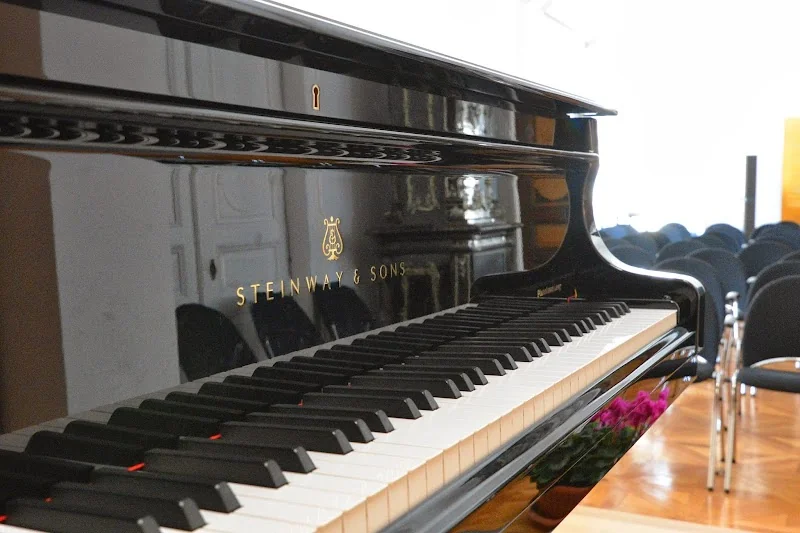
A particularly sought-after topic related to the institute is weddings. The chamber music hall at the Richard Strauss Institute is considered an extraordinary backdrop for civil ceremonies. The official page of the market Garmisch-Partenkirchen describes the room as a historically significant place with a special atmosphere in Villa Christina. Historical tiled stoves, a concert grand piano, and the view into the Kurpark Partenkirchen are also mentioned there. This mix of music, architecture, and nature makes the hall a place that is truly created for festive moments. Therefore, those looking to get married at the Richard Strauss Institute or searching for Richard Strauss Institute weddings will find here not just any event location, but a house with real cultural relevance and a very unique ambiance. ([markt.gapa.de](https://markt.gapa.de/buerger-verwaltung/heiraten-in-garmisch-partenkirchen/richard-strauss-institut/))
The weddings take place almost every Friday according to the market Garmisch-Partenkirchen. At the same time, it is pointed out that the appointment must be arranged through the registry office and that the marriage can only take place after prior coordination. A surcharge of 100.00 euros is charged for the use of the music hall. These are important, concrete pieces of information for couples planning a wedding in a special setting and wanting to calculate seriously at the same time. Particularly interesting is also that after the ceremony, the Kurpark is often used for a reception in the green. This creates a harmonious overall experience of a civil ceremony, music space, and subsequent stay outdoors. This connection explains why the Richard Strauss Institute is so popular as a wedding venue. ([markt.gapa.de](https://markt.gapa.de/buerger-verwaltung/heiraten-in-garmisch-partenkirchen/richard-strauss-institut/))
From an SEO perspective, this topic also perfectly fits the user intentions surrounding the institute: Many search queries revolve around weddings, civil ceremonies, opening hours, and photos. The reason is understandable, as the house combines a strong visual impact with a clear cultural identity. Those looking for a special civil location in Garmisch-Partenkirchen will not only find a room here but an experience with historical and musical relevance. That the location is part of GaPa Kultur gGmbH and is managed under a cultural roof with concerts and other formats enhances the impression of a lively place that is not only used once but remains culturally relevant over time. ([markt.gapa.de](https://markt.gapa.de/buerger-verwaltung/heiraten-in-garmisch-partenkirchen/richard-strauss-institut/))
Concert Hall, GAPA Classics and Richard Strauss Days
The Richard Strauss Institute is also important as a concert venue. Under the label GAPA Classics, the institute regularly hosts symphony and chamber music concerts between September and May, making it one of the key providers of classical music in the region. The official site also describes concert formats for an audience that appreciates high-quality classical programs and a personal atmosphere. Especially the concert hall of the institute is known for the fact that the artists perform spatially close to the audience. This makes the place particularly attractive for chamber music lovers and is a key reason why many search for Richard Strauss Institute concert hall or Richard Strauss Institute events. ([richard-strauss-institut.de](https://www.richard-strauss-institut.de/de/institut/))
The official event page also shows that the concert hall can be booked for its own cultural events. This expands the use beyond the fixed program and makes the location interesting for collaborations as well. Furthermore, seating plans are published in the program brochures, including for the concert hall of the institute and for the Festsaal Werdenfels in the congress house. This makes it clear that the house is not only a cultural address but also well-organized. Therefore, those asking about seating plans or seats will find understandable, structured concert information. For visitors, this means: The institute is not only historically interesting but also a professionally organized place for concert visits and smaller events. ([richard-strauss-institut.de](https://www.richard-strauss-institut.de/de/veranstaltungen/))
A highlight of the annual calendar is the Richard Strauss Days, which the institute organizes annually at the end of June. The event is closely connected to the landscape and the cultural self-understanding of the Werdenfelser Land. This already shows that the Richard Strauss Institute does not work in isolation but consciously intertwines its programs with the place and its surroundings. Public materials also reveal that the festival has a long history and has been continued under various leaderships. For regional culture, this is a strong signal, as the care of Strauss is not only a research topic but is regularly made publicly experienceable in the form of concerts, lectures, and musical formats. ([richard-strauss-institut.de](https://www.richard-strauss-institut.de/de/institut/?utm_source=openai))
Ticket and evening box information is also relevant for search intentions. In official event details, different ticket providers are mentioned, including GAP-Ticket and München Ticket, and the evening box is typically open one hour before the concert begins. This is important for all those searching for a concert visit at the Richard Strauss Institute and wanting to know how the practical process works. Especially because the institute offers both its own chamber concerts and larger formats in conjunction with the congress house, these clear indications are helpful. Thus, a culturally ambitious address becomes a place that can also be well planned organizationally. ([richard-strauss-institut.de](https://www.richard-strauss-institut.de/de/veranstaltungen/detail/753?utm_source=openai))
Research, Library, and Archive
The scientific core of the Richard Strauss Institute is one of the main reasons for its international significance. The official website describes the house as a competence center and research facility with a specialized library and archive. Research is conducted there on biographical aspects, the creation and reception of works, and compositional sketches, among other things. Researchers, conductors, opera houses, auction houses, and music colleges use the institute to check materials, clarify questions, or prepare scientific papers. This shows that the Richard Strauss Institute is not just a museum but an active research environment with high professional relevance. For users searching for Richard Strauss Institute research, library, or archive, this is a decisive added value. ([richard-strauss-institut.de](https://www.richard-strauss-institut.de/de/institut/))
Particularly noteworthy is the close connection to the Strauss family. According to the official representation, it allows the use of the private Richard Strauss archive for research purposes, enabling decades of trustful collaboration. At the same time, it is emphasized that nowhere else in the world is as much material about Richard Strauss preserved as in Garmisch-Partenkirchen. This statement underscores why the location is internationally regarded as a center for Strauss care and research. Therefore, those seeking a deeper engagement with the composer will find not only secondary literature there but also a place where materials are organized, examined, and scientifically classified. This gives the institute an extraordinary authenticity and explains its significance far beyond the region. ([richard-strauss-institut.de](https://www.richard-strauss-institut.de/de/institut/))
The content profile is also deliberately broad but clearly focused. On the event page, the institute describes its primary interest in the music of Richard Strauss as well as in German and Austrian composers of late Romanticism. Furthermore, rarities from Bavarian and Austrian music history and figures from the environment of Liszt, Wagner, and Strauss are particularly considered. This is important for SEO and content orientation alike, as it shows that the place does not only deal with Strauss in the narrower sense but opens up a whole musical environment. Thus, the Richard Strauss Institute becomes an address for research, collection, contextual knowledge, and historical classification. ([richard-strauss-institut.de](https://www.richard-strauss-institut.de/de/veranstaltungen/))
History and Role in the Cultural Life of Garmisch-Partenkirchen
The history of the institute itself is an important part of its identity. The Richard Strauss Institute was founded in 1982 as a municipal institution in Munich. Later, considerations were made to relocate the site to Garmisch-Partenkirchen, as the place increasingly established itself as a central Strauss location. In early September 1998, the institute initially began operations provisionally on a former barracks site. On September 8, 1999, the 50th anniversary of the composer's death, it was then reopened in Villa Christina. This development shows how closely the house is connected to the regional Strauss history and why it is so strongly identified with Garmisch-Partenkirchen today. ([richard-strauss-institut.de](https://www.richard-strauss-institut.de/de/institut/))
Another milestone was the organizational development since 2008. During this time, the institute grew into a cultural carrier with four pillars: science, exhibition, seasonal concerts, and festival. In 2020, GaPa Kultur gGmbH was founded to separate concert operations and scientific operations in terms of personnel and budget and to provide both areas with a stable structure. In early 2021, the transfer of the institute, the Richard Strauss Days, and the remaining event management to this company took place. For visitors, this means a professionally organized environment in which research and programming do not run parallel but are meaningfully positioned. ([richard-strauss-institut.de](https://www.richard-strauss-institut.de/de/institut/))
The role of the house in the cityscape should not be underestimated. Garmisch-Partenkirchen explicitly emphasizes Richard Strauss as part of its cultural heritage, and the institute is a visible and active institution in this regard. It stands for a lively care of Strauss that does not end in the archive but is carried forward in exhibitions, concerts, lectures, and events. For this reason, the location remains relevant for various search queries: from Richard Strauss Institute Garmisch to opening hours to reviews or photos. The house is not just a destination for specialists but also for culturally interested guests seeking an authentic connection to Richard Strauss in the region. ([markt.gapa.de](https://markt.gapa.de/buerger-verwaltung/heiraten-in-garmisch-partenkirchen/richard-strauss-institut/))
Seating Plan, Visitor Information, and What You Should Know in Advance
Those planning a visit or concert evening benefit from the clear information in the program brochures. There, seating plans for the concert hall of the Richard Strauss Institute and for the Festsaal Werdenfels in the congress house are displayed. This is particularly practical for guests interested in seating areas, categories, or the spatial layout. The event notices also include information on ticket prices, discounts, and advance sales points. For the Richard Strauss Institute, this means: The user experience is not only cultural but also professionally organized. This is a relevant point for search queries related to Richard Strauss Institute seating plan or concert hall. ([richard-strauss-institut.de](https://www.richard-strauss-institut.de/files/d52/GAPA-KLASSIK_programm_130824_web_doppelseiten.pdf))
The official event pages also show that the house offers a wide range of formats. These include chamber concerts, song evenings, musical readings, panel discussions, and other culture-related events. Some formats take place directly in the concert hall of the institute, while others are in cooperation with other houses in the city. The variety makes it clear that the Richard Strauss Institute cannot be reduced to a single type of use. It is a concert venue, discussion place, research house, and exhibition address at the same time. Therefore, those searching for Richard Strauss Institute events will find a lively and regularly updated program culture. ([richard-strauss-institut.de](https://www.richard-strauss-institut.de/de/veranstaltungen/))
For practical reasons, it is also important that the program is not static. Official pages and program brochures are continuously updated, so a quick look at the respective event pages before the visit is advisable. This is especially true if you want to buy concert tickets, plan a wedding, or schedule an appointment for the exhibition. The Richard Strauss Institute is therefore not a place for spontaneous uncertainty but for well-prepared visits. Those using the official information receive a precise overview of opening hours, programs, seating plans, and the special use of the house. This is exactly what makes the location so attractive for visitors. ([richard-strauss-institut.de](https://www.richard-strauss-institut.de/de/anfahrt/))
Sources:
- Richard Strauss Institute - The Institute, official website. ([richard-strauss-institut.de](https://www.richard-strauss-institut.de/de/institut/))
- Richard Strauss Institute - Directions and Location, official website. ([richard-strauss-institut.de](https://www.richard-strauss-institut.de/de/anfahrt/))
- Market Garmisch-Partenkirchen - Weddings at the Richard Strauss Institute. ([markt.gapa.de](https://markt.gapa.de/buerger-verwaltung/heiraten-in-garmisch-partenkirchen/richard-strauss-institut/))
- Richard Strauss Institute - Events and Program Information. ([richard-strauss-institut.de](https://www.richard-strauss-institut.de/de/veranstaltungen/))
- Richard Strauss Institute - Program Brochures and Seating Plans. ([richard-strauss-institut.de](https://www.richard-strauss-institut.de/files/d52/GAPA-KLASSIK_programm_130824_web_doppelseiten.pdf))
- Market Garmisch-Partenkirchen - Cultural Classification of the Richard Strauss Institute. ([markt.gapa.de](https://markt.gapa.de/buerger-verwaltung/heiraten-in-garmisch-partenkirchen/richard-strauss-institut/))
Show moreShow less
Richard Strauss Institute | Weddings & Opening Hours
The Richard Strauss Institute in Garmisch-Partenkirchen is much more than a classical cultural venue. It is a research center, exhibition space, concert address, and at the same time a place for special private occasions. In the historic Villa Christina in Partenkirchen, the institute combines scientific work with vibrant music education and an atmosphere that is directly connected to the life and legacy of Richard Strauss. The house serves as the official point of contact for questions regarding the composer, has a specialized library and an archive with originals, and offers a diverse program for visitors with its permanent exhibition and its own concert formats. Civil weddings in the chamber music hall also make the location unique. Those who visit the Richard Strauss Institute experience a place where research, cultural history, and personal experiences are closely intertwined. ([richard-strauss-institut.de](https://www.richard-strauss-institut.de/de/institut/))
Opening Hours, Address and Directions to the Richard Strauss Institute
The most important visiting information is clearly and officially communicated: The Richard Strauss Institute is located at Schnitzschulstraße 19 in 82467 Garmisch-Partenkirchen and is open from Monday to Friday from 10:00 AM to 4:00 PM; the house is closed on public holidays. The official directions page also lists the location with exactly this address and contact information. Those planning a visit thus have a reliable basis for traveling and can easily combine their stay with a tour of Partenkirchen. For inquiries, the institute is available by phone and email, which is particularly helpful for special topics, research concerns, or event questions. Especially because the Richard Strauss Institute is not only an exhibition space but also a workplace and event venue, a brief preparation before the visit is worthwhile. ([richard-strauss-institut.de](https://www.richard-strauss-institut.de/de/institut/))
The location in Partenkirchen significantly shapes the character of the house. The institute is housed in Villa Christina, a historic building that has served as the location of the house since 1999. Therefore, visitors to the area do not encounter a sterile administrative building, but a place with history that is consciously connected to the care of Strauss and the cultural heritage of the area. This is pleasant for visitors, as the path is not only functional but also atmospheric. The surroundings are also closely linked to the cultural life of Garmisch-Partenkirchen, making a visit easily combinable with other stops in the city. Especially for people searching for the Richard Strauss Institute in Garmisch, this location is a true anchor point, as it makes the theme of Strauss visible in the local landscape. ([markt.gapa.de](https://markt.gapa.de/buerger-verwaltung/heiraten-in-garmisch-partenkirchen/richard-strauss-institut/))
Practically important is also that the house has a clear institutional framework. The Richard Strauss Institute is officially a competence center for questions about Richard Strauss and thus not just a museum address, but a functioning work and research environment. This also explains why opening hours and contact methods are so important: Anyone wishing to visit an exhibition, attend an event, or make a professional inquiry should adhere to the official times. This is ideal for planning a day in Garmisch-Partenkirchen, as the visit can be well-timed. The combination of address, fixed opening hours, and proximity to the center of Partenkirchen makes the location attractive for culture enthusiasts as well as for those wanting to get married or concertgoers alike. ([richard-strauss-institut.de](https://www.richard-strauss-institut.de/de/institut/))
Weddings at the Richard Strauss Institute
A particularly sought-after topic related to the institute is weddings. The chamber music hall at the Richard Strauss Institute is considered an extraordinary backdrop for civil ceremonies. The official page of the market Garmisch-Partenkirchen describes the room as a historically significant place with a special atmosphere in Villa Christina. Historical tiled stoves, a concert grand piano, and the view into the Kurpark Partenkirchen are also mentioned there. This mix of music, architecture, and nature makes the hall a place that is truly created for festive moments. Therefore, those looking to get married at the Richard Strauss Institute or searching for Richard Strauss Institute weddings will find here not just any event location, but a house with real cultural relevance and a very unique ambiance. ([markt.gapa.de](https://markt.gapa.de/buerger-verwaltung/heiraten-in-garmisch-partenkirchen/richard-strauss-institut/))
The weddings take place almost every Friday according to the market Garmisch-Partenkirchen. At the same time, it is pointed out that the appointment must be arranged through the registry office and that the marriage can only take place after prior coordination. A surcharge of 100.00 euros is charged for the use of the music hall. These are important, concrete pieces of information for couples planning a wedding in a special setting and wanting to calculate seriously at the same time. Particularly interesting is also that after the ceremony, the Kurpark is often used for a reception in the green. This creates a harmonious overall experience of a civil ceremony, music space, and subsequent stay outdoors. This connection explains why the Richard Strauss Institute is so popular as a wedding venue. ([markt.gapa.de](https://markt.gapa.de/buerger-verwaltung/heiraten-in-garmisch-partenkirchen/richard-strauss-institut/))
From an SEO perspective, this topic also perfectly fits the user intentions surrounding the institute: Many search queries revolve around weddings, civil ceremonies, opening hours, and photos. The reason is understandable, as the house combines a strong visual impact with a clear cultural identity. Those looking for a special civil location in Garmisch-Partenkirchen will not only find a room here but an experience with historical and musical relevance. That the location is part of GaPa Kultur gGmbH and is managed under a cultural roof with concerts and other formats enhances the impression of a lively place that is not only used once but remains culturally relevant over time. ([markt.gapa.de](https://markt.gapa.de/buerger-verwaltung/heiraten-in-garmisch-partenkirchen/richard-strauss-institut/))
Concert Hall, GAPA Classics and Richard Strauss Days
The Richard Strauss Institute is also important as a concert venue. Under the label GAPA Classics, the institute regularly hosts symphony and chamber music concerts between September and May, making it one of the key providers of classical music in the region. The official site also describes concert formats for an audience that appreciates high-quality classical programs and a personal atmosphere. Especially the concert hall of the institute is known for the fact that the artists perform spatially close to the audience. This makes the place particularly attractive for chamber music lovers and is a key reason why many search for Richard Strauss Institute concert hall or Richard Strauss Institute events. ([richard-strauss-institut.de](https://www.richard-strauss-institut.de/de/institut/))
The official event page also shows that the concert hall can be booked for its own cultural events. This expands the use beyond the fixed program and makes the location interesting for collaborations as well. Furthermore, seating plans are published in the program brochures, including for the concert hall of the institute and for the Festsaal Werdenfels in the congress house. This makes it clear that the house is not only a cultural address but also well-organized. Therefore, those asking about seating plans or seats will find understandable, structured concert information. For visitors, this means: The institute is not only historically interesting but also a professionally organized place for concert visits and smaller events. ([richard-strauss-institut.de](https://www.richard-strauss-institut.de/de/veranstaltungen/))
A highlight of the annual calendar is the Richard Strauss Days, which the institute organizes annually at the end of June. The event is closely connected to the landscape and the cultural self-understanding of the Werdenfelser Land. This already shows that the Richard Strauss Institute does not work in isolation but consciously intertwines its programs with the place and its surroundings. Public materials also reveal that the festival has a long history and has been continued under various leaderships. For regional culture, this is a strong signal, as the care of Strauss is not only a research topic but is regularly made publicly experienceable in the form of concerts, lectures, and musical formats. ([richard-strauss-institut.de](https://www.richard-strauss-institut.de/de/institut/?utm_source=openai))
Ticket and evening box information is also relevant for search intentions. In official event details, different ticket providers are mentioned, including GAP-Ticket and München Ticket, and the evening box is typically open one hour before the concert begins. This is important for all those searching for a concert visit at the Richard Strauss Institute and wanting to know how the practical process works. Especially because the institute offers both its own chamber concerts and larger formats in conjunction with the congress house, these clear indications are helpful. Thus, a culturally ambitious address becomes a place that can also be well planned organizationally. ([richard-strauss-institut.de](https://www.richard-strauss-institut.de/de/veranstaltungen/detail/753?utm_source=openai))
Research, Library, and Archive
The scientific core of the Richard Strauss Institute is one of the main reasons for its international significance. The official website describes the house as a competence center and research facility with a specialized library and archive. Research is conducted there on biographical aspects, the creation and reception of works, and compositional sketches, among other things. Researchers, conductors, opera houses, auction houses, and music colleges use the institute to check materials, clarify questions, or prepare scientific papers. This shows that the Richard Strauss Institute is not just a museum but an active research environment with high professional relevance. For users searching for Richard Strauss Institute research, library, or archive, this is a decisive added value. ([richard-strauss-institut.de](https://www.richard-strauss-institut.de/de/institut/))
Particularly noteworthy is the close connection to the Strauss family. According to the official representation, it allows the use of the private Richard Strauss archive for research purposes, enabling decades of trustful collaboration. At the same time, it is emphasized that nowhere else in the world is as much material about Richard Strauss preserved as in Garmisch-Partenkirchen. This statement underscores why the location is internationally regarded as a center for Strauss care and research. Therefore, those seeking a deeper engagement with the composer will find not only secondary literature there but also a place where materials are organized, examined, and scientifically classified. This gives the institute an extraordinary authenticity and explains its significance far beyond the region. ([richard-strauss-institut.de](https://www.richard-strauss-institut.de/de/institut/))
The content profile is also deliberately broad but clearly focused. On the event page, the institute describes its primary interest in the music of Richard Strauss as well as in German and Austrian composers of late Romanticism. Furthermore, rarities from Bavarian and Austrian music history and figures from the environment of Liszt, Wagner, and Strauss are particularly considered. This is important for SEO and content orientation alike, as it shows that the place does not only deal with Strauss in the narrower sense but opens up a whole musical environment. Thus, the Richard Strauss Institute becomes an address for research, collection, contextual knowledge, and historical classification. ([richard-strauss-institut.de](https://www.richard-strauss-institut.de/de/veranstaltungen/))
History and Role in the Cultural Life of Garmisch-Partenkirchen
The history of the institute itself is an important part of its identity. The Richard Strauss Institute was founded in 1982 as a municipal institution in Munich. Later, considerations were made to relocate the site to Garmisch-Partenkirchen, as the place increasingly established itself as a central Strauss location. In early September 1998, the institute initially began operations provisionally on a former barracks site. On September 8, 1999, the 50th anniversary of the composer's death, it was then reopened in Villa Christina. This development shows how closely the house is connected to the regional Strauss history and why it is so strongly identified with Garmisch-Partenkirchen today. ([richard-strauss-institut.de](https://www.richard-strauss-institut.de/de/institut/))
Another milestone was the organizational development since 2008. During this time, the institute grew into a cultural carrier with four pillars: science, exhibition, seasonal concerts, and festival. In 2020, GaPa Kultur gGmbH was founded to separate concert operations and scientific operations in terms of personnel and budget and to provide both areas with a stable structure. In early 2021, the transfer of the institute, the Richard Strauss Days, and the remaining event management to this company took place. For visitors, this means a professionally organized environment in which research and programming do not run parallel but are meaningfully positioned. ([richard-strauss-institut.de](https://www.richard-strauss-institut.de/de/institut/))
The role of the house in the cityscape should not be underestimated. Garmisch-Partenkirchen explicitly emphasizes Richard Strauss as part of its cultural heritage, and the institute is a visible and active institution in this regard. It stands for a lively care of Strauss that does not end in the archive but is carried forward in exhibitions, concerts, lectures, and events. For this reason, the location remains relevant for various search queries: from Richard Strauss Institute Garmisch to opening hours to reviews or photos. The house is not just a destination for specialists but also for culturally interested guests seeking an authentic connection to Richard Strauss in the region. ([markt.gapa.de](https://markt.gapa.de/buerger-verwaltung/heiraten-in-garmisch-partenkirchen/richard-strauss-institut/))
Seating Plan, Visitor Information, and What You Should Know in Advance
Those planning a visit or concert evening benefit from the clear information in the program brochures. There, seating plans for the concert hall of the Richard Strauss Institute and for the Festsaal Werdenfels in the congress house are displayed. This is particularly practical for guests interested in seating areas, categories, or the spatial layout. The event notices also include information on ticket prices, discounts, and advance sales points. For the Richard Strauss Institute, this means: The user experience is not only cultural but also professionally organized. This is a relevant point for search queries related to Richard Strauss Institute seating plan or concert hall. ([richard-strauss-institut.de](https://www.richard-strauss-institut.de/files/d52/GAPA-KLASSIK_programm_130824_web_doppelseiten.pdf))
The official event pages also show that the house offers a wide range of formats. These include chamber concerts, song evenings, musical readings, panel discussions, and other culture-related events. Some formats take place directly in the concert hall of the institute, while others are in cooperation with other houses in the city. The variety makes it clear that the Richard Strauss Institute cannot be reduced to a single type of use. It is a concert venue, discussion place, research house, and exhibition address at the same time. Therefore, those searching for Richard Strauss Institute events will find a lively and regularly updated program culture. ([richard-strauss-institut.de](https://www.richard-strauss-institut.de/de/veranstaltungen/))
For practical reasons, it is also important that the program is not static. Official pages and program brochures are continuously updated, so a quick look at the respective event pages before the visit is advisable. This is especially true if you want to buy concert tickets, plan a wedding, or schedule an appointment for the exhibition. The Richard Strauss Institute is therefore not a place for spontaneous uncertainty but for well-prepared visits. Those using the official information receive a precise overview of opening hours, programs, seating plans, and the special use of the house. This is exactly what makes the location so attractive for visitors. ([richard-strauss-institut.de](https://www.richard-strauss-institut.de/de/anfahrt/))
Sources:
- Richard Strauss Institute - The Institute, official website. ([richard-strauss-institut.de](https://www.richard-strauss-institut.de/de/institut/))
- Richard Strauss Institute - Directions and Location, official website. ([richard-strauss-institut.de](https://www.richard-strauss-institut.de/de/anfahrt/))
- Market Garmisch-Partenkirchen - Weddings at the Richard Strauss Institute. ([markt.gapa.de](https://markt.gapa.de/buerger-verwaltung/heiraten-in-garmisch-partenkirchen/richard-strauss-institut/))
- Richard Strauss Institute - Events and Program Information. ([richard-strauss-institut.de](https://www.richard-strauss-institut.de/de/veranstaltungen/))
- Richard Strauss Institute - Program Brochures and Seating Plans. ([richard-strauss-institut.de](https://www.richard-strauss-institut.de/files/d52/GAPA-KLASSIK_programm_130824_web_doppelseiten.pdf))
- Market Garmisch-Partenkirchen - Cultural Classification of the Richard Strauss Institute. ([markt.gapa.de](https://markt.gapa.de/buerger-verwaltung/heiraten-in-garmisch-partenkirchen/richard-strauss-institut/))
Richard Strauss Institute | Weddings & Opening Hours
The Richard Strauss Institute in Garmisch-Partenkirchen is much more than a classical cultural venue. It is a research center, exhibition space, concert address, and at the same time a place for special private occasions. In the historic Villa Christina in Partenkirchen, the institute combines scientific work with vibrant music education and an atmosphere that is directly connected to the life and legacy of Richard Strauss. The house serves as the official point of contact for questions regarding the composer, has a specialized library and an archive with originals, and offers a diverse program for visitors with its permanent exhibition and its own concert formats. Civil weddings in the chamber music hall also make the location unique. Those who visit the Richard Strauss Institute experience a place where research, cultural history, and personal experiences are closely intertwined. ([richard-strauss-institut.de](https://www.richard-strauss-institut.de/de/institut/))
Opening Hours, Address and Directions to the Richard Strauss Institute
The most important visiting information is clearly and officially communicated: The Richard Strauss Institute is located at Schnitzschulstraße 19 in 82467 Garmisch-Partenkirchen and is open from Monday to Friday from 10:00 AM to 4:00 PM; the house is closed on public holidays. The official directions page also lists the location with exactly this address and contact information. Those planning a visit thus have a reliable basis for traveling and can easily combine their stay with a tour of Partenkirchen. For inquiries, the institute is available by phone and email, which is particularly helpful for special topics, research concerns, or event questions. Especially because the Richard Strauss Institute is not only an exhibition space but also a workplace and event venue, a brief preparation before the visit is worthwhile. ([richard-strauss-institut.de](https://www.richard-strauss-institut.de/de/institut/))
The location in Partenkirchen significantly shapes the character of the house. The institute is housed in Villa Christina, a historic building that has served as the location of the house since 1999. Therefore, visitors to the area do not encounter a sterile administrative building, but a place with history that is consciously connected to the care of Strauss and the cultural heritage of the area. This is pleasant for visitors, as the path is not only functional but also atmospheric. The surroundings are also closely linked to the cultural life of Garmisch-Partenkirchen, making a visit easily combinable with other stops in the city. Especially for people searching for the Richard Strauss Institute in Garmisch, this location is a true anchor point, as it makes the theme of Strauss visible in the local landscape. ([markt.gapa.de](https://markt.gapa.de/buerger-verwaltung/heiraten-in-garmisch-partenkirchen/richard-strauss-institut/))
Practically important is also that the house has a clear institutional framework. The Richard Strauss Institute is officially a competence center for questions about Richard Strauss and thus not just a museum address, but a functioning work and research environment. This also explains why opening hours and contact methods are so important: Anyone wishing to visit an exhibition, attend an event, or make a professional inquiry should adhere to the official times. This is ideal for planning a day in Garmisch-Partenkirchen, as the visit can be well-timed. The combination of address, fixed opening hours, and proximity to the center of Partenkirchen makes the location attractive for culture enthusiasts as well as for those wanting to get married or concertgoers alike. ([richard-strauss-institut.de](https://www.richard-strauss-institut.de/de/institut/))
Weddings at the Richard Strauss Institute
A particularly sought-after topic related to the institute is weddings. The chamber music hall at the Richard Strauss Institute is considered an extraordinary backdrop for civil ceremonies. The official page of the market Garmisch-Partenkirchen describes the room as a historically significant place with a special atmosphere in Villa Christina. Historical tiled stoves, a concert grand piano, and the view into the Kurpark Partenkirchen are also mentioned there. This mix of music, architecture, and nature makes the hall a place that is truly created for festive moments. Therefore, those looking to get married at the Richard Strauss Institute or searching for Richard Strauss Institute weddings will find here not just any event location, but a house with real cultural relevance and a very unique ambiance. ([markt.gapa.de](https://markt.gapa.de/buerger-verwaltung/heiraten-in-garmisch-partenkirchen/richard-strauss-institut/))
The weddings take place almost every Friday according to the market Garmisch-Partenkirchen. At the same time, it is pointed out that the appointment must be arranged through the registry office and that the marriage can only take place after prior coordination. A surcharge of 100.00 euros is charged for the use of the music hall. These are important, concrete pieces of information for couples planning a wedding in a special setting and wanting to calculate seriously at the same time. Particularly interesting is also that after the ceremony, the Kurpark is often used for a reception in the green. This creates a harmonious overall experience of a civil ceremony, music space, and subsequent stay outdoors. This connection explains why the Richard Strauss Institute is so popular as a wedding venue. ([markt.gapa.de](https://markt.gapa.de/buerger-verwaltung/heiraten-in-garmisch-partenkirchen/richard-strauss-institut/))
From an SEO perspective, this topic also perfectly fits the user intentions surrounding the institute: Many search queries revolve around weddings, civil ceremonies, opening hours, and photos. The reason is understandable, as the house combines a strong visual impact with a clear cultural identity. Those looking for a special civil location in Garmisch-Partenkirchen will not only find a room here but an experience with historical and musical relevance. That the location is part of GaPa Kultur gGmbH and is managed under a cultural roof with concerts and other formats enhances the impression of a lively place that is not only used once but remains culturally relevant over time. ([markt.gapa.de](https://markt.gapa.de/buerger-verwaltung/heiraten-in-garmisch-partenkirchen/richard-strauss-institut/))
Concert Hall, GAPA Classics and Richard Strauss Days
The Richard Strauss Institute is also important as a concert venue. Under the label GAPA Classics, the institute regularly hosts symphony and chamber music concerts between September and May, making it one of the key providers of classical music in the region. The official site also describes concert formats for an audience that appreciates high-quality classical programs and a personal atmosphere. Especially the concert hall of the institute is known for the fact that the artists perform spatially close to the audience. This makes the place particularly attractive for chamber music lovers and is a key reason why many search for Richard Strauss Institute concert hall or Richard Strauss Institute events. ([richard-strauss-institut.de](https://www.richard-strauss-institut.de/de/institut/))
The official event page also shows that the concert hall can be booked for its own cultural events. This expands the use beyond the fixed program and makes the location interesting for collaborations as well. Furthermore, seating plans are published in the program brochures, including for the concert hall of the institute and for the Festsaal Werdenfels in the congress house. This makes it clear that the house is not only a cultural address but also well-organized. Therefore, those asking about seating plans or seats will find understandable, structured concert information. For visitors, this means: The institute is not only historically interesting but also a professionally organized place for concert visits and smaller events. ([richard-strauss-institut.de](https://www.richard-strauss-institut.de/de/veranstaltungen/))
A highlight of the annual calendar is the Richard Strauss Days, which the institute organizes annually at the end of June. The event is closely connected to the landscape and the cultural self-understanding of the Werdenfelser Land. This already shows that the Richard Strauss Institute does not work in isolation but consciously intertwines its programs with the place and its surroundings. Public materials also reveal that the festival has a long history and has been continued under various leaderships. For regional culture, this is a strong signal, as the care of Strauss is not only a research topic but is regularly made publicly experienceable in the form of concerts, lectures, and musical formats. ([richard-strauss-institut.de](https://www.richard-strauss-institut.de/de/institut/?utm_source=openai))
Ticket and evening box information is also relevant for search intentions. In official event details, different ticket providers are mentioned, including GAP-Ticket and München Ticket, and the evening box is typically open one hour before the concert begins. This is important for all those searching for a concert visit at the Richard Strauss Institute and wanting to know how the practical process works. Especially because the institute offers both its own chamber concerts and larger formats in conjunction with the congress house, these clear indications are helpful. Thus, a culturally ambitious address becomes a place that can also be well planned organizationally. ([richard-strauss-institut.de](https://www.richard-strauss-institut.de/de/veranstaltungen/detail/753?utm_source=openai))
Research, Library, and Archive
The scientific core of the Richard Strauss Institute is one of the main reasons for its international significance. The official website describes the house as a competence center and research facility with a specialized library and archive. Research is conducted there on biographical aspects, the creation and reception of works, and compositional sketches, among other things. Researchers, conductors, opera houses, auction houses, and music colleges use the institute to check materials, clarify questions, or prepare scientific papers. This shows that the Richard Strauss Institute is not just a museum but an active research environment with high professional relevance. For users searching for Richard Strauss Institute research, library, or archive, this is a decisive added value. ([richard-strauss-institut.de](https://www.richard-strauss-institut.de/de/institut/))
Particularly noteworthy is the close connection to the Strauss family. According to the official representation, it allows the use of the private Richard Strauss archive for research purposes, enabling decades of trustful collaboration. At the same time, it is emphasized that nowhere else in the world is as much material about Richard Strauss preserved as in Garmisch-Partenkirchen. This statement underscores why the location is internationally regarded as a center for Strauss care and research. Therefore, those seeking a deeper engagement with the composer will find not only secondary literature there but also a place where materials are organized, examined, and scientifically classified. This gives the institute an extraordinary authenticity and explains its significance far beyond the region. ([richard-strauss-institut.de](https://www.richard-strauss-institut.de/de/institut/))
The content profile is also deliberately broad but clearly focused. On the event page, the institute describes its primary interest in the music of Richard Strauss as well as in German and Austrian composers of late Romanticism. Furthermore, rarities from Bavarian and Austrian music history and figures from the environment of Liszt, Wagner, and Strauss are particularly considered. This is important for SEO and content orientation alike, as it shows that the place does not only deal with Strauss in the narrower sense but opens up a whole musical environment. Thus, the Richard Strauss Institute becomes an address for research, collection, contextual knowledge, and historical classification. ([richard-strauss-institut.de](https://www.richard-strauss-institut.de/de/veranstaltungen/))
History and Role in the Cultural Life of Garmisch-Partenkirchen
The history of the institute itself is an important part of its identity. The Richard Strauss Institute was founded in 1982 as a municipal institution in Munich. Later, considerations were made to relocate the site to Garmisch-Partenkirchen, as the place increasingly established itself as a central Strauss location. In early September 1998, the institute initially began operations provisionally on a former barracks site. On September 8, 1999, the 50th anniversary of the composer's death, it was then reopened in Villa Christina. This development shows how closely the house is connected to the regional Strauss history and why it is so strongly identified with Garmisch-Partenkirchen today. ([richard-strauss-institut.de](https://www.richard-strauss-institut.de/de/institut/))
Another milestone was the organizational development since 2008. During this time, the institute grew into a cultural carrier with four pillars: science, exhibition, seasonal concerts, and festival. In 2020, GaPa Kultur gGmbH was founded to separate concert operations and scientific operations in terms of personnel and budget and to provide both areas with a stable structure. In early 2021, the transfer of the institute, the Richard Strauss Days, and the remaining event management to this company took place. For visitors, this means a professionally organized environment in which research and programming do not run parallel but are meaningfully positioned. ([richard-strauss-institut.de](https://www.richard-strauss-institut.de/de/institut/))
The role of the house in the cityscape should not be underestimated. Garmisch-Partenkirchen explicitly emphasizes Richard Strauss as part of its cultural heritage, and the institute is a visible and active institution in this regard. It stands for a lively care of Strauss that does not end in the archive but is carried forward in exhibitions, concerts, lectures, and events. For this reason, the location remains relevant for various search queries: from Richard Strauss Institute Garmisch to opening hours to reviews or photos. The house is not just a destination for specialists but also for culturally interested guests seeking an authentic connection to Richard Strauss in the region. ([markt.gapa.de](https://markt.gapa.de/buerger-verwaltung/heiraten-in-garmisch-partenkirchen/richard-strauss-institut/))
Seating Plan, Visitor Information, and What You Should Know in Advance
Those planning a visit or concert evening benefit from the clear information in the program brochures. There, seating plans for the concert hall of the Richard Strauss Institute and for the Festsaal Werdenfels in the congress house are displayed. This is particularly practical for guests interested in seating areas, categories, or the spatial layout. The event notices also include information on ticket prices, discounts, and advance sales points. For the Richard Strauss Institute, this means: The user experience is not only cultural but also professionally organized. This is a relevant point for search queries related to Richard Strauss Institute seating plan or concert hall. ([richard-strauss-institut.de](https://www.richard-strauss-institut.de/files/d52/GAPA-KLASSIK_programm_130824_web_doppelseiten.pdf))
The official event pages also show that the house offers a wide range of formats. These include chamber concerts, song evenings, musical readings, panel discussions, and other culture-related events. Some formats take place directly in the concert hall of the institute, while others are in cooperation with other houses in the city. The variety makes it clear that the Richard Strauss Institute cannot be reduced to a single type of use. It is a concert venue, discussion place, research house, and exhibition address at the same time. Therefore, those searching for Richard Strauss Institute events will find a lively and regularly updated program culture. ([richard-strauss-institut.de](https://www.richard-strauss-institut.de/de/veranstaltungen/))
For practical reasons, it is also important that the program is not static. Official pages and program brochures are continuously updated, so a quick look at the respective event pages before the visit is advisable. This is especially true if you want to buy concert tickets, plan a wedding, or schedule an appointment for the exhibition. The Richard Strauss Institute is therefore not a place for spontaneous uncertainty but for well-prepared visits. Those using the official information receive a precise overview of opening hours, programs, seating plans, and the special use of the house. This is exactly what makes the location so attractive for visitors. ([richard-strauss-institut.de](https://www.richard-strauss-institut.de/de/anfahrt/))
Sources:
- Richard Strauss Institute - The Institute, official website. ([richard-strauss-institut.de](https://www.richard-strauss-institut.de/de/institut/))
- Richard Strauss Institute - Directions and Location, official website. ([richard-strauss-institut.de](https://www.richard-strauss-institut.de/de/anfahrt/))
- Market Garmisch-Partenkirchen - Weddings at the Richard Strauss Institute. ([markt.gapa.de](https://markt.gapa.de/buerger-verwaltung/heiraten-in-garmisch-partenkirchen/richard-strauss-institut/))
- Richard Strauss Institute - Events and Program Information. ([richard-strauss-institut.de](https://www.richard-strauss-institut.de/de/veranstaltungen/))
- Richard Strauss Institute - Program Brochures and Seating Plans. ([richard-strauss-institut.de](https://www.richard-strauss-institut.de/files/d52/GAPA-KLASSIK_programm_130824_web_doppelseiten.pdf))
- Market Garmisch-Partenkirchen - Cultural Classification of the Richard Strauss Institute. ([markt.gapa.de](https://markt.gapa.de/buerger-verwaltung/heiraten-in-garmisch-partenkirchen/richard-strauss-institut/))
Upcoming Events
No events found
Frequently Asked Questions
Reviews
Kelly Wong
27. November 2018
Very small, but the museum has spent some time to make it very interesting, £3.5 for entrance fee. There is a man who works there who gave me a friendly welcome and a short introduction to the museum. There are three floors in this museum, the basement is a studio where you can listen to Strauss's music, the first floor has a small concert room and some introductions to Strauss, and the second floor is the library which contains a lot of compositions. I really prefer the basement and I can not only hear the brilliant music of Strauss but also enjoy a free cup of coffee there.
bmbsb S
27. April 2023
Ten reasons to visit here: 1. There are traces of Richard Strauss. 2. There are exhibits of Richard Strauss's belongings. 3. There is a biography of Richard Strauss. 4. There are introductions to Richard Strauss's works. 5. There are letters from Richard Strauss and other musicians. 6. There is also a collection of CDs and DVDs of Richard Strauss. 7. Of course, there are scores and related research books about Richard Strauss. 8. This can make up for not being able to enter Richard Strauss's villa. 9. There is also an introduction to conductor Hermann Levi downstairs. 10. There aren’t many people, so you can enjoy watching without being crowded. Unless you don’t like Richard Strauss, it’s fine if you don’t come. If you enjoy masterpieces like "Till Eulenspiegel", "Don Quixote", "Thus Spoke Zarathustra", and "Alpine Symphony" that have appeared in movies and TV shows, this fascinating, meaningful, and magnificent music, with the composer’s own traces, is definitely worth a visit.
Nicole Gmerek
28. October 2023
The Richard Strauss Institute not only has a museum or exhibition about Richard Strauss, but you can also get married there. A very nice location instead of the usual registry office! It costs 100 €, but it’s worth it!! However, you can only get married there on Fridays! There’s also a small park right next to it for nice photos. A lovely alternative for a beautiful, unique civil wedding in the lovely Garmisch-Partenkirchen!
Musikant
30. November 2019
The house of the German composer Richard Strauss is now used as a museum and institute. Here you can listen to all the music he composed and see numerous exhibits.
Mati film
8. June 2019
Nice historic building from the era, beautifully located. History and architecture.