
Claudia Kemfert
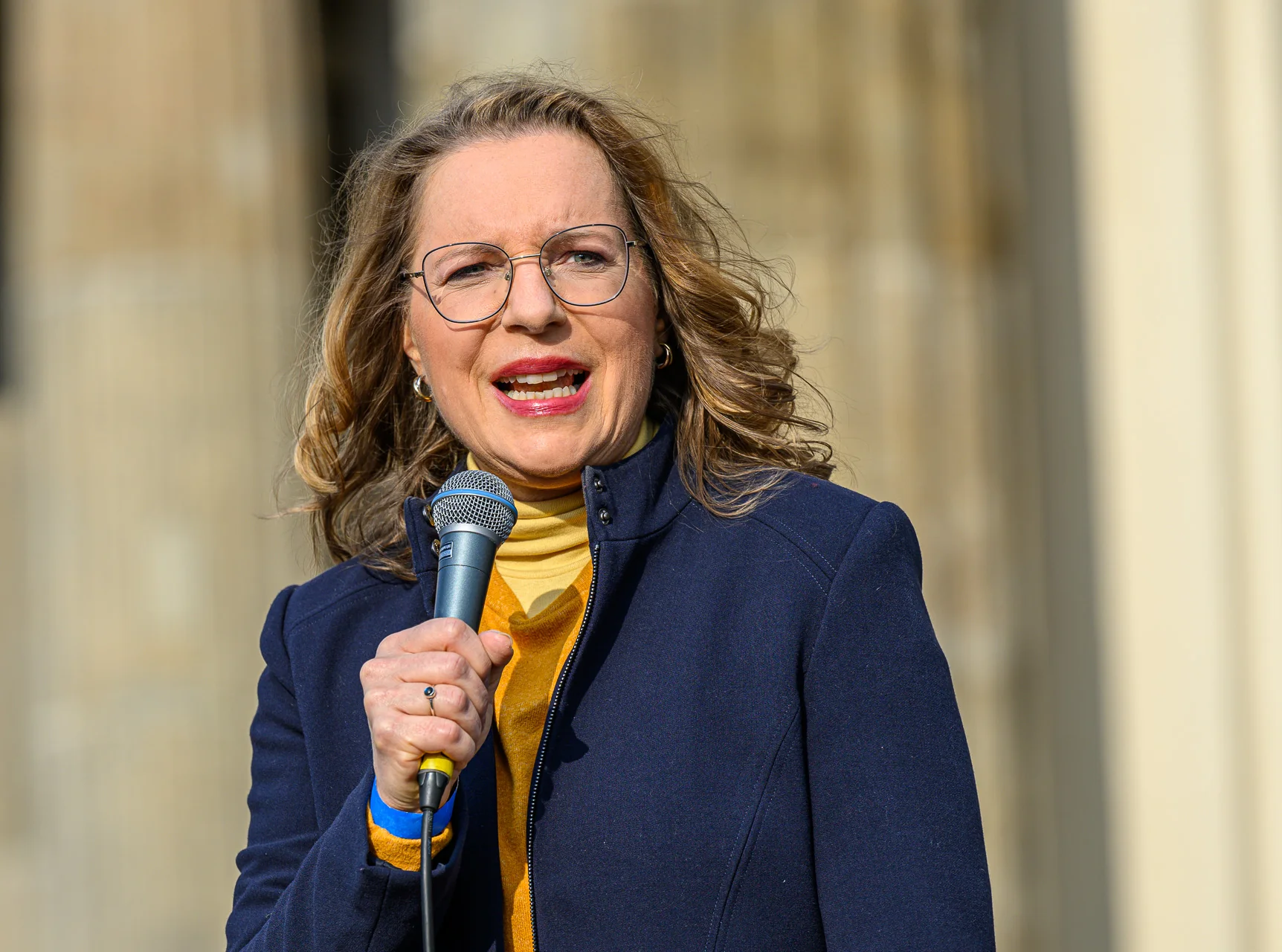
Image from Wikipedia
Image from Wikipedia
Claudia Kemfert: The Distinct Voice of German Energy Economics
Between Science, Public Engagement, and Clear Direction
Claudia Kemfert, born on December 17, 1968, in Delmenhorst, is one of the most renowned German economists in the fields of energy, transport, and the environment. As the head of the respective department at the German Institute for Economic Research (DIW) and a professor at Leuphana University Lüneburg, she has significantly shaped the public debate on climate protection, the energy transition, and economic transformation for years. Her work combines scientific analysis with a distinctly perceptible presence in media, policy advising, and public communication. ([de.wikipedia.org](https://de.wikipedia.org/wiki/Claudia_Kemfert?utm_source=openai))
Biographical Roots and Academic Rise
Kemfert studied economics in Bielefeld, Oldenburg, and at Stanford University; she earned her doctorate in 1998 and subsequently worked at the Fondazione Eni Enrico Mattei (FEEM) in Milan. She then returned to Germany, led a research group at the Institute for Rational Use of Energy at the University of Stuttgart, and from 2000, held a junior professorship in Oldenburg, where she led a research group until 2004. In 2004, she received a call to Berlin, and later became one of the central voices for energy and climate policy research at DIW. ([claudiakemfert.de](https://www.claudiakemfert.de/en/biography/?utm_source=openai))
This academic career is characterized by a clear specialization: energy economics, transformation pathways, and the economic consequences of climate change. Kemfert operates at an intersection where research does not end in the seminar room but influences political decision-making processes. That is precisely where her authority lies: she translates complex models, market mechanisms, and supply scenarios into a language that remains accessible outside academia. ([claudiakemfert.de](https://www.claudiakemfert.de/en/biography/?utm_source=openai))
Career as a Public Intellectual
Alongside her academic work, Claudia Kemfert became a sought-after policy advisor early in her career. She has been actively involved in various scientific advisory boards and commissions, including the High-Level Group on Energy and Climate, where she advised EU Commission President José Manuel Barroso. Her expertise has also taken her into committees of the Advisory Council on the Environment; since 2016, she has been a member of the presidency of the Club of Rome. ([claudiakemfert.de](https://www.claudiakemfert.de/en/biography/?utm_source=openai))
For her scholarly achievements, she has received numerous awards, including recognition as a top researcher by DFG, Helmholtz Association, and the Leibniz Association in 2006. Other honors include the Urania Medal, the B.A.U.M. Environmental Prize, the German Solar Prize, the Adam Smith Prize, the Thought Leader Award, the Bavarian Nature Conservation Prize, and the Environmental Media Prize from the German Environmental Aid in the Text category. These awards underline her status as a prominent authority in the interplay of economy, environment, and society. ([claudiakemfert.de](https://www.claudiakemfert.de/en/biography/?utm_source=openai))
Media Presence and Communicative Style
Kemfert's public influence derives not only from academic publications but also from a strong media presence. Her website features lectures, recordings, radio contributions, and current media appearances; it also hosts her podcast, which currently runs under the title "Climate Compass with Claudia Kemfert." The combination of analysis, commentary, and education has given her a broad audience known well beyond the confines of her field. ([claudiakemfert.de](https://www.claudiakemfert.de/medien/mitschnitte/?utm_source=openai))
Her role as a public debate figure is particularly evident in interviews, lectures, and podcasts, where she emphasizes the social dimension of the energy transition, the costs of fossil dependencies, and the necessity of long-term investments. Her appearances are not designed as mere data management but as argumentative interventions. This creates a profile that, in a broader sense, recalls the impact of a strong stage presence: clear, sharp, and recognizable. ([claudiakemfert.de](https://www.claudiakemfert.de/en/media/?utm_source=openai))
Publications, Research Focus, and Thematic Development
Content-wise, Kemfert's work revolves around the major transformation questions of our time: renewable energies, supply security, climate policy, mobility transition, and the economic evaluation of environmental risks. Her website documents that she regularly publishes research findings in scientific journals, books, and daily media. As a result, she has built a scientific oeuvre that cannot be reduced to a single topic but describes the architecture of the energy transition in its full complexity. ([claudiakemfert.de](https://www.claudiakemfert.de/en/biography/?utm_source=openai))
Her public commentaries also pursue this analytical approach. In media contributions and lectures, she repeatedly argues for a decentralized, renewable, and climate-friendly energy supply. Her name is often associated with precise positions: the prioritization of renewable energies, criticism of fossil lock-in effects, and the demand to connect economic rationality with climate policy responsibility. ([claudiakemfert.de](https://www.claudiakemfert.de/en/media/?utm_source=openai))
Critical Reception and Impact in the Debate
Like many prominent female scientists who take a clear public stance, Claudia Kemfert has also faced criticism. The Wikipedia text refers to controversies surrounding a study she co-authored, which was methodologically and substantively challenged in 2019 by historian Anna Veronika Wendland and a co-author. Such disputes, however, also highlight her relevance: those who do not just follow but shape debates become the subjects of both professional and political friction. ([de.wikipedia.org](https://de.wikipedia.org/wiki/Claudia_Kemfert?utm_source=openai))
Nevertheless, her influence remains significant. In academic circles, she represents an uncompromisingly communicated energy transition, where climate protection does not appear as a moral addendum but as a central economic and infrastructural question. This argumentative clarity gives her a rare position between academic expertise and popular comprehensibility. ([claudiakemfert.de](https://www.claudiakemfert.de/en/biography/?utm_source=openai))
Current Projects and Recent Public Presence
The recent entries on her website show that Kemfert continues to publish, engage in discussions, and appear publicly. There are current media contributions from 2024 and 2025, including program recordings, lectures, and podcasts covering topics such as the heating transition, energy hunger, climate crisis, and economic redirection. Evidence of new appearances and interviews in 2026 is also documented on the website, demonstrating her ongoing presence in public discourse. ([claudiakemfert.de](https://www.claudiakemfert.de/medien/mitschnitte/?utm_source=openai))
The website also emphasizes her continued focus on scientific dissemination and journalistic accessibility. The current profile is thus characterized less by a singular project than by an ongoing series of interventions, commentaries, and conversations. This consistency lies not in the shifting of topics but in the persistency of her position. ([claudiakemfert.de](https://www.claudiakemfert.de/?utm_source=openai))
Cultural Influence and Public Relevance
Claudia Kemfert is not an artist in the musical sense, yet her significance to contemporary German culture is undeniable. She exemplifies a generation of female scientists who do not keep their expertise in the background but bring it into the public sphere. Her voice shapes discussions on energy prices, supply security, industrial modernization, and the societal acceptance of climate protection. ([claudiakemfert.de](https://www.claudiakemfert.de/en/biography/?utm_source=openai))
Her cultural value lies precisely in this: she combines analysis with conviction and facts with comprehensibility. In a time when ecological and economic questions are increasingly intertwined, this profile is not only factually relevant but also stylistically defining. Kemfert's role demonstrates how powerful scientific authority can be when clearly articulated and consistently communicated. ([claudiakemfert.de](https://www.claudiakemfert.de/en/biography/?utm_source=openai))
Conclusion: An Inimitable Voice of Transformation
Claudia Kemfert is compelling because she combines scientific precision with public assertiveness. Her career represents a form of authority grounded not in volume but in reliable expertise, clear language, and long-term credibility. Those who want to understand why energy transition, climate policy, and economic future issues are so emotionally debated in Germany will find in her one of the most influential voices. Those who experience her live encounter a speaker who transforms analysis into conviction and enriches debates with rare clarity. ([claudiakemfert.de](https://www.claudiakemfert.de/en/biography/?utm_source=openai))
Official Channels of Claudia Kemfert:
- Instagram: no official profile found
- Facebook: no official profile found
- YouTube: no official profile found
- Spotify: no official profile found
- TikTok: no official profile found