
Elisabeth Scholl
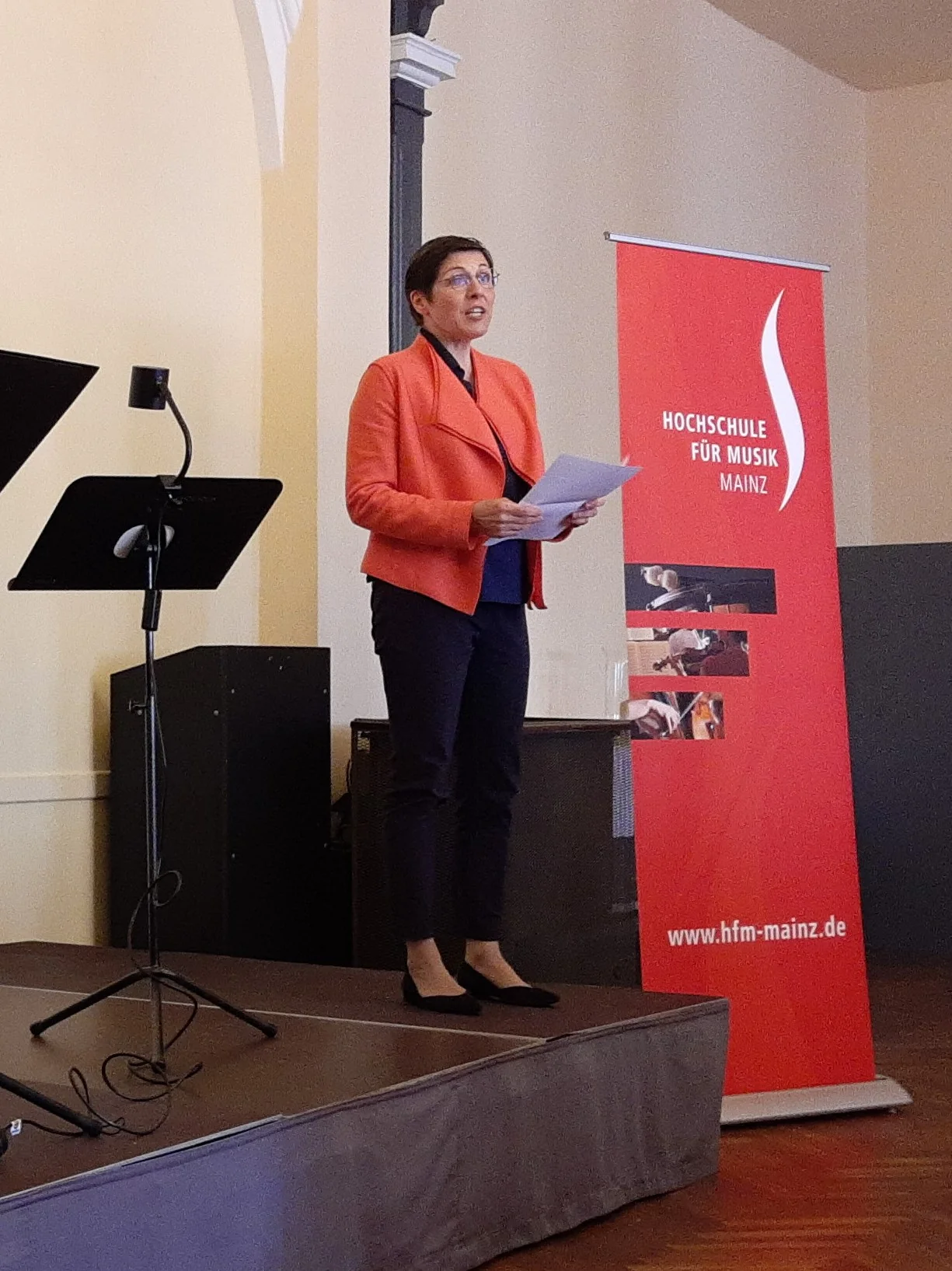
Image from Wikipedia
Image from Wikipedia
Elisabeth Scholl – Baroque Elegance, Historical Depth, and a Soprano Voice with Character
An Artist Between Historical Performance Practice and Lively Present
Elisabeth Scholl, born in 1966 in Kiedrich, is one of the prominent German sopranos in the field of Baroque and Early Music. Her artistic profile combines stylistic precision with musical expressiveness, shaped by a biography early influenced by singing, choral tradition, and solid academic education. As a singer, educator, and musicologist, she embodies a musical career in which interpretative sensitivity and historical knowledge go hand in hand. ([de.wikipedia.org](https://de.wikipedia.org/wiki/Elisabeth_Scholl))
Early Influence in the Rheingau: Music as Heritage and Path
Scholl's journey began in a musical environment in the Rheingau, specifically in her hometown of Kiedrich, where she was the first girl to sing in the Kiedrich boys' choir. This early experience not only shaped her voice but also her understanding of ensemble sound, discipline, and historically grown vocal culture. Another biographical key moment was her role as the First Boy in Mozart's "The Magic Flute" at the Hessisches Staatstheater Wiesbaden, which significantly strengthened her desire to become a singer. ([de.wikipedia.org](https://de.wikipedia.org/wiki/Elisabeth_Scholl))
Here, a particular peculiarity of her development becomes evident: Scholl did not come from a purely opera-centered career path but from a blend of practice, choral work, and a musical milieu. Her later specialization in Early Music appears, in retrospect, as a consistent continuation of an early influence from liturgical, vocal, and historically informed sound worlds. This background also explains why her stage presence aims for musical authenticity rather than effect. ([de.wikipedia.org](https://de.wikipedia.org/wiki/Elisabeth_Scholl))
Academic Training and Specialization in Early Music
After finishing her A-levels, Elisabeth Scholl initially studied musicology, English studies, and art history at the Johannes Gutenberg University Mainz while also receiving private singing lessons from Eduard Wollitz. She then completed a postgraduate study in Early Music at the Schola Cantorum Basiliensis with René Jacobs and Richard Levitt as well as the opera studio at the Basel Music Academy. This dual structure of scholarly reflection and vocal practice is a central building block of her artistic authority. ([de.wikipedia.org](https://de.wikipedia.org/wiki/Elisabeth_Scholl))
Her specialization in historical performance practice continues to shape her artistic development to this day. Scholl navigates a repertoire field where articulation, ornamentation style, affect shaping, and linguistic clarity are as important as a lean, agile soprano line. Particularly in Baroque singing, this school demands not only vocal security but also stylistic intelligence, and it is precisely here that one of Elisabeth Scholl's trademarks lies. ([de.wikipedia.org](https://de.wikipedia.org/wiki/Elisabeth_Scholl))
International Career: Ensemble Work, Festivals, and Concert Repertoire
For over 25 years, Elisabeth Scholl has been performing freelance both nationally and internationally. She has worked with renowned ensembles of Early Music such as the Freiburg Baroque Orchestra, the Academy for Ancient Music Berlin, Concerto Köln, Anima Eterna, and Cantus Cölln. Additionally, she has appeared at significant festivals like the Schleswig-Holstein Music Festival, the Rheingau Music Festival, the Lucerne Festival, the Festival van Vlaanderen, the Händel Festivals in Halle and Göttingen, as well as the BBC Proms. ([de.wikipedia.org](https://de.wikipedia.org/wiki/Elisabeth_Scholl))
This list is more than a career showcase: it illustrates the musical network Scholl operates within. Her collaboration with conductors such as René Jacobs, Jos van Immerseel, Frieder Bernius, Bruno Weil, and Nicholas McGegan points to a repertoire comprehension that is historically informed but never museum-like. In this context, her soprano voice unfolds its unique charm: clearly contoured, agile, and equally focused on the word as on the musical arc. ([de.wikipedia.org](https://de.wikipedia.org/wiki/Elisabeth_Scholl))
Discography: Focus on Baroque, Cantatas, and Sacred Repertoire
Elisabeth Scholl's discography clearly reflects her stylistic specialization. The recordings include works by Reinhard Keiser, Alessandro Scarlatti, Giovanni Battista Ferrandini, Johann Christian Bach, and Georg Friedrich Händel. The selection encompasses operatic arias, dramatic cantatas, sacred works, and song programs, including the project "Inspired by Goethe – Songs by Female Composers of the 18th and 19th Centuries" with Burkhard Schaeffer. ([de.wikipedia.org](https://de.wikipedia.org/wiki/Elisabeth_Scholl))
Particularly insightful is the breadth between solo albums, ensemble recordings, and thematically curated song art. The mentioned productions are released by labels such as DG, cpo, Accent, SALTO, and NAXOS and represent a career that focuses on substantial repertoire work rather than individual hit singles. Critically considered, Scholl stands in a tradition of female singers whose artistic value is primarily measured by interpretation, textual closeness, and stylistic integrity. ([de.wikipedia.org](https://de.wikipedia.org/wiki/Elisabeth_Scholl))
Musical Language: Baroque Singing with Historical Authority
Elisabeth Scholl's artistic identity is closely tied to Early Music, but according to available sources, it extends beyond this field. Her repertoire description includes works "from Alessandro Grandi to Romanticism," indicating a remarkable stylistic range. Particularly in Baroque music, the balance between sonic lightness and emotional presence is crucial; Scholl's profile suggests a singer who shapes this balance from historical knowledge and vocal experience. ([de.wikipedia.org](https://de.wikipedia.org/wiki/Elisabeth_Scholl))
The combination of concert activity, song evenings, and occasional opera engagements demonstrates an artist who does not separate different formats but connects them musically. In opera roles by Händel, Vivaldi, and Mozart, as well as in chamber music, her ability for nuanced phrasing and text-related expression flourishes. This lends her music career the credibility that is considered a crucial currency in the realm of historical performance practice. ([de.wikipedia.org](https://de.wikipedia.org/wiki/Elisabeth_Scholl))
Teaching, Passing on Knowledge, and Artistic Responsibility
Since 2009, Elisabeth Scholl has been teaching as a professor, initially in Nuremberg and since the summer semester of 2018 at the Hochschule für Musik Mainz. This adds a second, equally important role to her career as a singer: that of educator and mentor. The fact that she describes teaching as a "great passion" reflects an artistic self-understanding that not only preserves tradition but also passes it on. ([elisabethscholl.com](https://elisabethscholl.com/vita/))
This teaching activity also strengthens her authority within the German music landscape. Teaching at a music university while also performing internationally combines practical experience with reflective communication. For young singers, such a background is especially valuable as it demonstrates how technique, style, and musical personality interact. ([de.wikipedia.org](https://de.wikipedia.org/wiki/Elisabeth_Scholl))
Current Projects and Public Presence
On her official website, recent updates include information on "Interested in studying voice with me?", the Baroque Vocal Academy 2023, a operetta project from HfM Mainz, as well as entries about the award winner and final concert of the HFP 2022. The available search results do not show any confirmed information about new albums or major releases in 2024 or 2025. The current public presence thus seems less like a hype cycle and more like continuous pedagogical and artistic work. ([elisabethscholl.com](https://elisabethscholl.com/vita/))
This continuity makes Elisabeth Scholl intriguing. She does not represent short-term market logic but rather a music career with substance, where performances, teaching, and repertoire maintenance intertwine. For lovers of Early Music, this is a strong signal: here is an artist whose profile emerges from experience, knowledge, and artistic consistency. ([elisabethscholl.com](https://elisabethscholl.com/vita/))
Cultural Influence and Family Connection
Elisabeth Scholl is the sister of countertenor Andreas Scholl, further underscoring the musical shaping of the family. However, her own path remains clearly recognizable: a soprano with independent repertoire logic, a unique sound aesthetic, and a strong connection to historical performance practice. Her contribution to the German Baroque scene lies not only in individual performances but also in the ongoing cultivation of a demanding musical domain. ([de.wikipedia.org](https://de.wikipedia.org/wiki/Elisabeth_Scholl))
Her cultural value is also evident in her ability to mediate between concert podium, academic teaching, and repertoire work. Such artists keep the connection between research and performance alive, and therein lies a substantial part of her authority. Scholl represents a generation of female singers who understand historical music not as a special effect, but as a serious artistic language. ([de.wikipedia.org](https://de.wikipedia.org/wiki/Elisabeth_Scholl))
Conclusion: Elisabeth Scholl is fascinating because she unites musical intelligence, stylistic sovereignty, and pedagogical responsibility in a rarely convincing manner. Her career demonstrates how richly Baroque singing can resonate when technique, research, and expression meet at a high level. Anyone wishing to experience historical vocal art in its lively, credible form should definitely hear Elisabeth Scholl live. ([de.wikipedia.org](https://de.wikipedia.org/wiki/Elisabeth_Scholl))
Official Channels of Elisabeth Scholl:
- Instagram: no official profile found
- Facebook: no official profile found
- YouTube: no official profile found
- Spotify: https://open.spotify.com/artist/08rODWASMZcb2LashgmiqJ
- TikTok: no official profile found