
Hugo Harrer
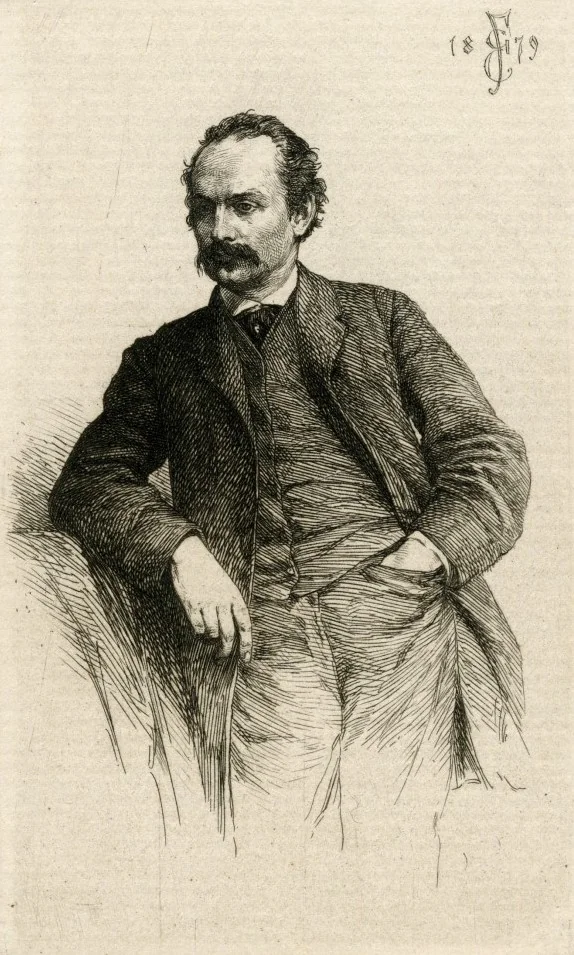
Image from Wikipedia
Image from Wikipedia
Hugo Harrer – the poetic landscape and architectural painter of the Düsseldorf School
A painter between Rome, Düsseldorf, and the southern light of Italy
Hugo Paul Harrer, born on February 6, 1836, in Eberswalde and died on December 10, 1876, in Rome, is one of those 19th-century artists whose work embodies the atmosphere of travel, observation, and architectural precision. As a German landscape and architectural painter of the Düsseldorf School, he developed a visual language that combines studies of nature, cityscapes, and Italian light into an independent pictorial profile. His biography does not recount the path of an academy star but rather that of a consistent, unconventional observer who shaped himself through self-study and intensive practice. ([de.wikipedia.org](https://de.wikipedia.org/wiki/Hugo_Harrer?utm_source=openai))
Early years and artistic self-discovery
Harrer initially intended to become an architect but soon turned to painting. The German Biography emphasizes that he did not attend an art academy and did not work permanently in a master’s studio, but developed through self-study, careful observation of nature, and visits to artist friends. This background from the tension between architecture and free art strongly influenced his later visual world: lines, perspective, and building forms remained just as important to him as atmosphere and light. ([deutsche-biographie.de](https://www.deutsche-biographie.de/sfz26126.html?language=de&utm_source=openai))
He initially worked in Nuremberg and Munich before finally settling in Rome in 1861. There he found the environment that became crucial for his motifs: ancient ruins, Italian coastal landscapes, street scenes, and a space where history and present overlap. His career thus illustrates the typical European artist path of the 19th century while also focusing very personally on the Italian motif. ([stiftung-volmer.de](https://www.stiftung-volmer.de/artist/painting/all/321?utm_source=openai))
Düsseldorf as a turning point in his career
In 1867 and 1868, Harrer stayed in Düsseldorf and studied in the landscape class of Oswald Achenbach at the art academy. This phase is considered a decisive impulse for his painting, as it connected his Roman experience with the compositional school of Düsseldorf painting. The Kunstpalast explicitly associates him with the Düsseldorf School of Painting, which clarifies his art historical anchoring. ([search.smb.museum](https://search.smb.museum/object/obj-963556?doc_types=Bild&materials=%C3%96l-%2FBrom%C3%B6lumdruck&page=3&utm_source=openai))
After this stay, Harrer returned to Rome and consistently gathered studies and sketches from there. These served as templates for oil paintings that he regularly submitted to German art exhibitions. Particularly characteristic are his painterly representations of street scenes, ruins, and Italian coastal landscapes, types of images in which architecture and atmosphere do not stand side by side but intertwine. ([de.wikipedia.org](https://de.wikipedia.org/wiki/Hugo_Harrer?utm_source=openai))
World of motifs: Ruins, street life, and Italian landscapes
The preserved and documented works reveal an artist who combined a keen eye for detail with a secure spatial direction. The Museum Berlin describes a precise, realistic veduta using the example of the Theater of Marcellus in Rome, where Harrer also integrates lively street life: merchants, basket weavers, passersby, and historical architecture form a dense, vibrant ensemble. It is precisely this connection of observation and staging that makes the charm of his art. ([search.smb.museum](https://search.smb.museum/object/obj-963556?doc_types=Bild&materials=%C3%96l-%2FBrom%C3%B6lumdruck&page=3&utm_source=openai))
The Gera Art Collection also includes a painting of his titled At the Marcellus Theater in Rome, dated 1876. Such works demonstrate how well Harrer understood the Italian city scene as a painterly space of experience. His images do not merely appear as mementos of travel, but rather as precisely condensed studies on light, architecture, and the rhythm of public life. ([gera.de](https://www.gera.de/tourismus-freizeit-kultur/museen/kunstsammlung-gera-/-orangerie/sammlung?utm_source=openai))
Stylistic signature and art historical classification
Harrer's style sits at the intersection of architectural painting and landscape art. His images combine constructive accuracy with a finely calibrated light modulation, typical of the Düsseldorf School of Painting. The perspective is never purely documentary: Harrer composes places so that they function as pictorial spaces while simultaneously unfolding historical mood. ([search.smb.museum](https://search.smb.museum/object/obj-963556?doc_types=Bild&materials=%C3%96l-%2FBrom%C3%B6lumdruck&page=3&utm_source=openai))
The Volmer Collection Foundation describes his path as a development from architectural study to self-taught painting, initially in Nuremberg and then in Munich, before Rome became his permanent residence. This explains the special tension in his work: on one hand, architectural discipline, and on the other, openness for painterly observation. This very mix makes him an interesting representative of that generation which sought new forms of imagery between academic tradition and individual experience. ([stiftung-volmer.de](https://www.stiftung-volmer.de/artist/painting/all/321?utm_source=openai))
Work, transmission, and reception
The art historical transmission portrays Harrer as a productive painter who regularly exhibited, whose works were present in German art exhibitions. The Allgemeine Deutsche Biographie and later reference works already pointed out his reputation as a capable painter who asserted himself without an academic standard career. This assessment emphasizes that his significance arises less from spectacular individual events than from the continuity of his work. ([deutsche-biographie.de](https://www.deutsche-biographie.de/sfz26126.html?language=de&utm_source=openai))
Today, Harrer is primarily perceived in the context of the Düsseldorf School, the Italian vedute, and 19th-century architectural painting. The art historical relevance lies in the connection of local observation, topographical precision, and narrative composition. Viewing his works reveals a painter who translated travel into visual form and gave the motif of Rome a precise yet poetic language. ([kunstpalast.de](https://www.kunstpalast.de/wp-content/uploads/2023/07/2016_Kuenstlerliste_DM_-Einleitung_2016_2023.pdf?utm_source=openai))
Current projects and publications
No current projects, re-publications, or contemporary collaborations have been recorded for Hugo Harrer. As a historical painter of the 19th century, his current context lies in collections, museum holdings, and art historical exhibitions, not within ongoing publication activities. Recent receptions focus on exhibition texts, collection records, and art historical cataloging. ([gera.de](https://www.gera.de/tourismus-freizeit-kultur/museen/kunstsammlung-gera-/-orangerie/sammlung?utm_source=openai))
Discography and critical reception
A discography in the musical sense does not exist for Hugo Harrer, as he worked as a visual artist. However, applied to his oeuvre, the preserved paintings clearly demonstrate an artistic signature: Italian motifs, architectural views, street scenes, and images of ruins form the core of his “work chronicle.” In the art historical reception, he appears as an accurate observer and reliable representative of the Düsseldorf School, whose quality arises from substance, not from effects. ([search.smb.museum](https://search.smb.museum/object/obj-963556?doc_types=Bild&materials=%C3%96l-%2FBrom%C3%B6lumdruck&page=3&utm_source=openai))
His cultural significance lies in the connection between German painting tradition and the Italian world of motifs. Harrer demonstrates how strongly the 19th century was characterized by mobility, study travels, and exchanges between art centers. For this reason, his work remains intriguing for collectors, museums, and art-interested readers: it tells of observation, discipline, and a quiet yet impactful form of seeing. ([stiftung-volmer.de](https://www.stiftung-volmer.de/artist/painting/all/321?utm_source=openai))
Conclusion: A quiet master of observed reality
Hugo Harrer captivates with his blend of architectural clarity and painterly sensitivity. His images open a view of Rome and Italy that is not folkloric but precise, atmospheric, and historically aware. Those who want to understand the Düsseldorf School will find in Harrer an artist who furthered its qualities in a personal, Italian-influenced form. His works invite viewers to look more closely and to rediscover the quiet power of observation. ([search.smb.museum](https://search.smb.museum/object/obj-963556?doc_types=Bild&materials=%C3%96l-%2FBrom%C3%B6lumdruck&page=3&utm_source=openai))
Official channels of Hugo Harrer:
- Instagram: No official profile found
- Facebook: No official profile found
- YouTube: No official profile found
- Spotify: No official profile found
- TikTok: No official profile found
Sources:
- Wikipedia – Hugo Harrer
- German Biography – Harrer, Hugo
- Kunstpalast – Artists of the Düsseldorf School
- State Museums of Berlin – Theater of Marcellus in Rome
- Volmer Collection Foundation – Harrer, Hugo Paul
- City of Gera – Art Collection / Collection
- Wikipedia – List of Painters of the Düsseldorf School