
Johan Simons
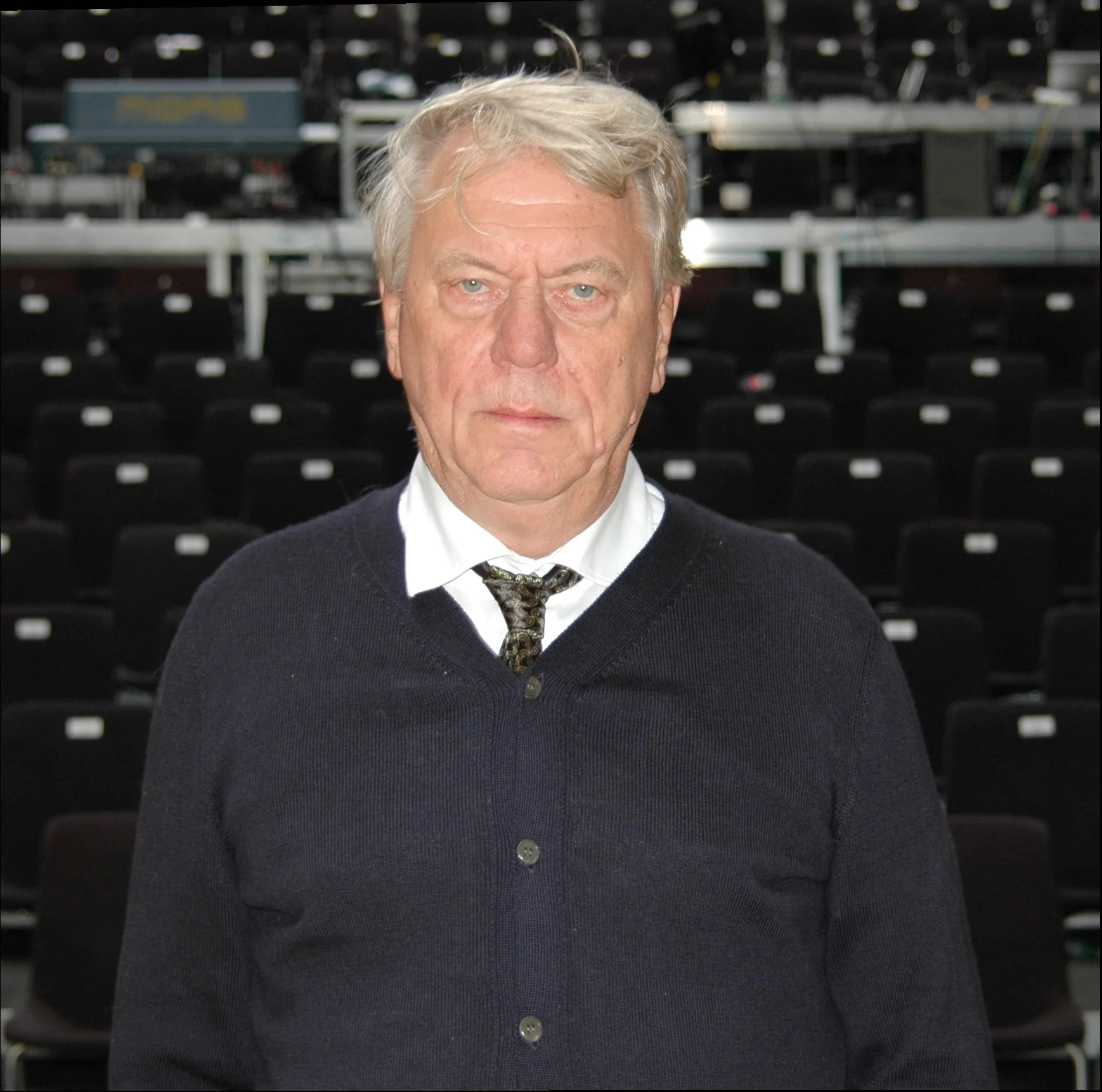
Image from Wikipedia
Image from Wikipedia
Johan Simons – the European theater maker between opera, contemporary art, and grand stagecraft
A director with conviction, musicality, and European charisma
Johan Simons, born in 1946 in Heerjansdam, is among the defining theater and opera directors in Europe. His artistic career intertwines acting, dance, music theater, and a clear political and aesthetic stance into a distinctive profile. Since the 2018/2019 season, he has been the artistic director of the Schauspielhaus Bochum; his leadership is focused on continuity, ensemble artistry, and internationally minded theater work. ([schauspielhausbochum.de](https://www.schauspielhausbochum.de/de/kuenstler-innen/323/johan-simons))
Biography: The journey from Heerjansdam to the grand stages of Europe
Simons trained in acting and dance before beginning his career at the Haagsche Comedie in 1976. In 1979, he founded his own group, Het Wespetheater, and in 1982 he launched the Regiotheater, which operated under the name Hollandia from 1985 onward. These early years laid the foundation for a working style that tightly intertwines physicality, space, and contemporary relevance. ([ita.nl](https://ita.nl/en/people/johan-simons/2341/))
At Hollandia, the location became an aesthetic category: Simons often performed in so-called locations, directly incorporating the real environment into the production. This created a form of theater that engaged the audience not just as observers but physically and atmospherically. In collaboration with composer and drummer Paul Koek, a pronounced musical understanding of speech, rhythm, and scenic composition also developed. ([ita.nl](https://ita.nl/en/people/johan-simons/2341/))
Artistic development: From the stage to music theater
In the 1990s, Simons shifted his focus more towards socially engaged and sometimes explicitly political themes. This dedication to contemporary issues is reflected in his work for NTGent as well as in productions that expose social conflicts, power structures, and moral dilemmas. His theater never considers the psychological alone but always engages with historical, social, and spatial contexts. ([ita.nl](https://ita.nl/en/people/johan-simons/2341/))
At the same time, he established himself as an internationally renowned opera director. Some of his significant works include Verdi's Simon Boccanegra at the Opéra Bastille, Mozart's The Abduction from the Seraglio at De Nederlandse Opera, Bartók's Duke Bluebeard's Castle at the Salzburg Festival, and Beethoven's Fidelio at the Opéra de Paris. These productions demonstrate how adeptly Simons integrates musical dramaturgy, text treatment, and scenic concentration. ([ita.nl](https://ita.nl/en/people/johan-simons/2341/))
Breakthrough and recognition: Awards, festivals, and leadership roles
Widespread attention and institutional recognition have accompanied his path for decades. In 2013, the Münchner Kammerspiele, under his direction, was named Theater of the Year by Theater heute. In 2014, Simons received the German Theater Prize Der Faust for Danton's Death, along with the Berlin Theater Prize and the Prince Bernhard Cultural Fund Award, the highest artistic honor in the Netherlands. ([schauspielhausbochum.de](https://www.schauspielhausbochum.de/de/kuenstler-innen/323/johan-simons))
As a festival director, he also shaped the theater landscape: from 2015 to 2017, Simons was the artistic director of the Ruhrtriennale. The festival, under his leadership, emphasized artistic openness, interdisciplinarity, and the connection of music theater, performance, installation, and live art. The Ruhrtriennale described him as a new artistic director for the 2015–2017 season; Simons' work is thus aligned with a series of prominent festival signatures. ([archiv.ruhrtriennale.de](https://archiv.ruhrtriennale.de/www.2014.ruhrtriennale.de/en/aktuelles/news/bilanz-2012-14/index.html))
Bochum as an artistic center: A directorship with a profile
Since the 2018/2019 season, Johan Simons has led the Schauspielhaus Bochum, which he has developed with his team into an international house of different cultures. The program combines contemporary interpretations of classic works with world premieres and new developments; the ensemble remains the center of artistic work. In 2022, the theater was again named Theater of the Year, a testament to the impact of this long-term directorship. ([schauspielhausbochum.de](https://www.schauspielhausbochum.de/de/haus/50/geschichte))
Simons' work in Bochum has also received strong recognition at the festival level. His production of Woyzeck was awarded the Nestroy for Best Direction in 2019, while Hamlet in 2020 and Macbeth in 2024 were among his further invitations to the Berliner Theatertreffen. This affirms a directing oeuvre that reads classics not in a museum-like manner but as highly relevant contemporary forms. ([schauspielhausbochum.de](https://www.schauspielhausbochum.de/de/kuenstler-innen/323/johan-simons))
Style and signature: Body, language, rhythm
Simons' theater is characterized by a pronounced physical presence. Characters do not appear merely as psychological profiles but as bodies in space, working with gesture, tempo, and silence. This attitude stems from his training in acting and dance and from a methodology in which movement and text never occur separately. ([ita.nl](https://ita.nl/en/people/johan-simons/2341/))
Additionally, there is a unique relationship to the musicality of stage events. The collaboration with Paul Koek has given Hollandia productions a mode of speaking that functions like a musical arrangement: repetition, variation, tempo, pause, and ensemble sound interconnect. This quality unfolds with particular intensity in Greek tragedies and in opera works. ([ita.nl](https://ita.nl/en/people/johan-simons/2341/))
Cultural influence: Theater as a public space for thought
Johan Simons represents a theater that does not merely reflect social reality but interrogates it. His works open a space where political conflicts, religious questions, social tensions, and personal crises are translated into artistic forms. In this lies his cultural significance: he connects European theater tradition with a contemporary language that does not settle for simple answers. ([ita.nl](https://ita.nl/en/people/johan-simons/2341/))
His international impact also derives from his ability to connect various art forms. At the Ruhrtriennale and the Schauspielhaus Bochum, acting met performance, choreography, and music theater; this openness has further strengthened Simons' reputation as a boundary-crossing theater maker. That he is preparing for his final Bochumer season in 2026 and consistently focuses on the future and new beginnings underscores his still vibrant artistic energy. ([schauspielhausbochum.de](https://www.schauspielhausbochum.de/en/presse))
Current projects and final Bochum season
In June 2026, the Schauspielhaus Bochum presented Simons' final season. A total of 16 premieres were announced for the 2026/2027 season, alongside a collaboration with the Centre for the Less Good Idea of the South African artist William Kentridge. The presentation consciously emphasized a departure rather than a farewell and marks Simons' handover of the artistic directorship with programmatic clarity. ([schauspielhausbochum.de](https://www.schauspielhausbochum.de/en/presse))
At the same time, his presence as a theater maker remains visible: the theater confirms him as artistic director for the 2026/2027 season, as the handover to Nicolas Stemann is not scheduled until the summer of 2027. This extension facilitates a seamless transition and demonstrates how strongly Simons still shapes the structure of the theater. ([schauspielhausbochum.de](https://www.schauspielhausbochum.de/en/presse?utm_source=openai))
Discography, hits, and reception
Johan Simons is not a musician in the classical sense; therefore, there is no discography, hit singles, or chart career. His oeuvre consists of productions, festival programs, and opera works that are reflected in theater and music theater critique. This form of reception replaces the pop or music market for him: awards, festival invitations, and critics' polls are the defining markers of his success. ([schauspielhausbochum.de](https://www.schauspielhausbochum.de/de/kuenstler-innen/323/johan-simons))
The critical response repeatedly emphasizes his ability to infuse classics with contemporary relevance while precisely guiding the ensemble, space, and language. The Schauspielhaus Bochum points to his numerous awards, noting that under his leadership, the theater was named Theater of the Year in 2022. Simons' cultural influence lies not in sales figures but in the sustainable shaping of a European theatrical aesthetic. ([schauspielhausbochum.de](https://www.schauspielhausbochum.de/de/kuenstler-innen/323/johan-simons))
Conclusion: Why Johan Simons continues to fascinate today
Johan Simons is an artist of grand design: biographically rooted in the Netherlands, artistically at home in Europe, and stylistically open to acting, opera, performance, and musical structure. His work connects intellectual precision with physical presence, transforming theater into a space where the present becomes visible and audible. Encountering Simons means not just experiencing a performance but engaging with a clear stance on art. ([schauspielhausbochum.de](https://www.schauspielhausbochum.de/de/kuenstler-innen/323/johan-simons))
It is precisely for this reason that his career remains exciting: because it never settles into routine but continually opens new spaces. His Bochum years have shown how powerful theater can be when it relies on ensemble, risk, and musical precision. Experiencing Johan Simons live means experiencing European stage art in its most concentrated form. ([schauspielhausbochum.de](https://www.schauspielhausbochum.de/de/haus/50/geschichte))
Official channels of Johan Simons:
- Instagram: no official profile found
- Facebook: no official profile found
- YouTube: no official profile found
- Spotify: no official profile found
- TikTok: no official profile found
Sources:
- Wikipedia – Johan Simons
- Schauspielhaus Bochum – Johan Simons
- Schauspielhaus Bochum – History of the House
- Schauspielhaus Bochum – Press
- International Theater Amsterdam – Johan Simons
- Ruhrtriennale Archive – Johan Simons as new artistic director 2015–2017
- Ruhrtriennale Archive – Press Biography Johan Simons